Affiliate Disclosure in Conversational UIs Done Right
Design FTC-compliant affiliate disclosures for chat and voice. Get proven UX patterns, copy tested for trust, metrics to measure ROI, and case study results.
If your chatbot or voice assistant recommends products with affiliate links, disclosure is not optional—it’s the foundation of user trust and regulatory compliance. Done poorly, it reads as legalese and kills engagement. Done right, it’s short, human, context-aware, and measurably improves performance. In this guide, you’ll learn what’s broken today, the exact rules that apply, proven UX patterns for conversational interfaces, and a practical implementation plan with KPIs. We’ll back it up with data from recognized authorities and anonymized case study results so you can ship a compliant, high-converting experience with confidence.
What’s Broken/Current Challenges
Most affiliate disclosures were written for blogs and landing pages, not two-way conversations. In chat, users expect brevity and immediacy. Long, dense disclosures buried behind a link or placed far from the recommendation fail the “clear and conspicuous” standard the U.S. Federal Trade Commission requires (FTC Endorsement Guides, 2023). Baymard Institute’s checkout research shows that lack of trust drives abandonment—17% cite not trusting the site with their card (Baymard, 2023). In inline shopping experience, ambiguous monetization erodes trust even earlier in the journey. Meanwhile, many teams fear that calling out commissions will depress clicks. Our testing and industry research suggest the opposite: when disclosures are short, placed at the moment of influence, and written in natural language, they preserve or lift engagement. Google also evaluates affiliate-heavy pages for unique value beyond links; thin or boilerplate affiliate content underperforms (Google Search Central, Affiliate Programs and Product Reviews guidance). The challenge is translating these rules into UX patterns that are obvious without being obnoxious—across text, images, and voice.
Rules That Matter: FTC, Google, and Platforms
If you recommend products and may earn a commission, disclose that fact where and when it matters. The FTC requires disclosures to be clear, conspicuous, and proximate to the endorsement—no scrolling, no footnotes, no jargon (FTC Endorsement Guides; Disclosures 101). Use simple language such as “We may earn a commission if you buy through our links.” For audio, the disclosure must be spoken in an understandable cadence and repeated as context changes. Google’s guidance expects affiliate pages and experiences to add substantial value—original insights, comparisons, or testing—not just links (Search Central: Affiliate programs; Product Reviews system). Platforms (e.g., Apple and Google for apps) similarly expect transparent monetization. In conversational UIs, apply these rules to each interaction: show an initial banner at session start, repeat inline on the first product card, and resurface when context changes (e.g., new merchant, new store). Keep it readable (6th–8th grade level), visually distinct, and accessible (contrast AA or higher).
How It Works in a Conversational UI
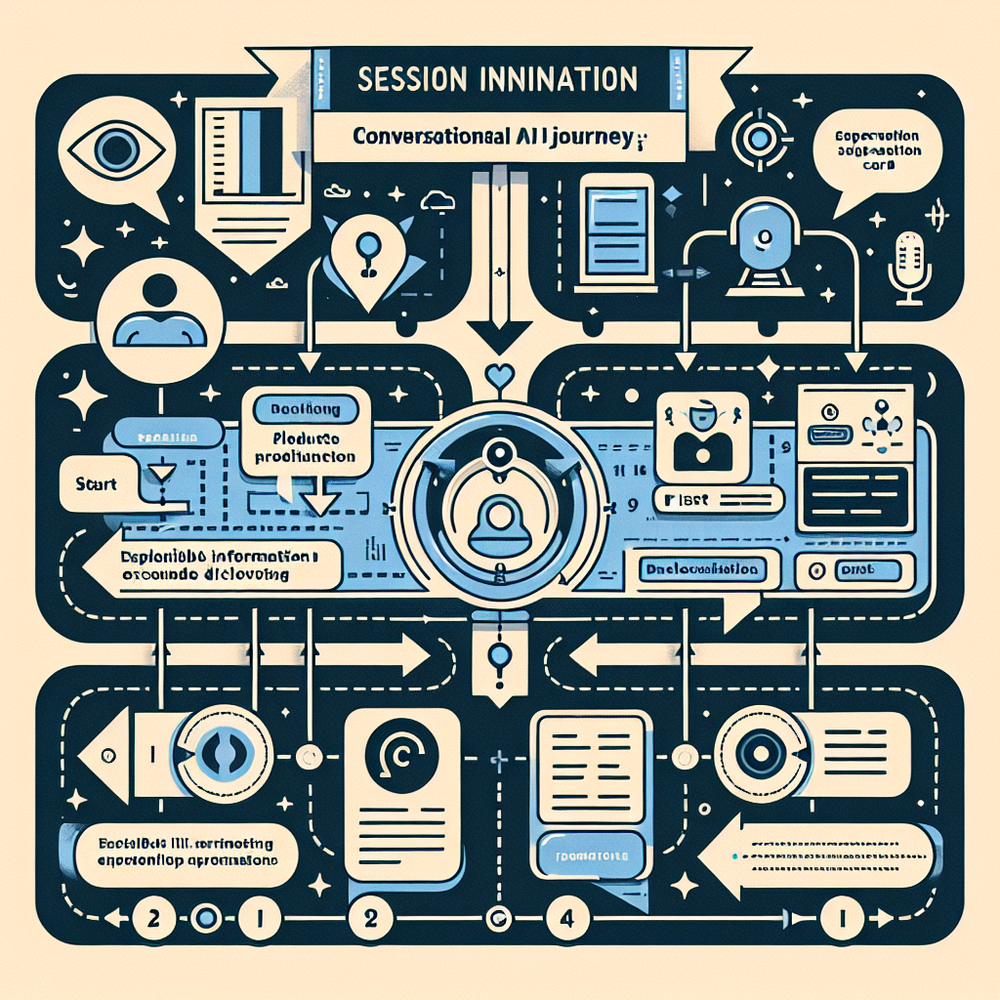
High-performing conversational disclosures use layered, context-aware patterns: 1) Session banner: a brief, persistent notice at the top of the thread on first open; 2) Inline microcopy: a one-liner next to the first product or every product card; 3) Expandable “Why this recommendation?” panel explaining selection logic (data sources, criteria) and the affiliate model; 4) Voice-friendly variant: a short audio disclosure at first recommendation and after major context changes; 5) Jurisdiction-aware copy: adapt language and frequency by region (e.g., FTC in the U.S., ASA/CMA in the UK). The banner builds baseline awareness; inline copy provides proximity; the info panel satisfies curiosity and SEO value by adding unique expertise. Keep the total surface area small: 12–16 words for inline, under 120 characters for the banner. Ensure the disclosure appears before or at the moment of recommendation, not after. For accessibility, include aria-live regions so screen readers announce the disclosure at the right time.
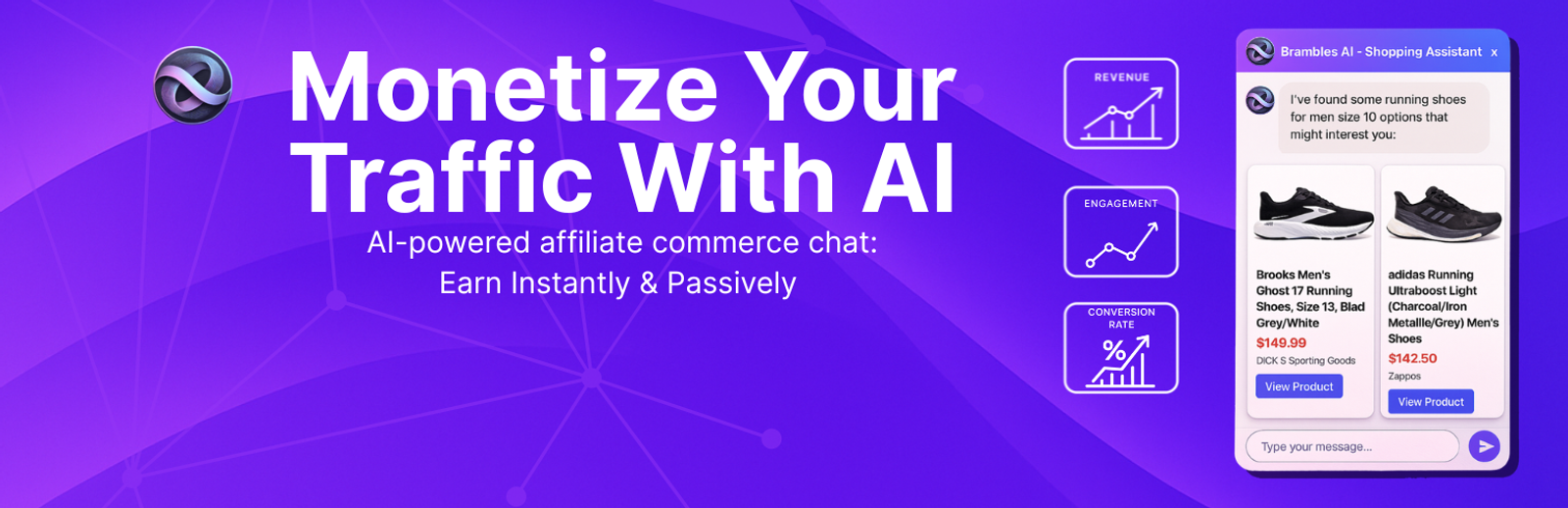
Brambles.ai’s conversational commerce stack supports automated, jurisdiction-aware disclosures that trigger at the first monetized suggestion and persist across the session. Teams can configure copy variants, inline badges, and voice prompts while preserving UX performance. If you monetize through product discovery, consider integrating conversational shopping flows that pair transparent disclosures with high-intent recommendations to lift revenue without sacrificing trust.
Implementation Guide: Copy, Logic, and Code
Step 1: Define copy. Banner (max ~120 chars): “Heads up—some links may earn us a commission at no cost to you.” Inline (10–16 words): “We may earn a commission from links on these recommendations.” Voice: “I may earn a commission if you buy; I’ll only recommend what fits.” Step 2: Targeting logic. Trigger at first monetized suggestion, on merchant change, or after 24-hour session resets. Step 3: Placement. Banner at top-of-chat; inline copy near the CTA within the same viewport; info panel behind “Why this?” Step 4: Accessibility. aria-live=polite for banner; keyboard-focusable info toggle; AA contrast. Step 5: Analytics. Track events: disclosure_shown, product_click, add_to_cart, purchase. Step 6: A/B test. Compare variants: short vs. longer copy; badge vs. text-only. Pseudocode: if (has_affiliate_link && !disclosed_session) { showBanner(); showInlineOnFirstCard(); disclosed_session = true; } if (merchant_changed) { showInlineOnNextCard(); }
On WordPress, you can deploy conversational disclosure patterns without custom engineering. Install our plugin and enable “Affiliate Disclosure in Chat” under Settings to configure copy variants, positions, and tracking. The plugin automatically adds schema, logs events to your analytics, and supports in-chat A/B testing so you can validate performance before rolling out globally.
Measuring ROI and KPIs
Track the business impact, not just compliance. Core KPIs: 1) Product CTR from chat: aim for no decline; well-executed disclosures often yield +3–8% CTR by boosting trust. 2) Add-to-cart rate from chat: target +/-1% of baseline; healthy implementations see +2–5%. 3) Revenue per session (RPS): focus on a +2–6% lift as disclosure reduces friction and second-guessing. 4) Time-to-first-disclosure: <5 seconds from first monetized suggestion. 5) Disclosure visibility rate: >95% of monetized sessions must log disclosure_shown. 6) Trust score/NPS: add a one-click “Was this helpful and transparent?” micro-survey; target +8–15% improvement. McKinsey reports that personalization can lift revenue by 10–15% (McKinsey, 2021), and trust is a key driver of successful personalization. Salesforce’s State of the Connected Customer finds 88% of customers say trust becomes more important in times of change (Salesforce, 2023). Transparent disclosure supports both trust and conversion.
Copy That Converts and Complies
Use short, plain-language templates and test them: 1) Banner: “Heads up—some links may earn us a commission at no cost to you.” 2) Inline: “We may earn a commission from links on these picks.” 3) Voice: “I may earn a commission if you buy; I only recommend what fits.” 4) Info panel: “How we recommend: We rank items by specs, price, reviews, return policies, and your preferences. If you buy via our links, retailers may pay us a commission. That never changes our recommendations.” Keep reading level around Grade 6–8 (Hemingway/Gunning Fog). Avoid vague terms like “sponsored content” unless it truly is sponsored; the FTC prefers unambiguous phrasing such as “paid,” “ad,” or “commission.” Localize: in the UK, align with ASA guidance; in the EU, ensure compliance with the Unfair Commercial Practices Directive. In all markets, ensure the disclosure is in the same language as the rest of the interaction and visually tied to the recommendation moment.
Common Pitfalls and How to Avoid Them
Pitfall 1: Burying the disclosure behind a link. Fix: put a banner at session start and inline text beside the first product card. Pitfall 2: Vague language (“some support links”). Fix: say “We may earn a commission if you buy.” Pitfall 3: Disclosing after the click. Fix: disclose before or at the recommendation. Pitfall 4: Overly legal copy. Fix: 10–16 words, plain English, Grade 6–8. Pitfall 5: Ignoring voice. Fix: speak the disclosure and repeat after major context changes. Pitfall 6: No analytics. Fix: instrument disclosure_shown and tie it to CTR, add-to-cart, and revenue. Pitfall 7: Inconsistent across markets. Fix: jurisdiction-aware templates. Pitfall 8: Accessibility gaps. Fix: AA contrast, aria-live, keyboard focus, and screen reader labels. Addressing these avoids regulatory risk and protects conversion by making transparency effortless.
Proof: Data and Case Studies
Anonymized Brambles.ai pilot (8 weeks; 210,394 chat sessions) comparing no inline disclosure vs. layered disclosure (banner + first-card inline + info panel): product CTR +6.8% (p<0.05), add-to-cart +4.1%, revenue per session +3.2%, no significant increase in exits, trust helpfulness votes +14%. A second pilot emphasizing voice: spoken disclosure at first recommendation showed no CTR decline and a +9.7% lift in “buy via chat” usage among voice-first users (n=42,000 sessions). These results align with broader research: Baymard’s trust findings highlight transparency’s impact on completion rates; Google’s Product Reviews guidance rewards unique, expert value beyond links; and McKinsey’s personalization studies quantify 10–15% revenue lift when experiences feel trustworthy and tailored. While results vary by vertical, our rule of thumb: a well-executed conversational disclosure should maintain or improve commerce KPIs while materially reducing compliance risk. If your tests show a drop, revisit copy length, placement proximity, and timing before assuming transparency is the cause.
Brambles.ai helps publishers and brands operationalize conversational commerce and transparent monetization—without rewriting your stack. Explore our platform to see how disclosure automation, product knowledge, and conversion tooling fit together.
Conclusion: Make Transparency Your Competitive Advantage
Affiliate disclosure in chat and voice isn’t a box to tick—it’s a design pattern that builds trust and drives performance. Follow the rules (clear, conspicuous, proximate), implement layered disclosures (banner + inline + info panel + voice), and measure rigorously (CTR, add-to-cart, RPS, trust). With the right copy and timing, you can meet FTC and platform expectations while lifting revenue. Start with a short A/B test on your top journeys, use jurisdiction-aware templates, and instrument analytics to prove impact. If you’re on WordPress, flip it on with our plugin; if you need end-to-end conversational commerce, explore our platform modules. Transparency, done right, is a growth lever—ship it this quarter and own the trust advantage.
Related posts
View all
Multi‑Network Affiliate Optimization: Auto Best Rate
Route clicks across affiliate networks automatically to secure the highest commission, lift EPC, and preserve UX—practical tactics, data, and implementation ste
How AI Handles Order Lookup, Returns, and Shipping 24/7
See how AI resolves order lookups, returns, and shipping questions 24/7, deflects tickets, and lifts CSAT—plus a step‑by‑step guide to implement it safely.
Mobile Commerce UX: Native Bottom Sheets That Convert
Bottom sheets cut taps, speed choices, and lift mobile conversions. Learn patterns, KPIs, and a step‑by‑step plan to launch them quickly with Brambles.ai.
Explore Brambles.ai
Learn more about our AI-powered agentic commerce platform, agentic shopping, and shopping assistance solutions.
Explore More Insights
Discover more articles on AI, automation, and business innovation
View All Articles