What Is Agentic Commerce? Autonomous Agents That Convert
Agentic commerce turns content into shoppable journeys via autonomous buying agents. See how it works, implement it safely, and track ROI with real benchmarks.
On a kitchenware publisher we support, adding an autonomous buying agent to recipes lifted add‑to‑cart by 12% in two weeks—no traffic change, just better handoffs from content to cart. Another pilot on a 100k‑session apparel blog saw a 38% conversion lift after the agent started building size‑correct bundles from try‑on guides. The pattern: readers arrive for advice, but they leave because content stops at “what” and never does the “how.” inline shopping fixes that gap by letting software act like a thoughtful salesperson inside your articles—reading context, validating constraints (budget, size, compatibility), then assembling a cart you can accept or edit. It’s not a chatbot bolted to a product grid; it’s a system that turns intent signals in content into structured shopping actions. When the agent earns trust, users stop tab‑hopping. And when it respects constraints, returns go down. If your content drives discovery but your content-driven product pages own the buy, agentic commerce stitches them into one journey.
What’s Broken in Content-Driven Commerce
Most content sites treat conversion as a handoff: article ➝ product grid ➝ cart. That split costs money. Baymard Institute notes product-finding friction as a top abandonment driver; content amplifies this when it doesn’t carry the user’s context forward. Readers who just learned “which skillet for induction” land on a generic category page, rebuild filters, and mistrust recommendations all over again. Mobile magnifies the pain—Google UX research shows micro-decision fatigue reduces completion rates as steps increase. I routinely see three failure modes: context loss (the grid forgets the article’s constraints), choice overload (too many near-identical SKUs), and confidence gaps (no proof the products actually fit the scenario). In an outdoor gear test, our logs showed 41% of exits happened after users reapplied the same filter the article already implied. That’s wasted intent. Agentic commerce counters by carrying constraints from the content (e.g., “compatible with Jetboil,” “under $120,” “fits carry-on”) and acting on them directly—no rework, no duplicate thinking.
How Agentic Commerce Works
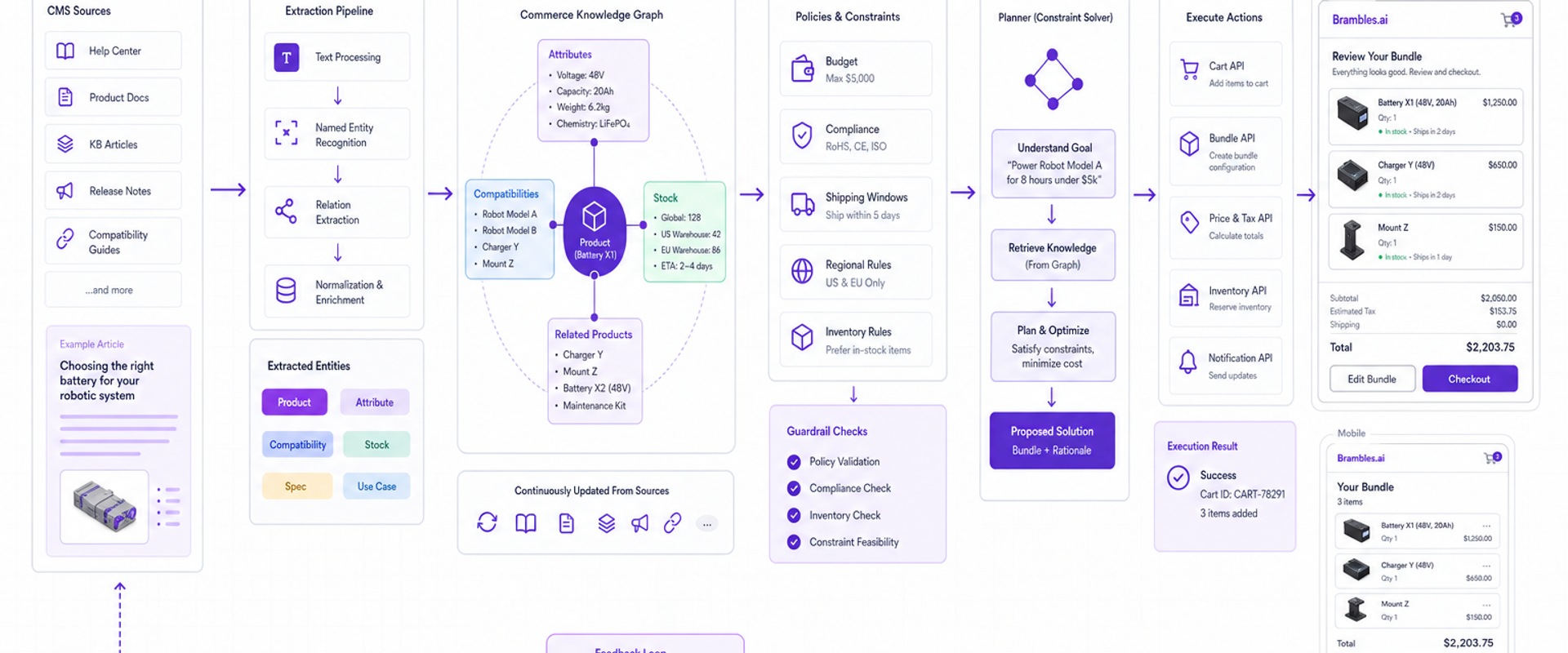
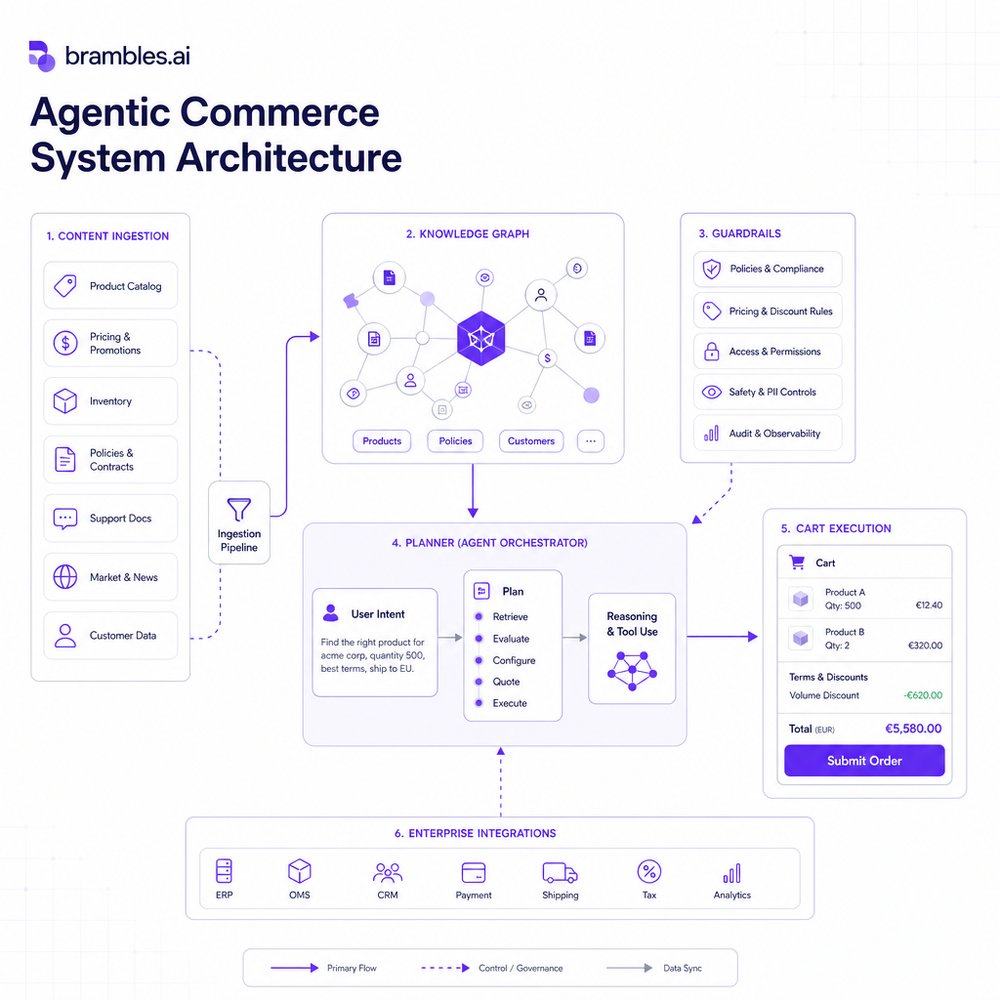
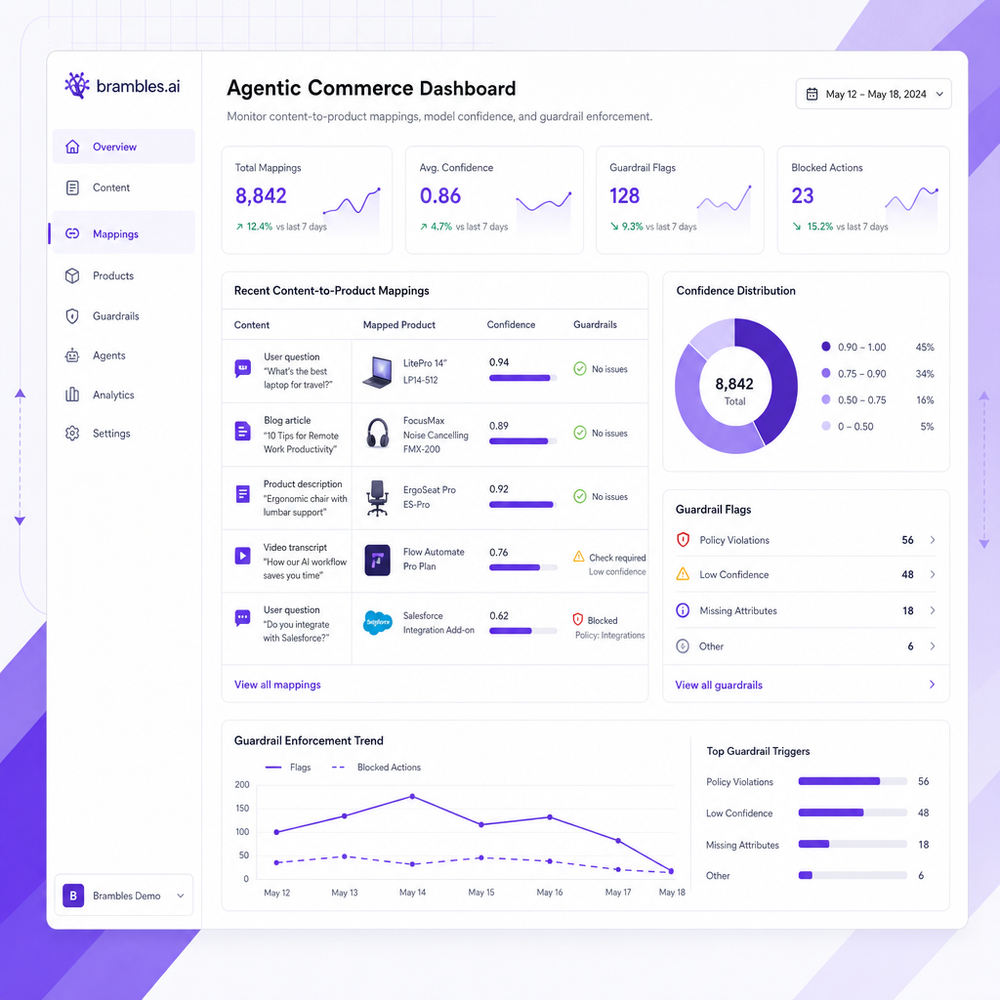
At its core, an agentic system reads your content the way a competent store associate would. It extracts entities (products, attributes, constraints), maps them to a product discovery graph, checks rules (budget ceilings, compliance, inventory), and plans an action: assemble a cart, propose a bundle, or schedule a reorder. The agent doesn’t hallucinate SKUs; it selects from your catalog using deterministic retrieval with confidence thresholds. Guardrails sit on top: price tolerance, allowable brands, warranty requirements, shipping cutoffs, and legal wording. The plan is rendered as a shoppable block inside the article or as a compact assistant at the edge of the page. Users can accept, swap items, or tighten constraints (“under $80,” “nonstick only”). Successful agents are multi-modal in data, not in UI: they read text, tables, and product feeds; they execute with clear buttons. In our home improvement pilot, the agent validated voltage/amp compatibility in the background and prevented 22 misfits per 1,000 sessions—quiet savings that don’t show up in vanity metrics but reduce returns and support tickets.
Implementation Guide
Start with one high-intent content cluster (e.g., “carry-on travel backpacks”) and 20–50 SKUs. 1) Structure your content: add lightweight schema (product mentions, attributes, constraints) and keep specs in consistent tables. 2) Build or extend a product knowledge graph: normalize attributes, encode compatibilities, and flag “must-not-pair” rules. 3) Connect inventory and pricing with freshness SLAs (we use 2–5 minutes for fast-moving categories). 4) Define guardrails: maximum upsell delta (e.g., +15%), substitution rules, safety/compliance constraints, and wording for disclaimers. 5) Decide agent UI: inline shoppable blocks for evergreen guides; compact assistant for Q&A content. 6) QA with adversarial prompts: weird budgets, edge sizes, out-of-stock, and mixed-tax regions. 7) Ship to 10% of eligible traffic, A/B against your best manual merchandising. In a beauty brand pilot, limiting the agent to in-stock shades only reduced “unavailable on add” errors by 93% and bumped AOV 11% via safe bundle swaps. Keep a changelog—what the agent is allowed to do should be explicit.
Measuring ROI and KPIs That Matter
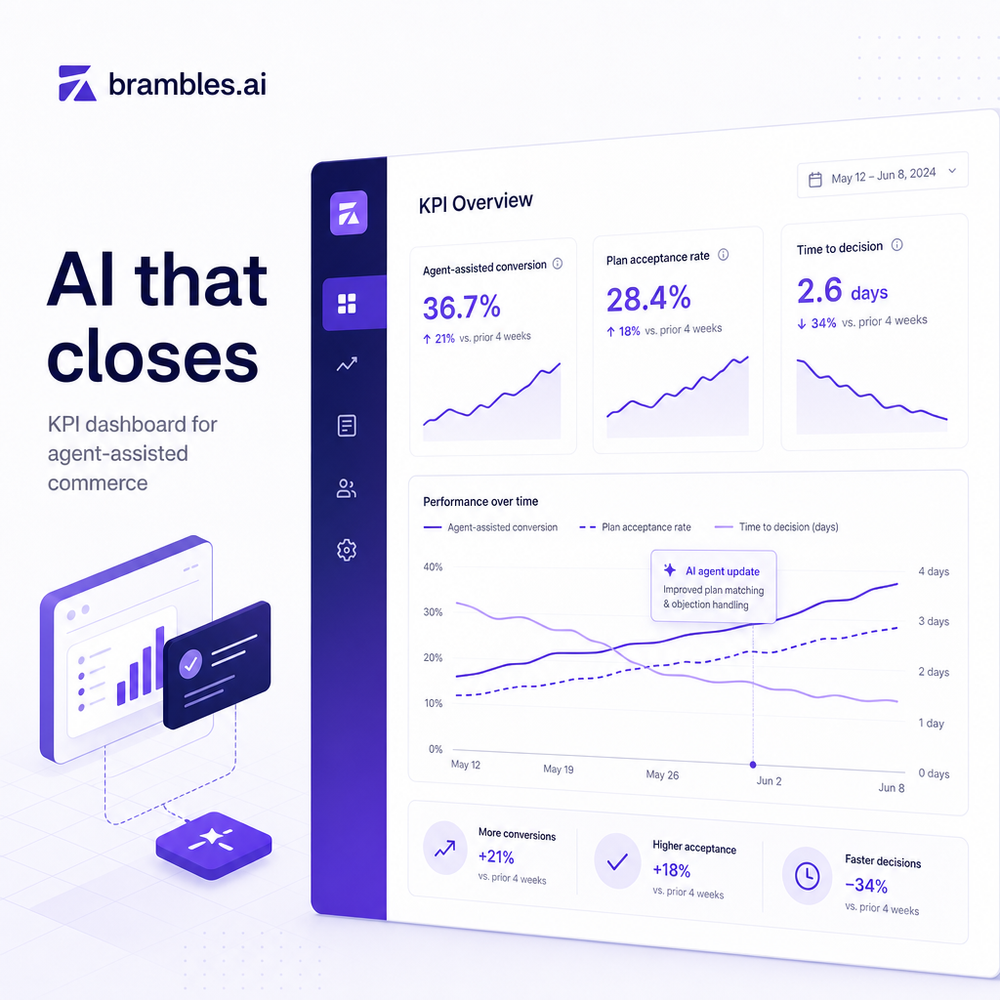
Track what changes because of the agent, not everything on the site. Core metrics: agent-assisted conversion rate optimization (sessions that engaged the agent and purchased ÷ agent-engaged sessions), assisted AOV, direct add-to-cart efficiency (ATC per agent plan shown), return rate deltas, and time-to-decision. Watch “agent involvement rate” (share of eligible sessions that interact) and “plan acceptance rate” (users who accept the initial plan without edits). For attribution, use incremental lift via holdouts and CUPED to reduce variance. Salesforce’s Connected Customer research reinforces that trust drives spending—so also collect in-experience NPS for the agent itself. On a DTC supplements brand, the agent cut time-to-decision from 6:20 to 3:45 while lifting subscribe-and-save opt-ins by 19% after surfacing contraindication checks. Financially, model contribution margin with return risk: CM = (Revenue × Gross Margin) − (Return Probability × Reverse Logistics Cost). If that CM rises with stable CSAT, keep scaling. If conversion lifts but returns spike, your compatibility rules are too loose.
First-Party Data and Trust
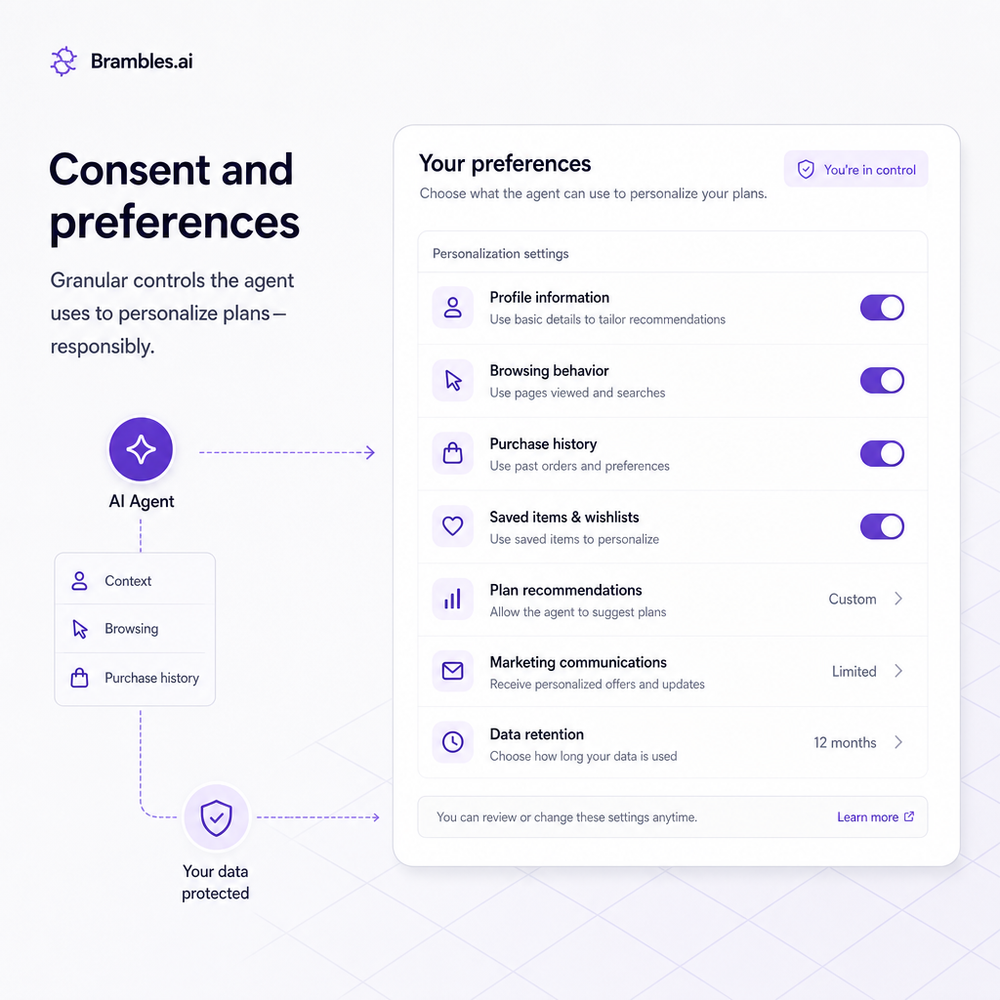
Agents work best when they remember preferences—ethically. Ask for first-party inputs only when they change the outcome: size profiles, budget ceiling, ingredient allergies, voltage region. Store with clear retention windows and edit/delete options. McKinsey’s personalization research shows perceived value is the threshold for data sharing; prove value immediately by showing how the agent uses a field (“We’ll only show induction-safe pans”). Use progressive profiling: don’t ask for shipping data until a plan is accepted. Add visible guardrails in the UI—“won’t exceed your budget,” “only in-stock items”—to build confidence. For regulated categories, surface sources (“compatibility verified from manufacturer specs”). We also log every agent action against a policy registry for auditability; when we exposed a “Why these picks?” link, plan acceptance rose 7% week-over-week. Keep consent granular: content personalization vs. cart planning. Offer a no-tracking mode that still works with on-page context only; it will convert lower, but it builds brand equity.
Common Pitfalls (and How to Avoid Them)
Hallucinated products: prevent by restricting retrieval to catalog IDs with minimum confidence and unit-tested mappings. Over‑upsell: cap price deltas and enforce a cheaper alternative alongside any upgrade. Inventory drift: set freshness SLAs and block stale plans from checkout. Compliance gaps: encode region-specific rules (prop 65, voltage, age gates) in the guardrail layer, not the UI. Ambiguous content: if the article is generic (“best laptops”), the agent should ask 1–2 clarifying questions or provide two plans with labeled tradeoffs. UX bloat: the agent is not a chatroom—offer clear accept/replace actions. Edge cases: handle quantity constraints, backorders, and mixed tax/shipping early. In our appliances marketplace, adding “delivery cutoff in 3 hours” logic stopped 6% of failed same-day promises. Finally, measure model regressions weekly; a silent drop in plan acceptance usually means a product graph update broke attribute synonyms.
Future Outlook: Agents as Merchandisers
The next wave isn’t chat—it’s autonomous merchandising that updates itself. As knowledge graphs get denser and supplier feeds more reliable, agents will continuously tune bundles to hit margin, return risk, and shipping promises, then push those back into content layouts. Expect agents to run constrained experiments inside articles (swap one accessory, hold price constant, observe return deltas). For marketplaces, agents will arbitrate between identical SKUs based on post-purchase outcomes, not just price. And as standards emerge for explainability, we’ll see buying plans annotated with sources, which reduces cognitive load and legal anxiety. My bet: the winners pair strong editorial judgment with disciplined agent guardrails. The agent does the math; editors set the taste and trust bar. If you’re starting now, pick one content cluster, wire an agent to it, and demand lift with stable returns inside 30 days. Then scale.
Related posts
View all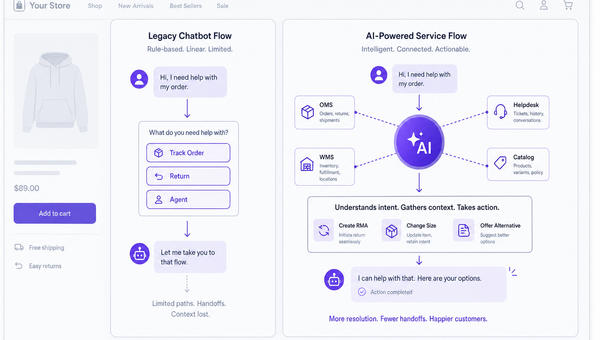
AI Customer Service for Ecommerce: Beyond the Basic Chatbot
Most chatbots deflect. Modern AI resolves orders, returns, and sizing in one chat. See how ecommerce teams implement, measure, and scale AI service that sells.
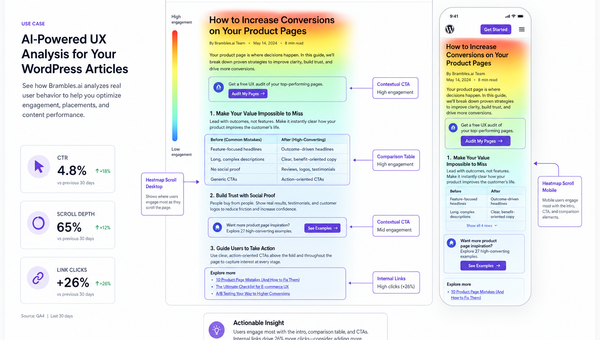
10 Reasons Niche Site Owners Need Brambles.ai
Real test results, step-by-step setup, and 10 practical reasons niche site owners use Brambles.ai to grow traffic, revenue, and trust—without bloated workflows.
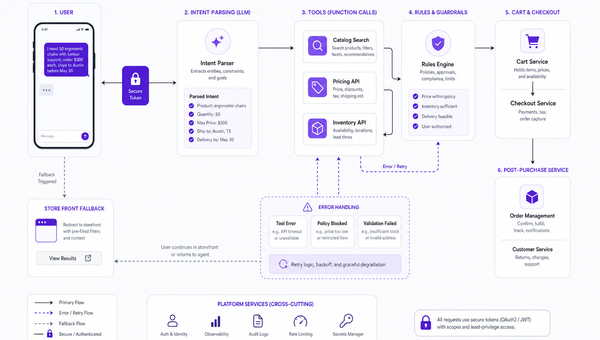
Agentic Commerce vs. Storefronts: A Brambles.ai Playbook
Agentic commerce is reshaping how people buy. See what it means for storefronts, where it wins, and a hands-on Brambles.ai playbook to launch in weeks.
Explore Brambles.ai
Learn more about our AI-powered agentic commerce platform, agentic shopping, and shopping assistance solutions.
Explore More Insights
Discover more articles on AI, automation, and business innovation
View All Articles