The New Monetization Stack: AI, Affiliate, Commerce
Publishers are rebuilding revenue with AI intent mapping, affiliate optimization, and contextual commerce. Here’s the stack, playbook, and KPIs that actually mo
Three weeks after we embedded price-and-stock modules under our top 50 buying guides, earnings per session jumped 31% without adding a single ad unit. The win didn’t come from a new network; it came from intent detection, affiliate link hygiene, and a tighter handoff into contextual commerce. Another test on a 100k-session cooking site replaced generic “Where to Buy” buttons with retailer-specific availability by region; RPM lifted 22% and bounce dropped 12% on mobile. The pattern keeps repeating: when content answers commercial intent through product discovery and the path to purchase is clean, revenue climbs with less friction and fewer pixels. This article lays out the new monetization stack we’ve implemented across publishers: AI to map intent, affiliate revenue to stop leakage, and contextual commerce to convert. Expect a practical build order, dashboards worth watching, and traps to avoid. If you run WordPress, you can ship most of this in a sprint and iterate weekly against revenue per session, not vibes.
What’s broken in publisher monetization
Two leaky pipes dominate: misaligned intent and broken handoffs. Most review pages carry the same call-to-action regardless of reader state. Comparison shopper? They need price history and alternatives. Post-decision buyer? They need fast checkout and accurate stock. Baymard’s research shows 69% of online carts are abandoned, with extra friction and unexpected costs leading the list; pushing users into generic, slow retailer pages magnifies the problem. Meanwhile, affiliate links decay—out-of-stock products, moved SKUs, or multiple parameters that sever attribution. Cookie loss and ITP shrink last-click tracking windows, so commissions evaporate even when you drove the sale. Add performance-killing widgets, cumulative layout shift, and ad clutter, and you’re taxing the very users most likely to convert. The old playbook—maxing out ad slots and sprinkling static links—flatlines quickly. The new stack meets readers where they are, validates data in real time, and instruments every micro-step for incrementality.
How the new stack works: AI, affiliate hygiene, commerce
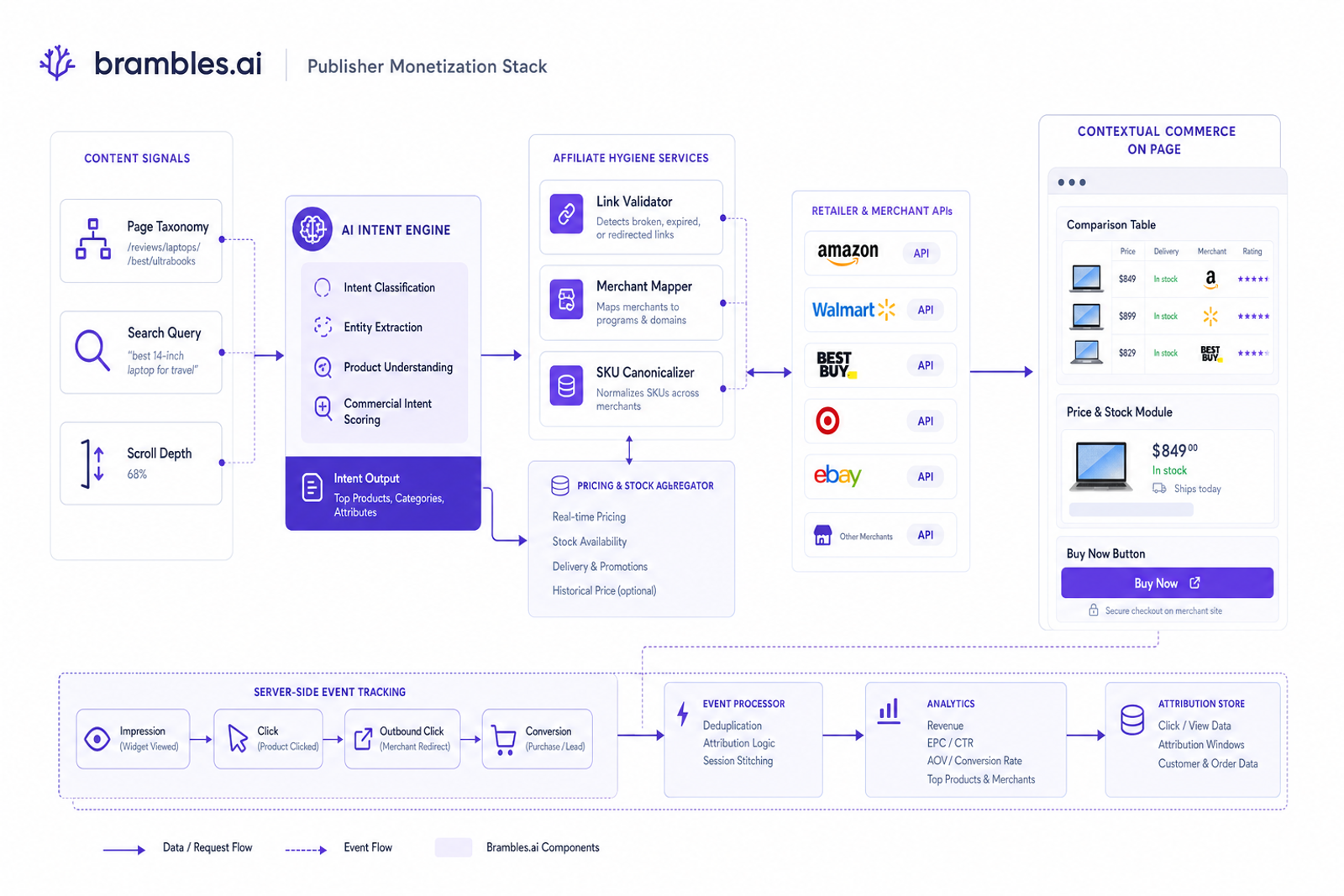
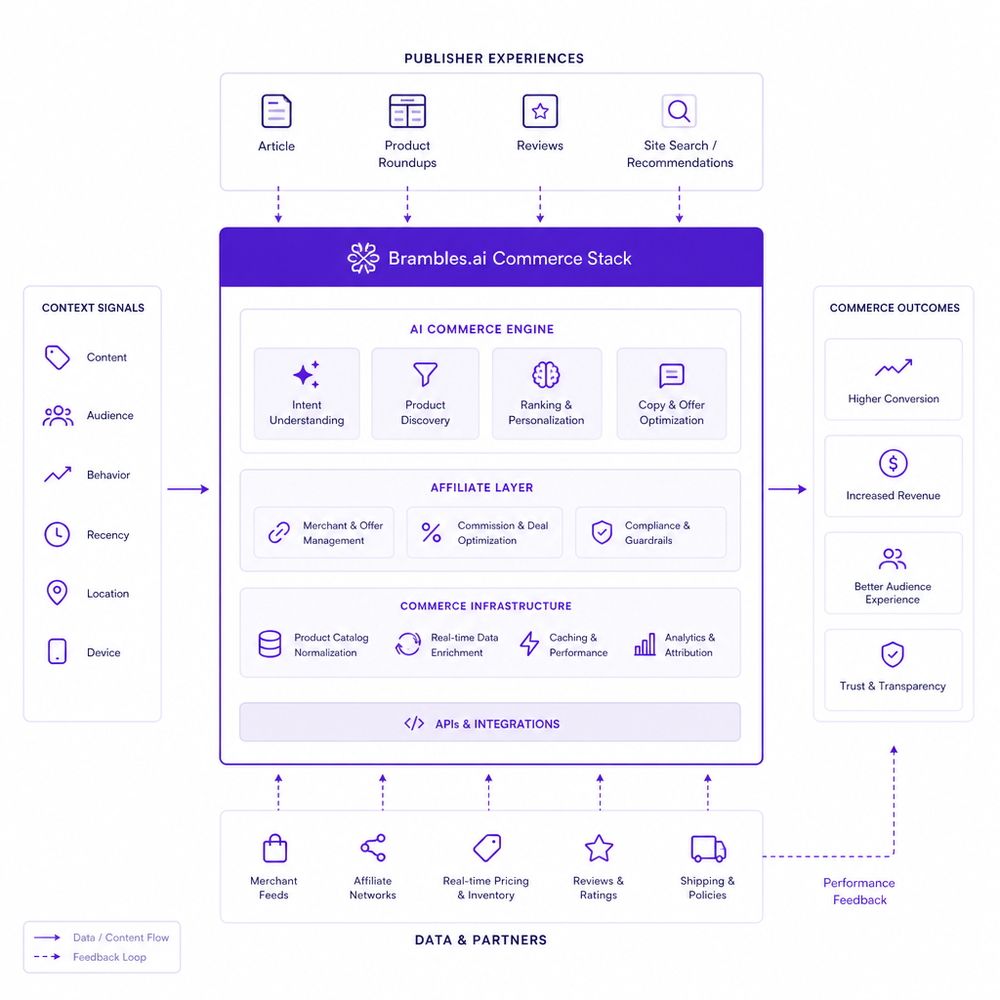
At its core, the stack is a decision system that adapts content and commerce to the reader’s intent and context in milliseconds. AI ranks intent from the page, query, and behavior: research, compare, or buy-now. That signal selects a component: comparison table, price tracker, or checkout-focused module. Affiliate hygiene sits beneath, normalizing retailers, deduping merchant IDs, and validating deep links. A contextual commerce layer renders shoppable blocks—real-time price and stock, retailer badges, shipping speed, and alternatives when inventory is limited—using retailer APIs, data feeds, or aggregator services. Server-side tracking and first-party events preserve attribution despite browser changes. On WordPress, this can be shipped as a plugin with shortcodes and a schema-driven config, selecting templates by taxonomy (e.g., “best-of,” “vs,” “deal post”). One of our clients ran a 50/50 split on mobile: canonical links vs. intent-aware blocks. The intent-aware arm drove a 28% click-to-merchant increase and 17% higher net commission after accounting for clawbacks.
Implementation guide: ship in a sprint, iterate weekly
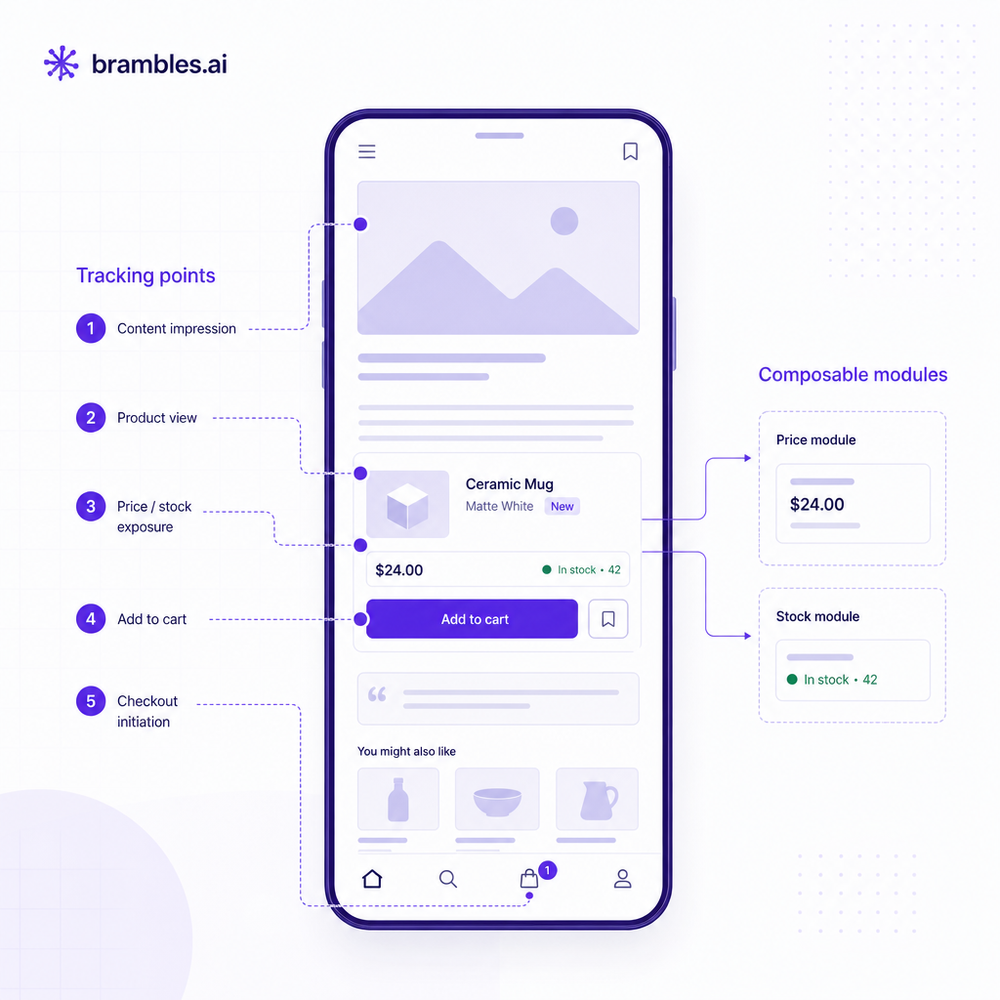
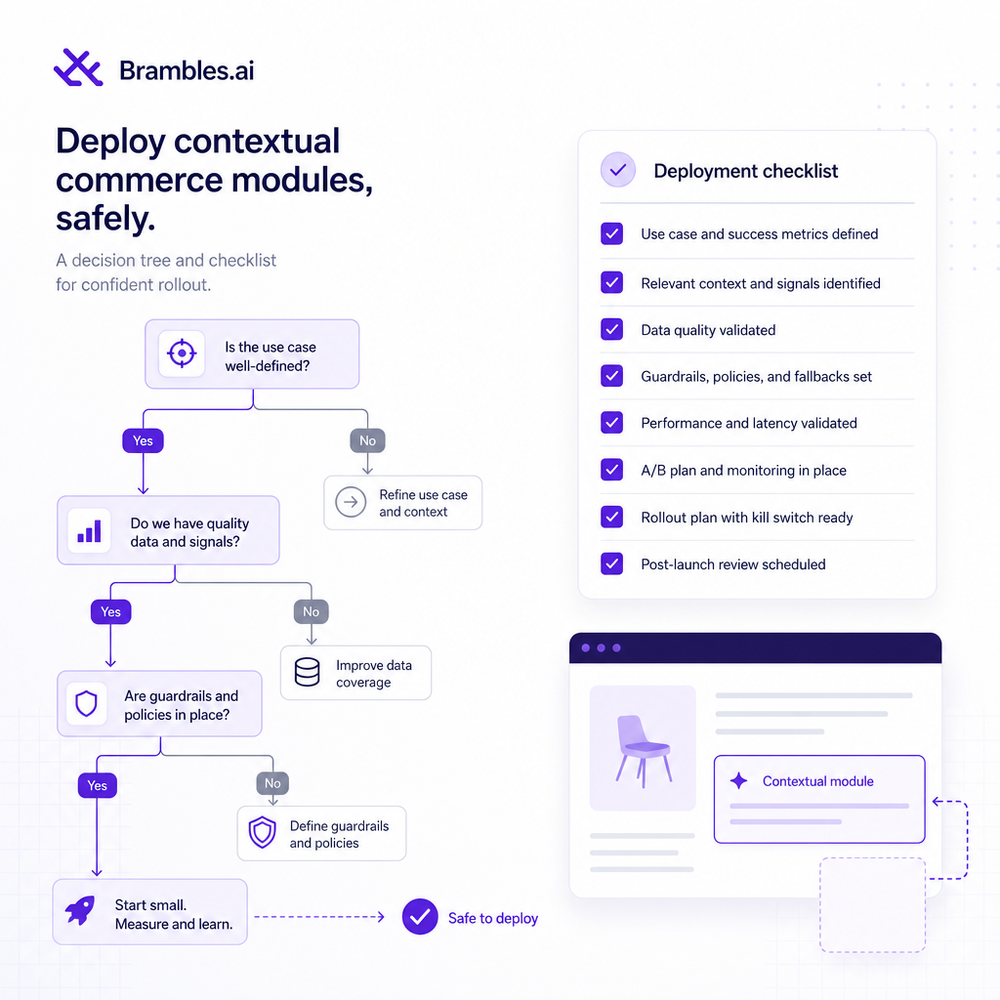
Audit and map intent. Tag your top 200 pages by commercial depth: discovery, comparison, purchase. Pull query data and on-site behavior (scroll, time to first interaction). Define components. For comparison pages, render sortable tables with 3–5 core specs and price deltas; for purchase pages, use compact price/stock blocks with retailer-specific shipping times. Wire up affiliate hygiene. Implement link validation nightly, resolve merchant IDs, and strip known broken parameters. Add a fallback retailer per SKU to avoid dead ends. Connect pricing and stock. Start with one strong retailer API and one aggregator; cache responses for 15–30 minutes. Instrument events. Fire first-party events server-side for impression, click-out, add-to-cart (when available), and postback. On WordPress, deploy via a configurable module and shortcodes; editors choose the component, the stack handles data. Launch a controlled A/B test, cap at 30–40% traffic until you validate no SEO harm and performance budget holds (Core Web Vitals).
Measuring ROI and the only KPIs that matter
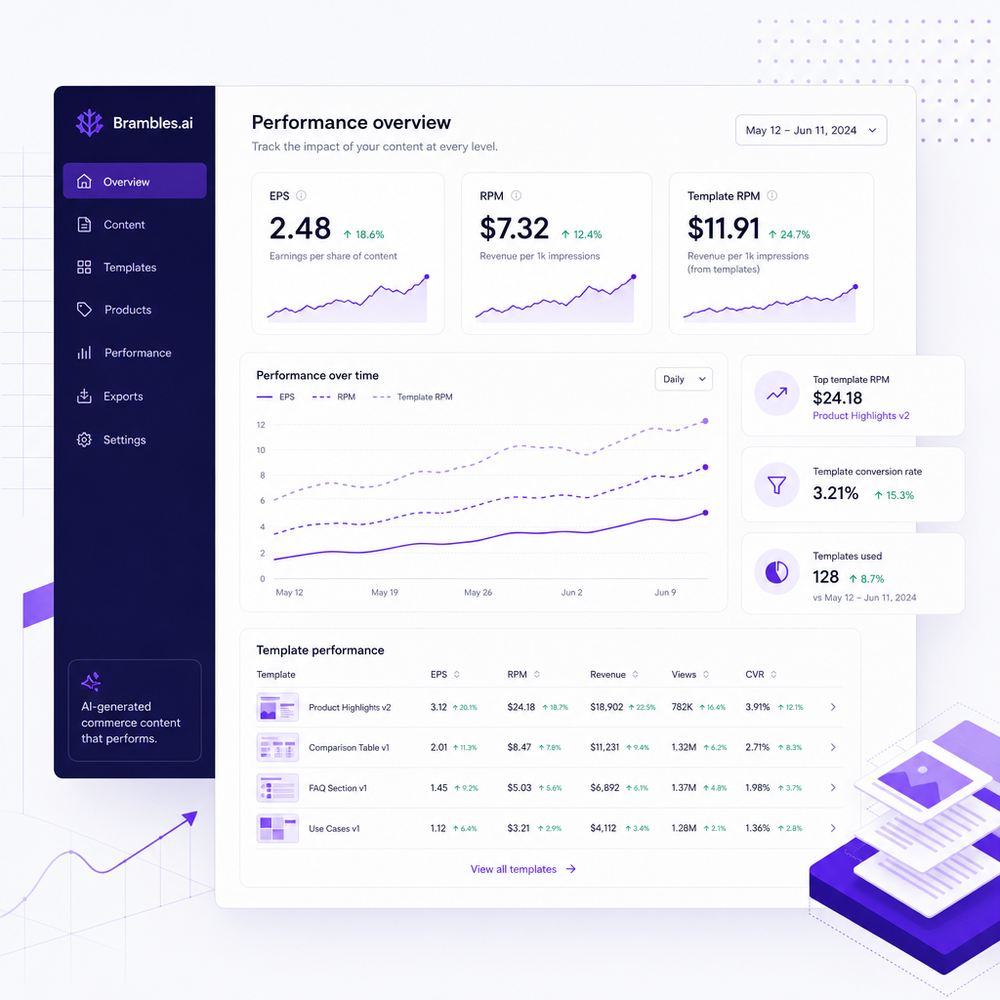
Track earnings per session (EPS) and revenue per mille (RPM) as the north stars. EPS = net commerce and affiliate revenue divided by sessions. RPM = net revenue per 1000 session pageviews. Layer diagnostic metrics beneath: click-out rate, retailer attach rate, average commission rate, approval rate, and clawback rate. Build a rolling 28-day baseline and run controlled experiments. For incrementality, compare against a holdout with canonical links only; also compare by device and template. One publisher we worked with saw EPS lift 19% overall, but the real story was a 41% lift on comparison pages and a flat result on news posts—use the granularity to reallocate effort. Watch speed. Google UX Research shows even sub-second slowdowns can dent conversions; keep all commerce modules under 50KB GZIP, lazy-load third-party scripts, and defer nonessential assets. Use server-side tracking to sidestep browser caps and reconcile daily with network reports to catch attribution gaps.
First-party data, consent, and trust-by-design
Commerce only compounds if readers trust you. Salesforce’s Connected Customer research reports that nearly nine in ten consumers say trust influences purchasing with a brand or publisher. Build it into the flow. Declare affiliate relationships in-line. Offer a price-drop alert or restock notification with explicit, revocable consent; this is real zero-party data that improves relevance without stalking. Keep personalization on-page and contextual unless a user opts into account-level tracking. Use server-side event pipelines that honor consent and minimize vendor sprawl. We’ve seen a 14% improvement in approval rates after adding transparent disclosures and clarifying shipping windows next to retailer logos. For EU traffic, ensure modules adapt to consent mode and degrade to non-tracking handoffs if needed. Maintain editorial firebreaks: commerce editors maintain offers; core editors keep verdicts clean. When readers feel the distinction, click-out quality and long-term EPS are healthier.
Common pitfalls and how to dodge them
Over-automation ships the wrong module too often. Keep human override fields in your CMS for edge cases and allow editors to pin a retailer or hide a block. Link rot erodes revenue silently; schedule automated link checks and report broken deep links by page so editors fix the highest-earning content first. Regional mismatch is common—surface retailer availability by country or ZIP. Don’t bury users in choices: two to three retailer options beat nine; Baymard shows cognitive overload harms conversion. Performance budgets matter: a heavy table that janks the page will lose more revenue than it adds. Finally, reconcile. Many teams celebrate click-outs while commissions shrink from clawbacks; implement daily network reconciliation and a weekly variance report. Our biggest “aha”: a 42% EPS lift on an apparel site vanished when a single merchant changed attribution parameters; a link hygiene monitor caught it within 36 hours the next time.
Future outlook: on-page checkout and smarter signals
Two shifts are underway. First, on-page or near-page checkout will compress the handoff. Retailer programs and wallets are making it safer to prefill carts or trigger a one-click transfer with preserved attribution; when executed with consent, it slashes the drop-off from tab-juggling. Second, signal quality is improving even as third-party cookies fade. Lightweight, on-device models can score intent from content and behavior without shipping data off-site, while clean-room partnerships enable aggregated performance views. McKinsey estimates personalized experiences deliver 10–15% revenue lifts on average; the opportunity here is to apply that lift to high-intent pages, not everything. Expect richer structured data, more durable link contracts, and better fraud controls. My prediction: publishers that treat commerce as a product with SLAs—performance budgets, link uptime, and inventory freshness—will expand EPS 20–40% over the next year, even as display CPMs stay choppy.
Practical checklist you can run this week
- Tag 50 highest-traffic pages by intent and template. - Add a compact price/stock module to purchase-intent pages and a 5-row comparison to “best-of.” - Validate top 500 affiliate links; fix broken parameters and set a default fallback retailer. - Connect one retailer API for real-time stock and cache results. - Establish server-side events for impression and click-outs, and reconcile with network reports nightly. - Run a 30% traffic test for two weeks; watch EPS, click-out rate, approval rate, and Core Web Vitals. - Publish a short, plain-language affiliate disclosure and confirm consent flows. - On WordPress, package modules into shortcodes so editors can switch components without tickets. Do these eight, and you’ll have a lean version of the new stack live, with enough telemetry to iterate toward durable wins.
Related posts
View all
Shoppable Video Discovery: Conversions & Engagement Up
Tests show shoppable video discovery lifts conversion 18–35% and doubles watch time. See the UX patterns, KPIs, and how to deploy it quickly with Brambles.ai.
Multi‑Network Affiliate Optimization: Auto Best Rate
Route clicks across affiliate networks automatically to secure the highest commission, lift EPC, and preserve UX—practical tactics, data, and implementation ste
Brambles.ai: Personalization With Privacy in AI Shopping
Learn how Brambles.ai pairs high-converting personalization with strict privacy: first-party signals, consented chat data, and transparent UX customers trust.
Explore Brambles.ai
Learn more about our AI-powered agentic commerce platform, agentic shopping, and shopping assistance solutions.
Explore More Insights
Discover more articles on AI, automation, and business innovation
View All Articles