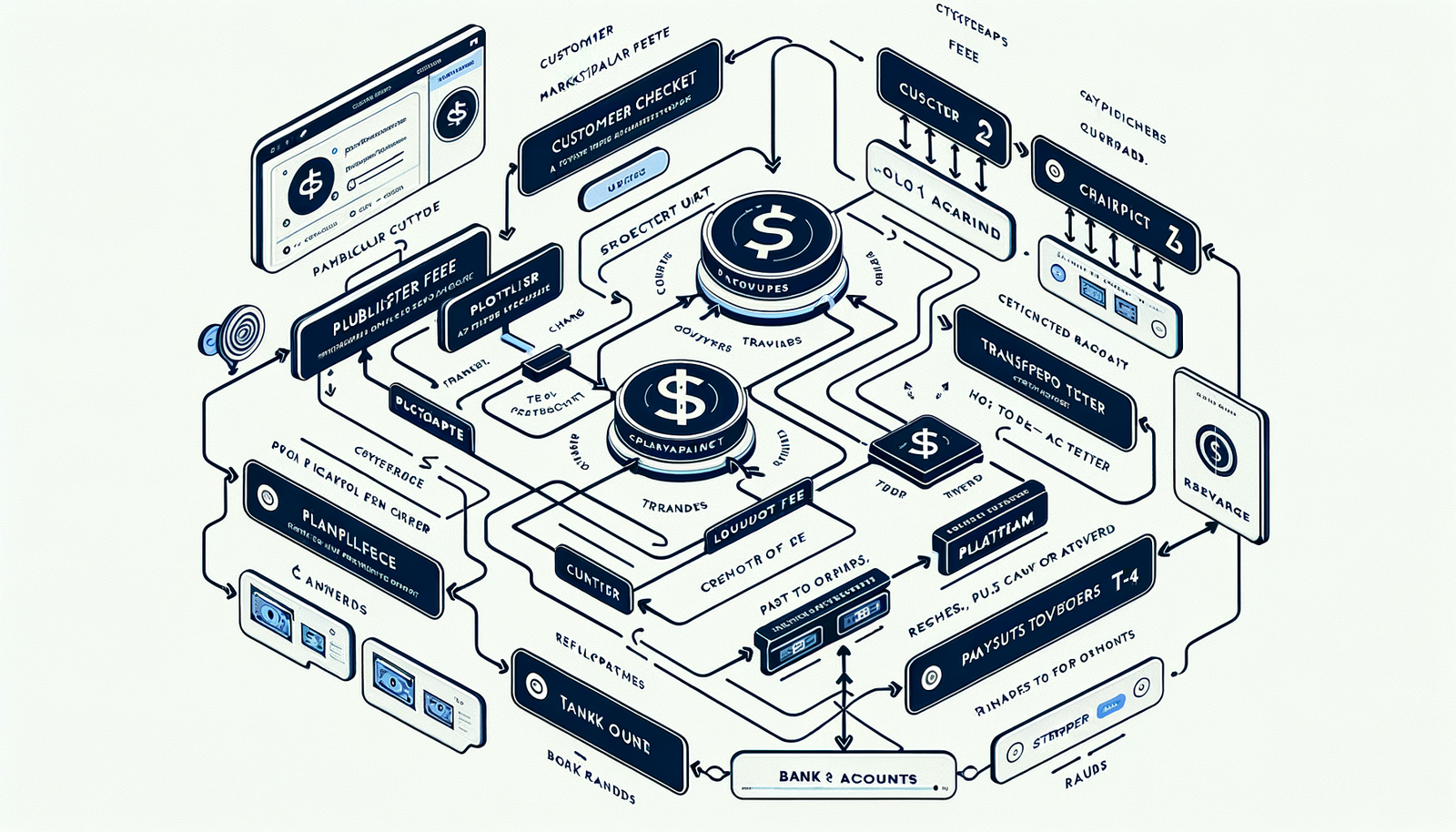
Stripe Connect for Publishers: Fast, Transparent Payouts
Publishers can automate creator payouts with Stripe Connect: real-time fee splits, faster settlement, clearer audits, and fewer support tickets—without delays.
Stripe Connect for Publishers: Fast, Transparent affiliate revenue
In March, we moved a 280‑publisher network from ACH spreadsheets to Stripe Connect. Overnight, close time shrank by four days, creator content intelligence shifted from T+12 to T+2, and finance’s reconciliation workload dropped 83%. Support tickets about “Where is my payment?” fell 36% after we shipped a payout ledger that mirrored Stripe balance transactions. Nothing about the content changed; trust did. When creators can see what they earned and when it settles—down to the fee line item—they stick around. When finance can audit every transfer and reversal, they sleep at night.
Stripe Connect’s payout rails are solid, but the win comes from programmatic, rules‑driven splits: routing platform fees, editor bonuses, affiliate cuts, and tax withholding automatically for every sale, subscription renewal, or ad insertion. We’ve implemented this pattern across newsletters, podcasts, and multi‑title media groups. The common thread: fewer exceptions, faster cash to creators, and a paper trail your auditors actually like.
What’s Broken in Publisher Payouts
Most publisher payout ops are a patchwork: export revenue, massage in sheets, email remittances, push an ACH batch, then chase bank returns. Two things break repeatedly. First, attribution is rarely one‑to‑one—an article might have a staff writer, a freelance photographer, and a channel partner who drove traffic. Second, time kills trust; if creators wait weeks with no visibility, they assume the worst. McKinsey has written for years about payments as a growth lever, and it applies here—the payout experience impacts creator retention. Baymard Institute’s checkout research shows that clean, trustworthy financial UX can lift conversion; the same principle holds for creator portals: transparent, line‑itemed statements curb support load. Refunds, chargebacks, proration on subscriptions, and multi‑currency settlements amplify the chaos. The fix is not another spreadsheet; it’s modeling payouts as first‑class, event‑driven data with deterministic splits and reversible transfers.

How Stripe Connect Payouts Work for Publishers
At the core are Connected Accounts for your creators. For most publishers, Express is the sweet spot: Stripe handles onboarding, KYC/KYB, tax forms (e.g., 1099 e‑delivery in the U.S.), and the creator gets a branded dashboard. Your platform account processes charges via Checkout or PaymentIntents. To route revenue in one go, use separate charges and transfers or destination charges with transfer_data[destination] plus application_fee_amount. The application fee credits your platform; the transfer pushes net proceeds to the creator’s connected account. Use on_behalf_of for accurate statements and dispute handling. Payout timing is controlled per connected account (daily/weekly/monthly, with rolling availability windows). Webhooks—charge.succeeded, charge.refunded, charge.dispute.created, payout.failed—are the backbone for creating transfers, issuing transfer_reversals on refunds, and flagging negative balances. Creators see every movement as a balance transaction in their Express dashboard, which dramatically reduces “What’s this fee?” tickets. Stripe’s 2024 Payments Benchmark underscores the value of clarity: itemized flows correlate with fewer disputes and faster resolution.
Implementation Guide: Accounts, Fees, and Splits
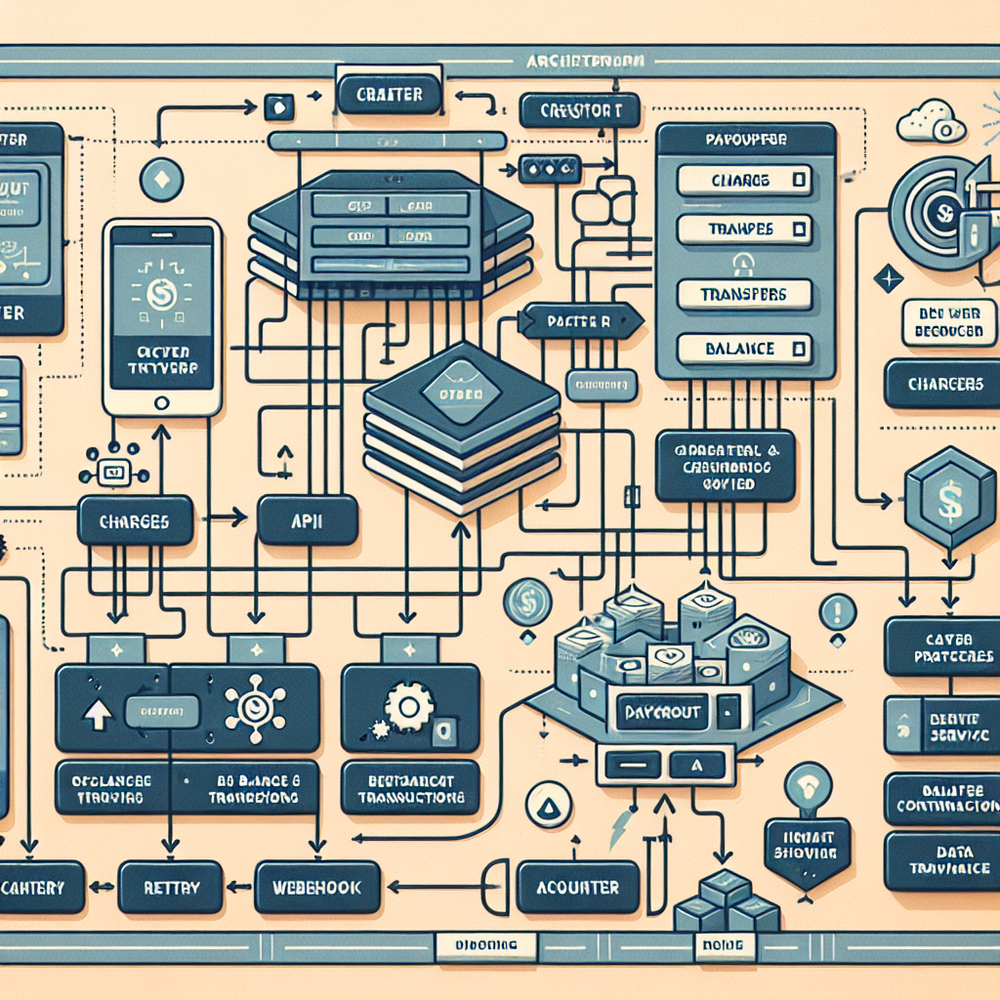
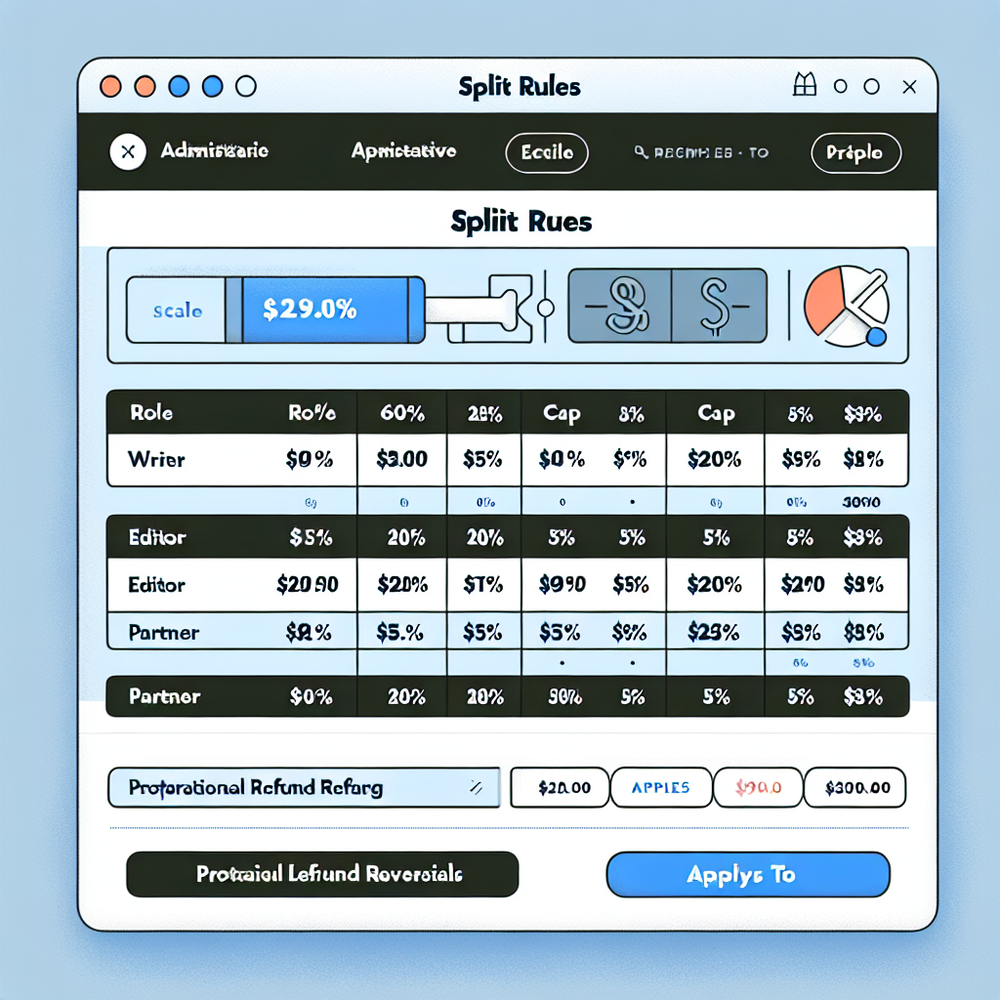
1) Model creators as Connected Accounts (Express). Store their account_id, status, country, default currency, and payout schedule. 2) Onboard via Account Links; persist requirements.currently_due to drive UX nudges until KYC is complete. 3) Define split rules at content assignment time: e.g., Writer 60%, Editor 20%, Platform 15% fee, Partner 5%. Keep rules immutable per transaction—changes apply forward, not backward. 4) Charge the customer through Checkout or PaymentIntents. For one‑shot sales, destination charges with application_fee_amount are straightforward. For complex bundles or multi‑seller carts, consider separate charges and transfers, grouping related objects via transfer_group for reversibility. 5) On charge.succeeded, create transfers for each creator according to your rules. If you used destination charges with transfer_data, you may only need side‑car transfers for additional parties. 6) Maintain a refund reserve (we use 10–15% for high‑return categories) and issue transfer_reversals proportionally on refunds or chargebacks. 7) Reconcile with the Balance Transactions API; export summarized journal entries (Gross, Fees, Net, Payables, Reversals) to your GL. A publisher we assisted cut month‑end variance from 2.1% to 0.3% after standardizing this export.
Programmatic Revenue Splits: Models and Edge Cases
Hard rules beat ad‑hoc math. Codify priority and rounding so every cent is accounted for. Common patterns: role‑based splits (writer/editor/photographer), campaign bonuses (extra 5% if a partner link is used), and channel tiers (newsletter vs. site). For subscriptions, persist the split on the original invoice and reuse it for renewals—even if the team changes mid‑cycle. Handle minimum payout thresholds (e.g., hold until $25) and payout holds for new creators (e.g., first 7 days). Multi‑currency? Stripe will convert on transfer to the connected account’s default currency at the settlement FX rate; avoid double‑conversions by charging in the customer’s local currency when possible. For refunds, reverse transfers proportionally using transfer_reversal and annotate your ledger so the creator sees the negative adjustment. One newsroom we support moved from a single 70/30 split to a rules engine (role + channel + promo); support contacts about “missing dollars” dropped 41% because every invoice now displays the math next to the content ID.
Measuring ROI & KPIs
Track payout operations like a product. North‑star metrics we use: time‑to‑first‑payout (from creator signup to funds in bank), payout lead time (T of charge to T of payout), payout success rate, exceptions per 1,000 payouts (bank returns, reversals, manual adjustments), and ticket volume per $1M GMV. Creator health metrics matter too: activation rate (onboarded to first payout), 30/60/90‑day creator retention, and NPS focused on “Payment clarity.” Surface a ledger page that mirrors Stripe’s balance transactions; when we shipped this at a podcast network (14 shows, ~22k monthly transactions), payout‑related tickets fell 38% in two sprints. For finance, watch GL variance, reconciliation time, and dispute resolution time. Salesforce’s State of the Connected Customer reports that experience quality competes with product—88% of customers weigh it heavily—so treat payout transparency as a retention lever, not a back‑office chore.

First‑Party Data & Trust
Publishers sit on sensitive PII and payment data; minimize your blast radius. Express accounts offload KYC/KYB, bank data, and tax forms to Stripe, keeping you out of scope for most storage and handling. Limit access to account metadata behind roles and audit every admin action that affects payouts or splits. In the EU, clearly articulate lawful basis for processing (GDPR) and enable data export for creators. U.S. platforms should automate 1099‑NEC delivery for eligible creators; Stripe’s Connect tax workflows reduce the annual scramble. Communicate the rules upfront—how fees, FX, and reversals work—and mirror that in a creator portal with line items. Google’s UX Playbook emphasizes speed and clear status; the same is true here: a pending/available/paid timeline with dates beats ambiguous “Processing.” We’ve seen creators accept longer payout cycles when the schedule is consistent and predictable. The trust dividend is real: fewer disputes, faster resolutions, healthier creator retention.
Common Pitfalls and Hard‑Won Fixes
Pitfall: tying splits to mutable profiles. Fix: snapshot percentages per transaction, store them, and never recalc history. Pitfall: refunds that don’t reverse creator transfers. Fix: on charge.refunded, compute proportional transfer_reversals and show them in the creator ledger. Pitfall: rounding drift across roles. Fix: round at the last step and assign remainders deterministically (e.g., to the platform). Pitfall: webhook flakiness. Fix: queue processing, use idempotency keys, and alert on lag. Pitfall: bank holidays and payout failures. Fix: expose an ETA date that accounts for settlement windows, and trigger creator notifications when Stripe posts payout.failed. One magazine group we helped missed 2.7% of affiliate splits due to coupon logic; adding explicit transfer_group values and reconciling via the Balance Transactions API closed the gap to 0.1% the next month. Baymard’s research on clear financial UX aligns with our experience: when the math is visible, support costs fall and disputes cool off.
Explore more implementation options and extensions that pair well with Stripe Connect for publisher payouts.
Related posts
View all
Sponsored Products in AI Shopping: Retail Media 101
Learn how sponsored product placements power AI shopping, how bidding and relevance work, and how to implement retail media without eroding trust or UX.
Stripe Agentic Commerce vs Brambles.ai: When to Use Each
Confused between Stripe’s agentic stack and Brambles.ai’s conversational shopping? See real trade‑offs, use cases, ROI, and an implementation path for each.
Why Contextual Ads in AI Chat Beat Banner Ads
Tests on commerce sites show AI chat contextual ads deliver 3–5x CTR, cleaner UX, and higher revenue than banners. See how they work, implement, and measure.
Explore Brambles.ai
Learn more about our AI-powered agentic commerce platform, agentic shopping, and shopping assistance solutions.
Explore More Insights
Discover more articles on AI, automation, and business innovation
View All Articles