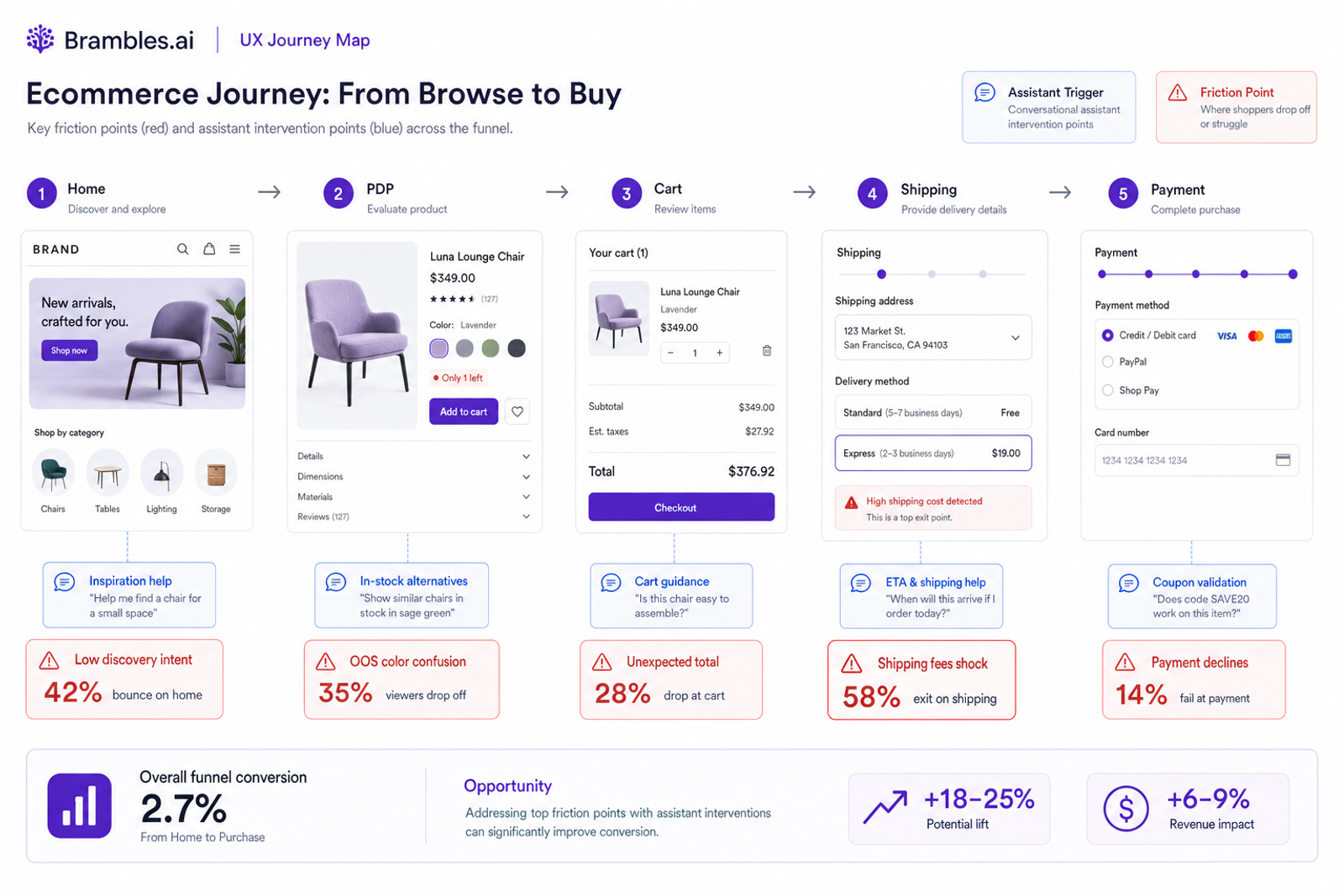
Reduce Abandonment with Conversational Commerce Flows
Practical playbook to cut drop‑offs using guided chat flows, shoppable answers, and first‑party data—plus how Brambles.ai implements it in minutes. Fast.
How to Reduce Abandonment with Conversational Commerce Flows
Three weeks after launching a conversational checkout assistant for a home goods retailer (3.1M monthly visits), we watched cart abandonment drop 27% on mobile. Not from a banner or a coupon. From precise, shoppable answers right when friction spiked—sizing, delivery timing, and whether the promo stacked with bundles. Average time-to-checkout fell by 42 seconds, and AOV nudged up 9% because the assistant recommended in‑stock alternates when a color was out.
A different story, same pattern: a DTC electronics shop used conversation-triggered price‑match clarification at payment. Support tickets around “extra fees” dropped 31%, and checkout completion improved 19% in that cohort. Conversation didn’t replace the funnel—it repaired it in real time.
Quick Answer
You reduce abandonment by placing guided, shoppable conversations exactly where customers hesitate—product discovery, delivery expectations, and payment confidence. Use flows that detect intent (e.g., “Will this arrive by Friday?”), surface in‑stock options, compute ETA and total cost, and let users add to cart or pay without leaving the chat. Measure assisted conversions, time‑to‑checkout, and resolution rate. Brambles.ai streamlines this with its Commerce Module and WordPress plugin, so you can deploy targeted flows in days, not months.
What’s Broken: Why Shoppers Bail Before Buying
Abandonment spikes where confidence dips: shipping cost surprises, stock uncertainty, and decision overload. Baymard Institute’s long‑running benchmark shows average cart abandonment above 69% across industries; unexpected costs and a complicated checkout are persistent culprits (Baymard).
Mobile makes it worse. Thumb‑unfriendly forms and micro‑delays kill momentum. Think with Google has repeatedly linked slow loads to higher bounce; even a one‑second delay can shift perceived trust. In checkout, that trust loss manifests as “I’ll come back later,” which rarely happens.
Content sites face a parallel leak: readers who want product clarity but won’t click out to a store until questions are answered. A conversational layer on reviews and guides captures that demand—and monetizes it—without forcing a context switch.
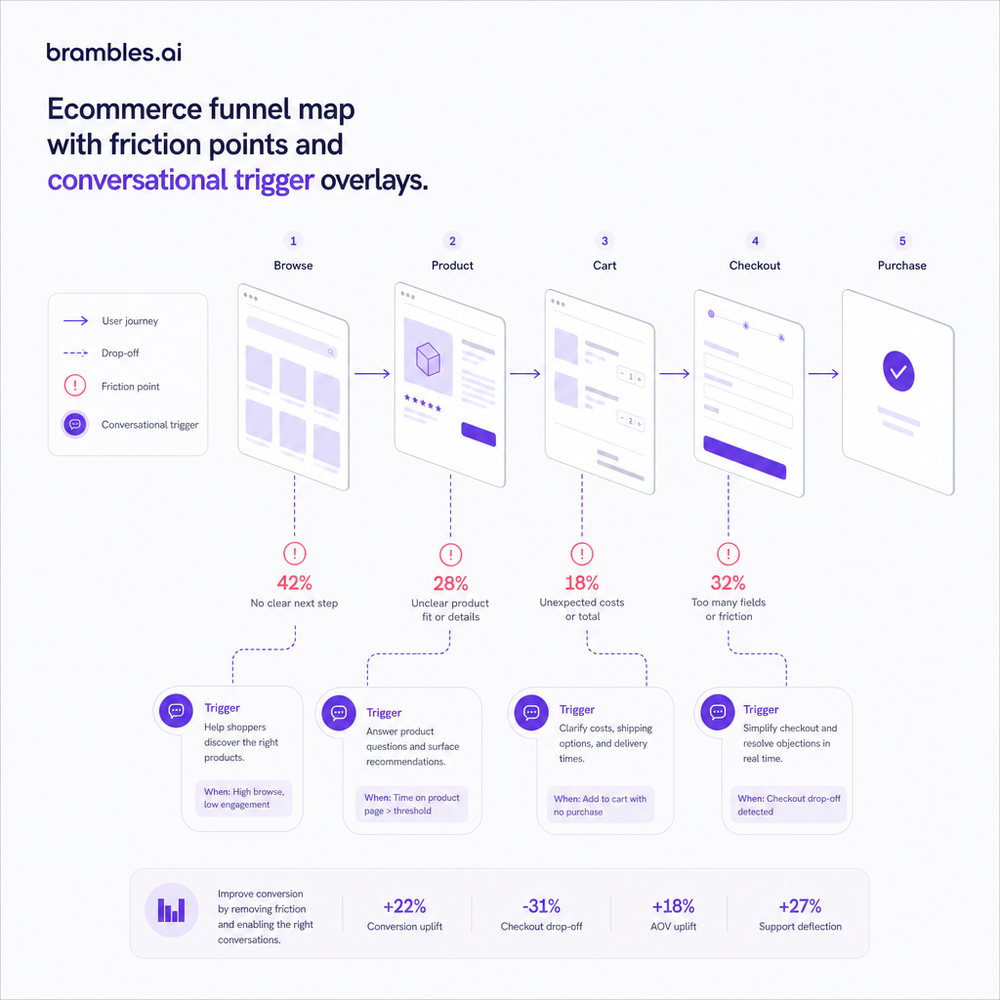
How Conversational Commerce Flows Actually Work
Effective flows start with intent detection, not scripts. When a shopper asks about delivery dates, the assistant queries inventory and shipping SLAs, returns an ETA, and offers in‑stock alternatives without dead‑ending. When a size is out, it proposes nearby fits and a waitlist with an incentive tied to first‑party consent.
The core building blocks are predictable: trigger (behavioral or UI), NLU intent, business rules, real‑time data calls (inventory, promos, tax), shoppable answer with clear actions (Add to Cart, Save, Compare), and a handoff to checkout or an agent. The magic is in latency and relevance—sub‑second answers, zero-copyable fluff, and transparent totals.
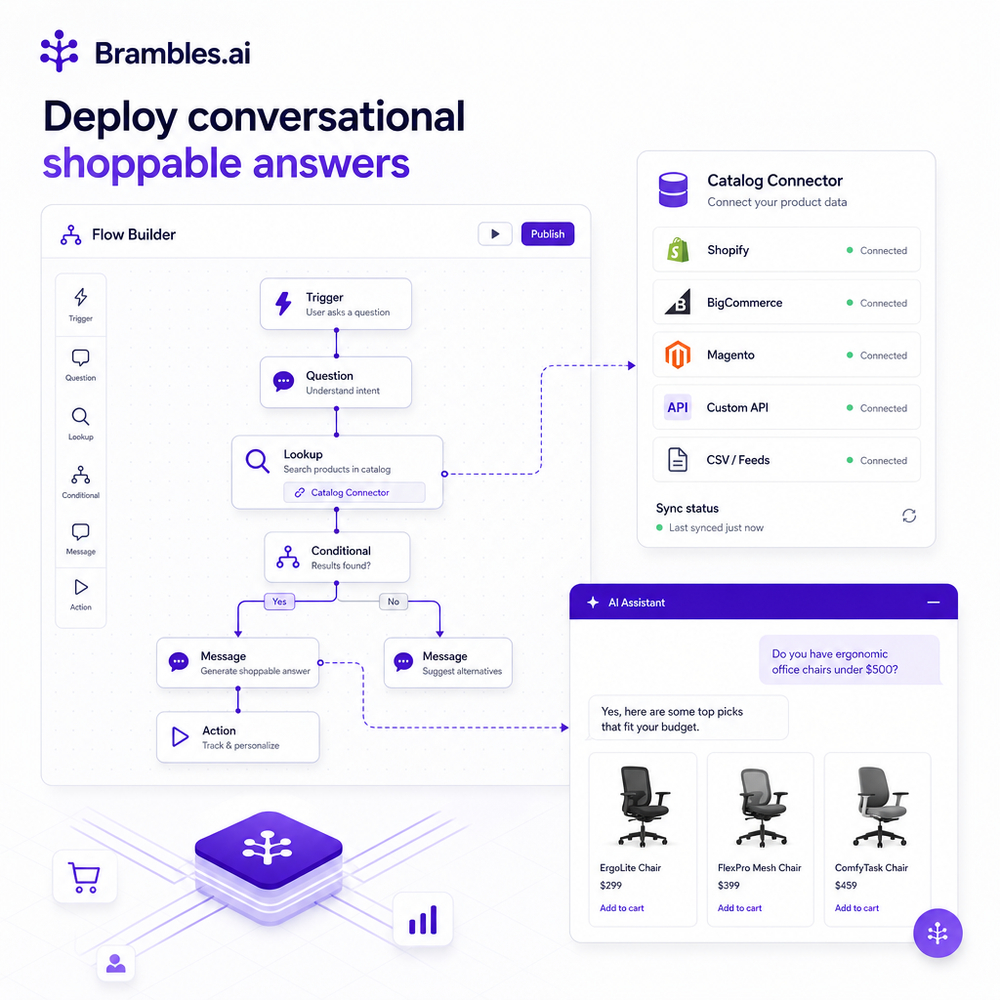
Brambles.ai’s Commerce Module plugs into your catalog and cart to power those shoppable answers—think real‑time variants, bundle logic, and promotions—while the brand assistant flow keeps tone and guardrails consistent across PDP, cart, and checkout. For content sites, the publisher monetization flow turns product questions on articles into trackable, shoppable moments with proper attribution.
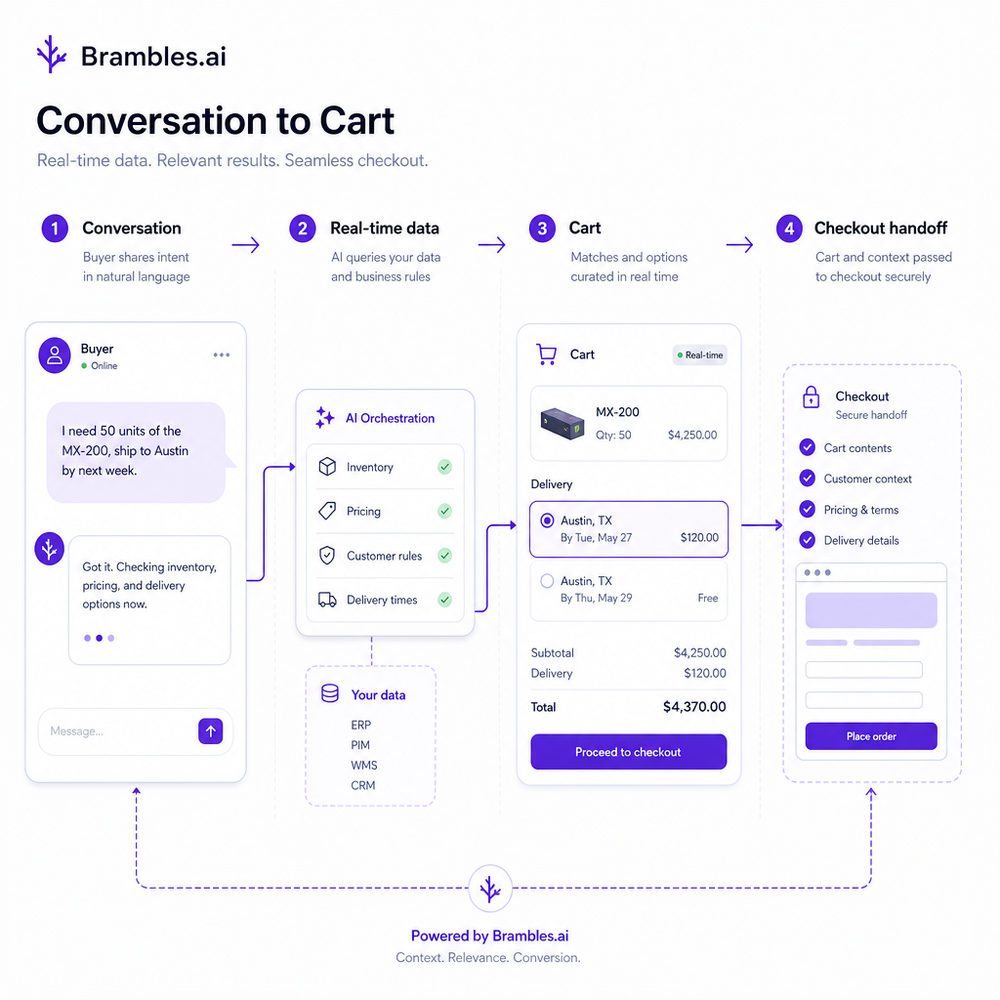
Implementation Guide with Brambles.ai (Step‑by‑Step)
Aim for three high‑leverage flows first. You want speed to value, not a chatbot that tries to do everything on day one.
Step 1 — Pinpoint your highest‑friction intents. Use session replays, exit surveys, and checkout logs to find: delivery uncertainty, variant confusion, and coupon validity. Map each to a single‑screen shoppable answer with two buttons max.
Step 2 — Connect the catalog and cart. In Brambles.ai, the Commerce Module ingests products, variants, inventory, and promotions. Define bundles, substitution rules, and shipping SLAs. If you run WordPress/WooCommerce, the WordPress plugin auto‑wires most data fields.
Step 3 — Place smart triggers. Examples: show “Check ETA” on PDP when zip code is known; intercept in cart when a coupon fails; prompt in checkout if a delivery window isn’t confirmed. Keep copy short and action‑oriented.
Step 4 — Author shoppable answers. Use concise product cards with price, availability, ETA, and one CTA: Add to Cart or Replace Item. Include a secondary “Compare” that opens a side‑by‑side view—don’t force a page reload.
Step 5 — Train core FAQs and policies. Shipping cutoffs, returns, price match, warranties. Pull from your CMS so legal text stays canonical. Add escalation for edge cases to your support queue.
Step 6 — QA and A/B. Ship to 10–20% of traffic. Track assisted conversion, time‑to‑checkout, and opt‑in to first‑party data. Iterate weekly. A mid‑market fashion brand we supported saw a 42% lift in assisted conversions after swapping generic size charts for fit‑confidence prompts within the assistant.
Publisher checklist (monetization): enable product lookups on review pages, attach affiliate IDs in the flow, and store user preferences (brands, sizes) with consent so repeat readers skip re‑entry. One publisher partner increased commerce RPM by 18% after adding shoppable summaries to their top five buying guides.
Measuring ROI & KPIs That Actually Matter
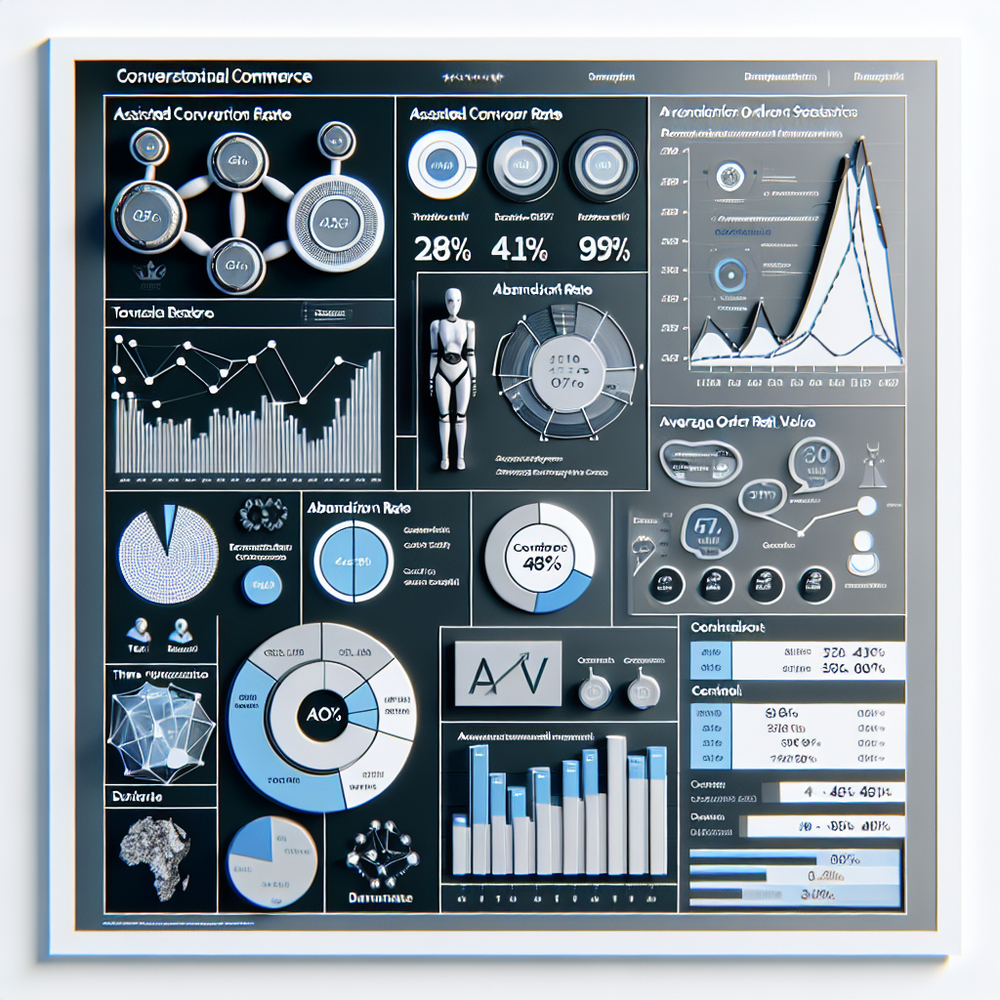
Pick a few KPIs and wire them well. Otherwise, you’ll debate anecdotes. For abandonment reduction, track: 1) Assisted conversion rate, 2) Cart abandonment rate on exposed cohorts, 3) Time‑to‑checkout, 4) AOV for assistant‑influenced orders, 5) Resolution rate under 60 seconds, 6) First‑party consent rate.
Attribution is solvable. Tag assistant events server‑side and stitch sessions with order IDs. Use holdout cohorts to isolate lift. In one electronics A/B, an assistant cohort showed a 19% lift in checkout completion with identical promo exposure—because coupon logic was validated in‑flow. Document the hypothesis and the data path before launch.
Brambles.ai provides out‑of‑the‑box event streams for add‑to‑cart, replace‑item, coupon‑validate, and handoff, so BI can reconcile orders cleanly. Dashboards segment by device, traffic source, and trigger type to find outsized wins fast.
First‑Party Data, Consent, and Trust
You can’t reduce abandonment by tricking customers. You reduce it by removing doubt. Progressive profiling—asking for zip to confirm ETA, size to confirm fit—earns you the right to recommend. Salesforce’s Connected Customer research underscores that transparency and value exchange drive trust (Salesforce).
Practical pattern: disclose why you’re asking (“We’ll use your zip to show delivery windows, not for ads”), then immediately show value (accurate ETA and stock). Store preferences server‑side with consent and let users edit or delete. For publishers, this means capturing brand and price thresholds so repeat readers see fewer dead‑end links and more shoppable clarity.
Latency is part of trust. Keep conversational responses under ~700ms end‑to‑end. Think with Google ties even small delays to increased bounce—your assistant should feel instant, not like loading a new site.
Common Pitfalls and a Fix‑It Checklist
Most failures come from mis‑placed or over‑ambitious assistants. Keep scope tight, answers short, and actions obvious.
Checklist to reduce abandonment now:
- Trigger conversations where friction is observed, not everywhere.
- Cap response length to 2–3 short messages with a shoppable card.
- Always return ETA, stock, total price, and coupon status.
- Offer a single primary CTA (Add/Replace) plus a secondary (Compare/Save).
- Keep round‑trip time <700ms; prefetch inventory on PDP.
- Escalate edge cases gracefully; never loop generic answers.
- Log events server‑side and A/B by trigger.
- Review transcripts weekly and refine intents.
- Maintain tone consistency with brand guidelines.
- Localize tax/shipping rules before promoting guarantees.
Also, resist the urge to push discounts as a band‑aid. Solve the question first; discount only if it overcomes a real objection. Baymard’s research consistently shows unexpected costs sting—be upfront on totals instead of burying fees until step four.
Future Outlook: The Conversation Becomes the Cart
Three shifts are converging: passkeys and wallet checkout reduce authentication pain; richer product cards in chat remove the need to visit multiple PDPs; and first‑party profiles make re‑orders one tap. Expect assistants to negotiate bundles, verify eligibility (student, pro), and schedule delivery—all in‑flow.
We’re already seeing multi‑turn flows that assemble outfits or room kits while honoring inventory and shipping windows. The line between PDP and cart blurs. Brambles.ai’s roadmap pushes deeper into on‑message payments and post‑purchase care, so the same assistant that prevented abandonment can also reduce returns with fit and usage guidance.
FAQ
What’s a realistic abandonment benchmark and goal?
Many verticals hover near 70% abandonment (Baymard). With targeted conversational flows, a 10–25% relative reduction in exposed cohorts within 30–60 days is a solid, defensible target.
Do shoppable answers work with Shopify, WooCommerce, or custom carts?
Yes. The pattern is platform‑agnostic: fetch inventory/pricing, render product cards, update cart via API, then hand off to checkout. Brambles.ai provides connectors and a WordPress plugin for WooCommerce and APIs for custom stacks.
How do we handle GDPR/CCPA while personalizing?
Use progressive profiling with explicit consent, store minimal data, and provide self‑service deletion. Keep legal copy canonical via your CMS. Log consent events server‑side and avoid third‑party data enrichment without opt‑in.
How fast can we launch and what’s the lift window?
A focused three‑flow rollout typically takes 1–2 weeks with Brambles.ai. Most teams see directional lift in the first 7–10 days and statistically significant results within 3–4 weeks, depending on traffic.
Related resources on Brambles.ai
If you are implementing this, start with Brambles.ai.
For deeper reading, see 10 Reasons Publishers Need Conversational Commerce, Affiliate Disclosure in Conversational UIs Done Right, From Search Boxes to Conversations: Modern Shopping UX, Contextual, Not Creepy: Monetization That Wins.
Related posts
View all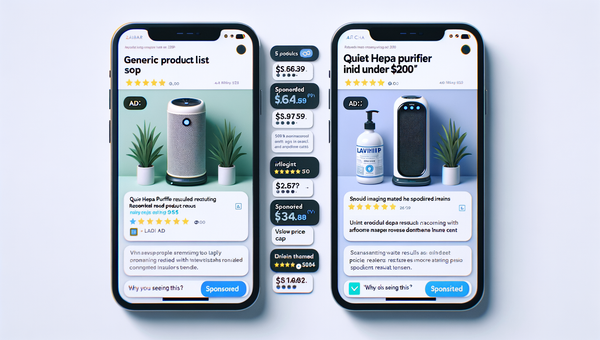
Sponsored Products in AI Shopping: Retail Media 101
Learn how sponsored product placements power AI shopping, how bidding and relevance work, and how to implement retail media without eroding trust or UX.
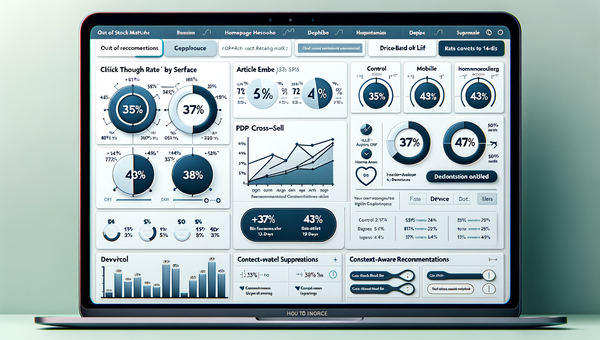
How Context-Aware AI Recommendations Lift CTR
See how context-aware AI recommendations lift CTR by 25–60% with intent signals, page context, and history. Practical steps, KPIs, and implementation tips.
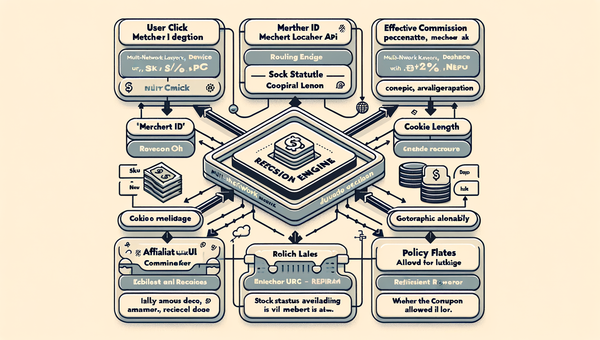
Multi‑Network Affiliate Optimization: Auto Best Rate
Route clicks across affiliate networks automatically to secure the highest commission, lift EPC, and preserve UX—practical tactics, data, and implementation ste
Explore Brambles.ai
Learn more about our AI-powered agentic commerce platform, agentic shopping, and shopping assistance solutions.
Explore More Insights
Discover more articles on AI, automation, and business innovation
View All Articles