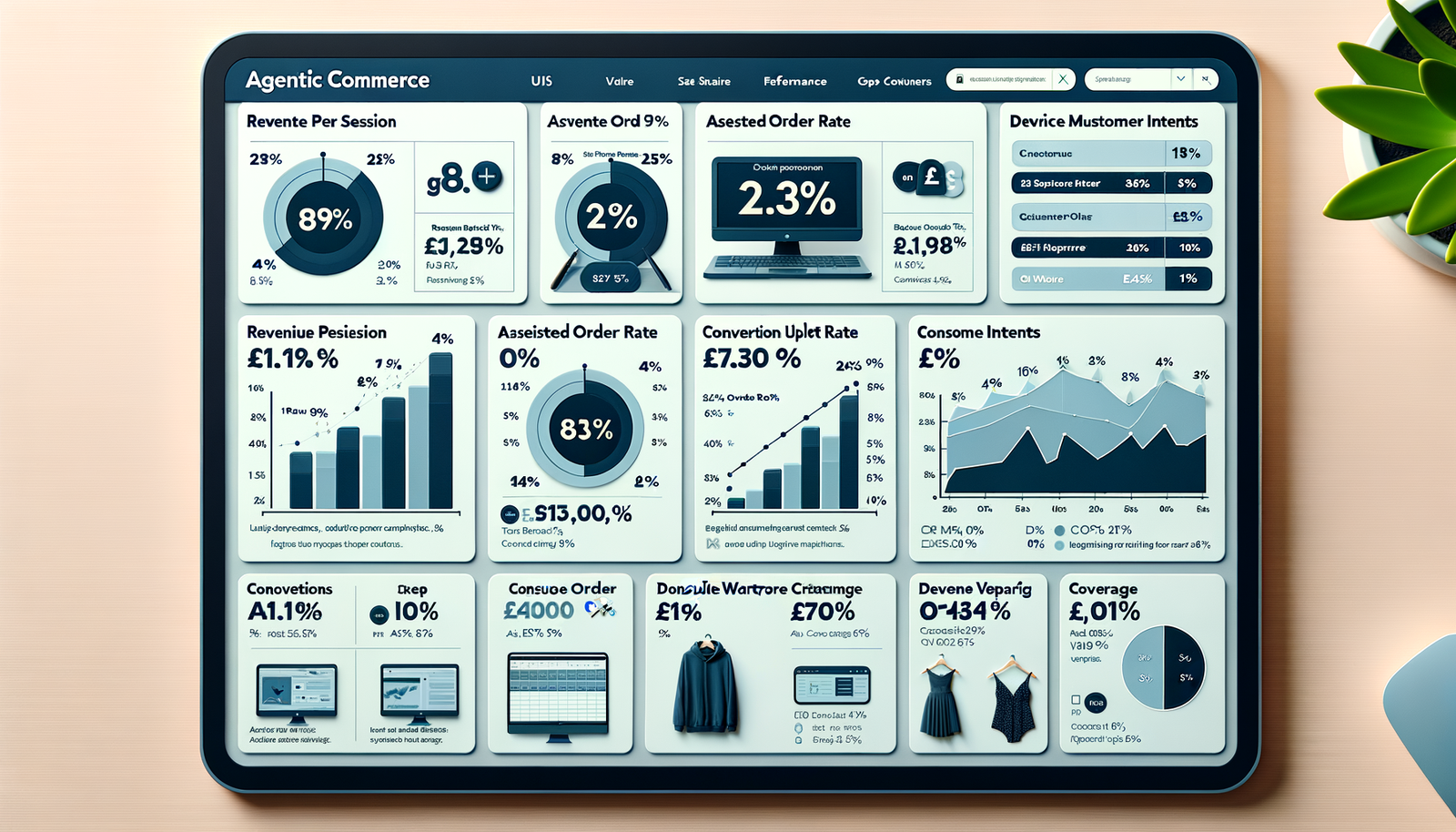
Proving Agentic Commerce ROI with Brambles.ai Metrics
Turn agentic commerce hype into bottom-line wins. See the exact KPIs, formulas, and experiments to prove ROI with Brambles.ai's built-in, cookieless metrics.
Proving Agentic Commerce ROI with Brambles.ai Metrics
On a 600k‑session tech publisher, swapping static affiliate boxes for Brambles-powered conversations lifted revenue per session by 34% in 21 days. The surprise wasn’t the lift—it was seeing exactly which exchanges, intents, and products moved dollars. A similar trial with a mid-market apparel brand showed a 17% assisted-order rate from chat within two weeks, with AOV +11%. When the metrics are instrumented correctly, the hype quiets down and the revenue speaks.
This article walks you through the KPIs, data plumbing, and testing plan we use to validate agentic commerce returns. You’ll leave with a checklist, formulas, and an implementation path tailored to Brambles.ai—no black boxes, no vanity metrics.
Quick Answer
Agentic commerce ROI is proven by tracking assisted orders, revenue per session, conversion rate uplift, AOV change, and time-to-value in a clean A/B or phased rollout. Brambles.ai exposes these through event-level analytics tied to conversational intent, product impressions, and merchant outcomes. Start by deploying the Agentic Commerce Module, map order and click events, and run a 14–28 day experiment. You should see 10–35% revenue-per-session lift when implementation basics (coverage, speed, mobile UX) are met.
What’s Broken in Measuring Agentic Commerce Today
Most teams ship a chat and watch session counts climb, then wonder why revenue doesn’t follow. The usual culprits: last‑click bias masks assist value, thin intent data, and no link between conversations and downstream merchant outcomes. Without conversation-aware attribution, you end up optimizing for engagement, not earnings.
Two patterns we see repeatedly: 1) the assistant appears only on a fraction of high‑intent pages, depressing coverage; 2) mobile performance issues slow the first token or result render, hurting add‑to‑cart rates. Baymard’s research shows even small UX lags spike abandonment, and conversations are no exception.
How Brambles.ai Turns Conversations Into Measurable Revenue
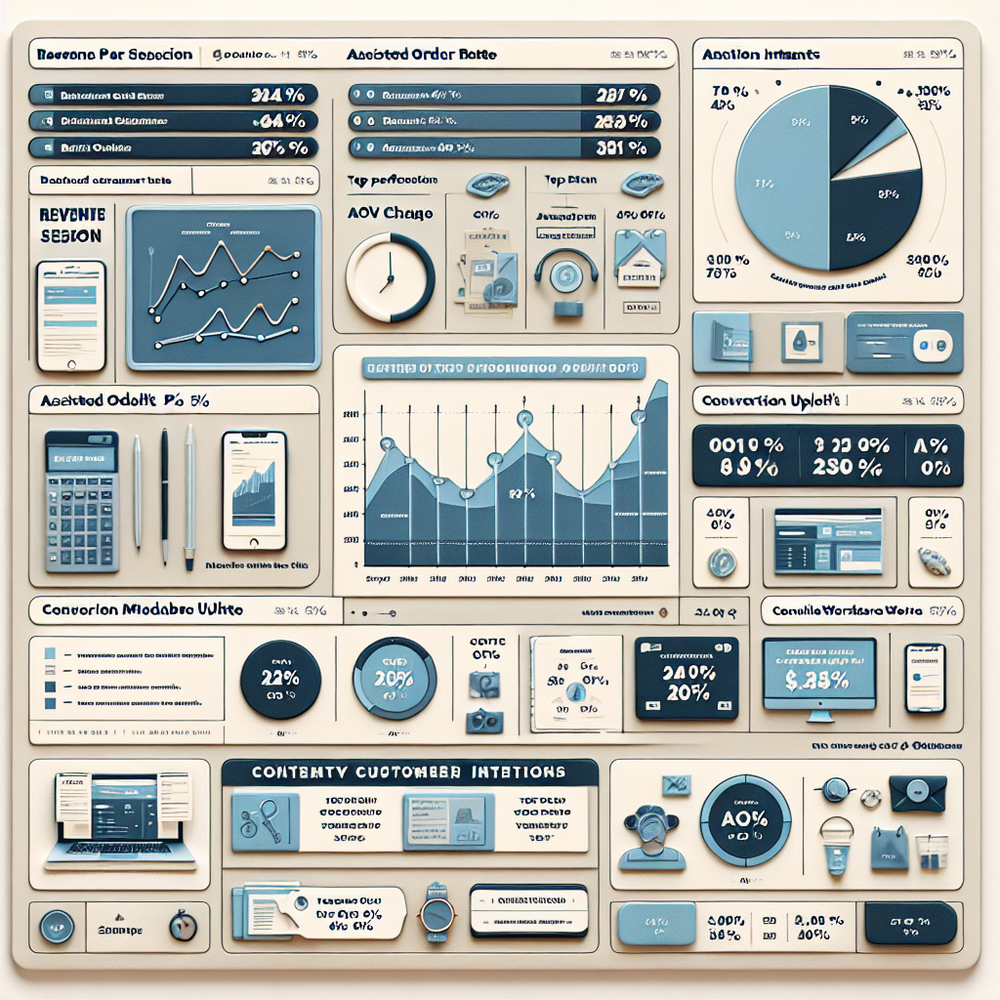
Brambles.ai captures intent, product impressions, clicks, and orders in a first‑party stream, then attributes revenue to conversations using time‑decay and step‑based models. You see which prompts lead to purchases and which replies stall out. Four metrics anchor ROI: Revenue per Session (RPS), Assisted Order Rate, Conversion Uplift vs Control, and AOV Change.
Feature highlights tied directly to ROI:
• AI product discovery: lets shoppers use natural language (“soft tall men’s chinos under $70”), raising findability and RPS. • Proactive engagement: detects page context and suggests next steps, boosting assisted orders without pop-up fatigue. • Affiliate revenue: unifies 1B+ products and networks so you see real earnings, not just clicks. • Direct add to cart: enables purchase from chat for owned stores, reducing friction and lifting conversion.
Anecdote: when we enabled proactive prompts on product comparison pages for a consumer electronics publisher, coverage rose from 38% to 71% and assisted orders climbed to 19% of total within 10 days. On a fashion DTC site, direct add‑to‑cart from chat cut clicks‑to‑checkout from 7.1 to 3.9 and nudged AOV +8%.

Implementation Guide: From Tag to Trustworthy Numbers
The fastest path to defensible ROI is a two‑week phased rollout with clean baselines. Here’s the playbook we deploy with teams that need numbers yesterday.
Step 1 — Install and configure: Add the Agentic Commerce Module via your tag manager or codebase. WordPress sites can use the plugin; Shopify support is available. Configure intents, products, and page‑level triggers.
Step 2 — Map events: Ensure we receive product impression, click‑out, add‑to‑cart, and order confirmation events. Use the integration guide and API to pass order totals, currency, and merchant IDs. Add UTM enrichment for experiment buckets.
Step 3 — Configure variants: Define Control (no assistant or legacy UI) vs Brambles (assistant active). Use the configuration options to scope pages and traffic splits. Keep device parity to avoid skew.
Step 4 — QA and ship: Validate coverage %, first contentful paint impact, and event firing. Launch to 30–50% of traffic for 14–28 days. If internal approvals drag, start with high‑intent pages (buying guides, top categories) to show early signal.
Checklist for clean data: 1) Coverage >60% of monetizable sessions. 2) First response <1.5s on 4G. 3) Event fidelity: 99%+ of orders joining to sessions. 4) Merchant IDs normalized. 5) Clear affiliate disclosures on first interaction. We cover the last item in depth here: Affiliate Disclosure in Conversational UIs Done Right.
Measuring ROI & KPIs That Actually Move Revenue
Anchor on a small set of KPIs that finance, editorial, and growth can all trust. Here are the definitions we standardize across deployments.
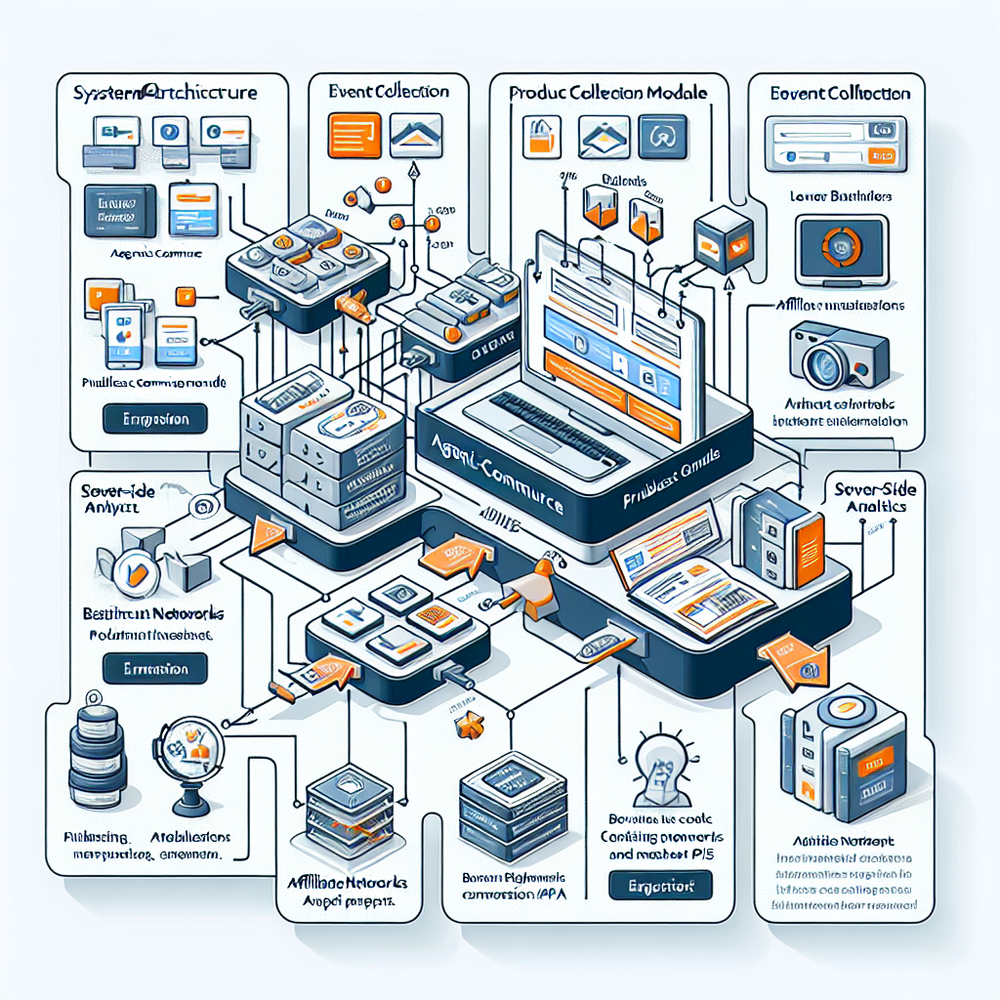
• Revenue per Session (RPS): total attributable revenue / sessions. Target +10–35% vs control. • Assisted Order Rate: share of orders with at least one Brambles interaction in the last 7 days; healthy ranges are 10–25%. • Conversion Uplift: relative lift in purchase rate vs control; watch device splits. • AOV Change: average order value shift; aim for +5–15% with bundling nudges.
Supplemental diagnostics: Coverage %, Resolution Rate (did the assistant return shoppable results?), Latency to First Result, and Product Match Quality. In one test, reducing first result latency from 2.3s to 1.1s increased add‑to‑cart by 12%. Baymard and Google UX research consistently tie speed and clarity to checkout completion.
Attribution model note: We default to conversation‑assist attribution with time decay (30% weight to the last interaction, 70% distributed across prior steps). For brands, this complements existing first‑touch models; for publishers, it surfaces true value of guide pages and topic clusters—vital in a cookieless world.
First‑Party Data, Trust, and Monetization That Scales
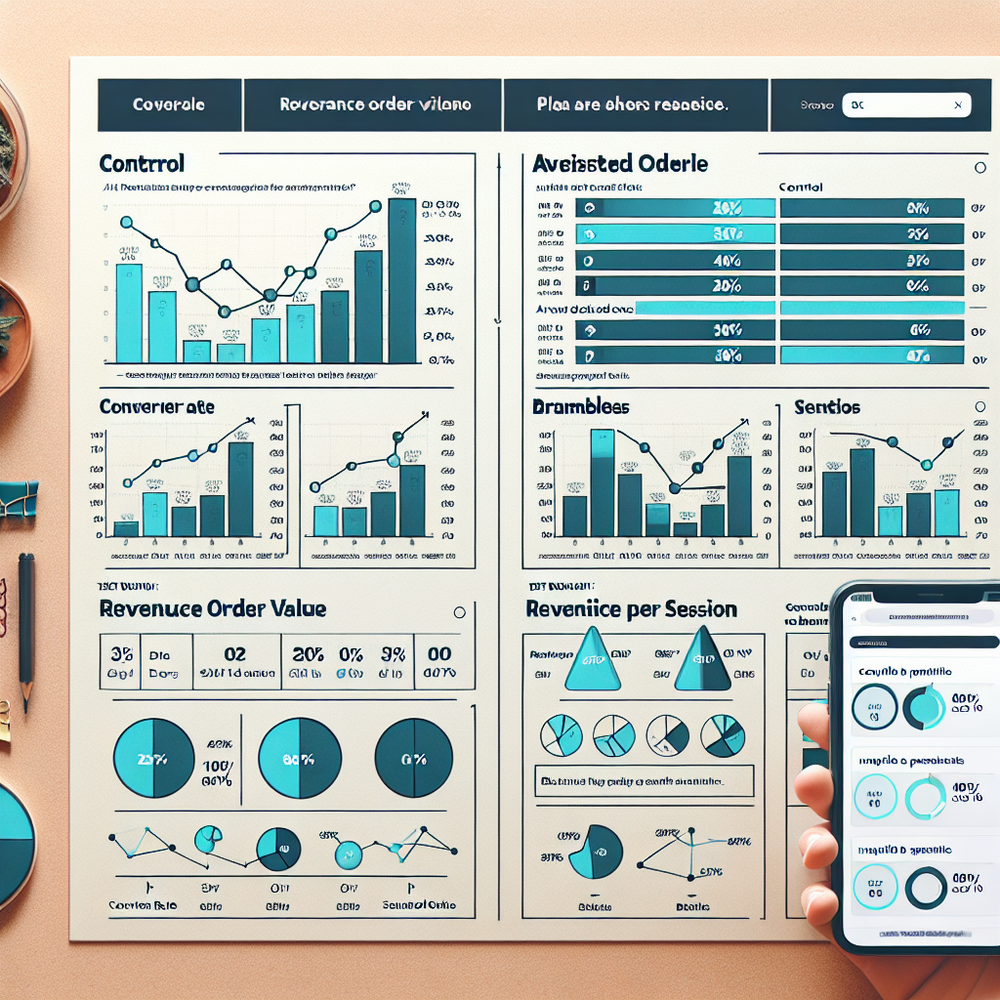
Trust fuels conversion. Brambles.ai runs on first‑party data and contextual understanding, not third‑party cookies. That keeps you in step with platform privacy shifts while preserving monetization. Clear disclosures and value‑forward suggestions—never dark patterns—earn repeat interactions and higher LTV.
For publishers, two growth levers compound: contextual CPC/retail media and affiliate earnings. Brambles supports both with first‑party relevance signals. Sponsored results are labeled and measured distinctly from organic.
Anecdote: a home decor publisher piloting retail media alongside organic recommendations saw 9% incremental RPM without reducing organic CTR, aided by “view in room” prompts on articles. Transparent labeling plus truly helpful utility wins, every time.
Common Pitfalls (and How to Avoid Them)
• Measuring clicks, not cash: Always back clicks with orders and merchant-side revenue. • Thin coverage: If the assistant only appears on 20–30% of monetizable sessions, your ROI will look muted. • Mobile neglect: If mobile first result is >1.5s, you’ll bleed intent. • Prompt sprawl: Too many generic entry points confuse users; tie prompts to page context. • No baseline: Freeze a clean control for at least 14 days to avoid seasonality traps.
Quick fixes: tighten prompts with page-aware suggestions, ensure direct paths to cart for owned stores, and use Brambles’ configuration to scope variants by traffic source. When in doubt, start with buyer’s guides and top categories—high intent, fast proof.
Future Outlook: Agentic Assistants as a Primary Revenue Channel
Expect assistants to own more of the journey: richer product graphs, video search inside chat, and tighter post‑purchase loops. The metric to watch is contribution margin per session, not just top‑line revenue. With Brambles, video and mobile‑native surfaces will compound gains where shoppers already are—on phones, in feeds, and in guides.
FAQ
How long until we see reliable ROI data?
Most sites hit statistical confidence in 14–28 days, depending on traffic and baseline conversion. We recommend shipping to at least 30% of monetizable sessions and watching for weekday/weekend patterns before finalizing.
What’s a good assisted order rate?
Across publishers and brands we typically see 10–25% of orders with at least one Brambles interaction. If you’re below 8%, check coverage, latency, and prompt relevance on mobile.
How does Brambles attribute revenue without third‑party cookies?
We operate on first‑party events joined to merchant order confirmation data. Conversation‑assist attribution with time decay assigns value across interactions, giving a realistic picture of influence while respecting privacy.
Can we run this on WordPress or Shopify quickly?
Yes. Most WordPress publishers go live in a day using our plugin. Shopify support is available; we map orders and carts to conversations so you can see impact on AOV and conversion immediately.
How much does it cost, and how do we budget ROI?
Model ROI with RPS uplift and traffic coverage. Even a conservative +12% RPS at 60% coverage usually pays back in weeks. Check plan details and align to your traffic mix.
Related resources on Brambles.ai
If you are implementing this, start with enterprise solutions, about Brambles.ai, developer docs, virtual try-on.
Related posts
View all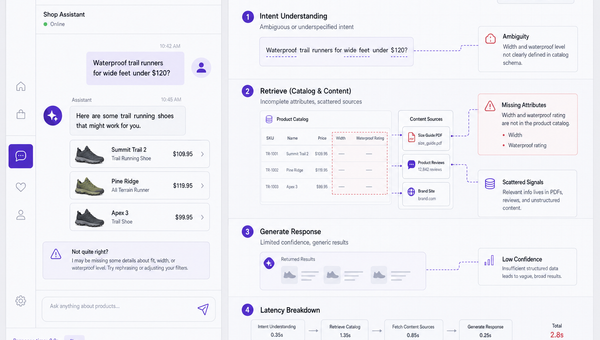
Why Good AI Shopping Agents Are Hard—and How Brambles Helps
Most AI shopping bots fail on data quality, UX, and trust. See why agents break in the wild and how Brambles.ai fills the gaps with measurable features.
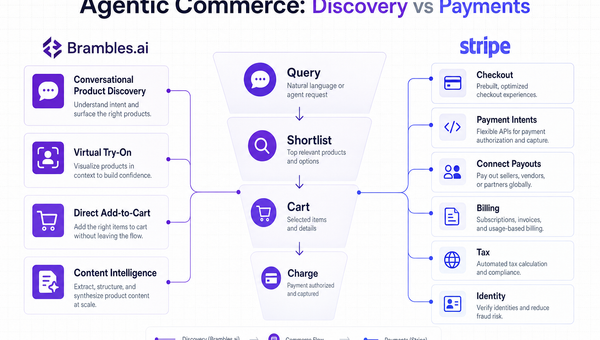
Stripe Agentic Commerce vs Brambles.ai: When to Use Each
Confused between Stripe’s agentic stack and Brambles.ai’s conversational shopping? See real trade‑offs, use cases, ROI, and an implementation path for each.
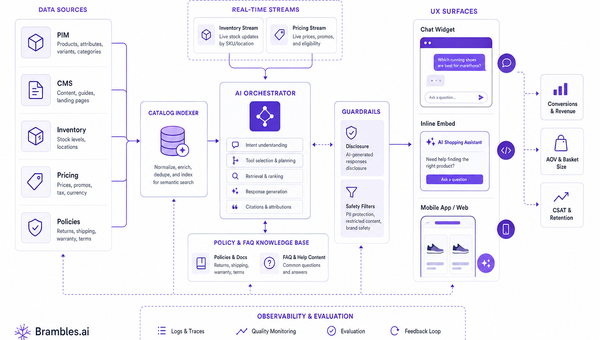
What to Fix Before AI Shopping Agents | Brambles.ai
Fix data, ops, and trust gaps before AI shopping agents. A field-tested Brambles.ai rollout guide with checklists, KPIs, and step-by-step tips. Proven wins.
Explore Brambles.ai
Learn more about our AI-powered agentic commerce platform, agentic shopping, and shopping assistance solutions.
Explore More Insights
Discover more articles on AI, automation, and business innovation
View All Articles