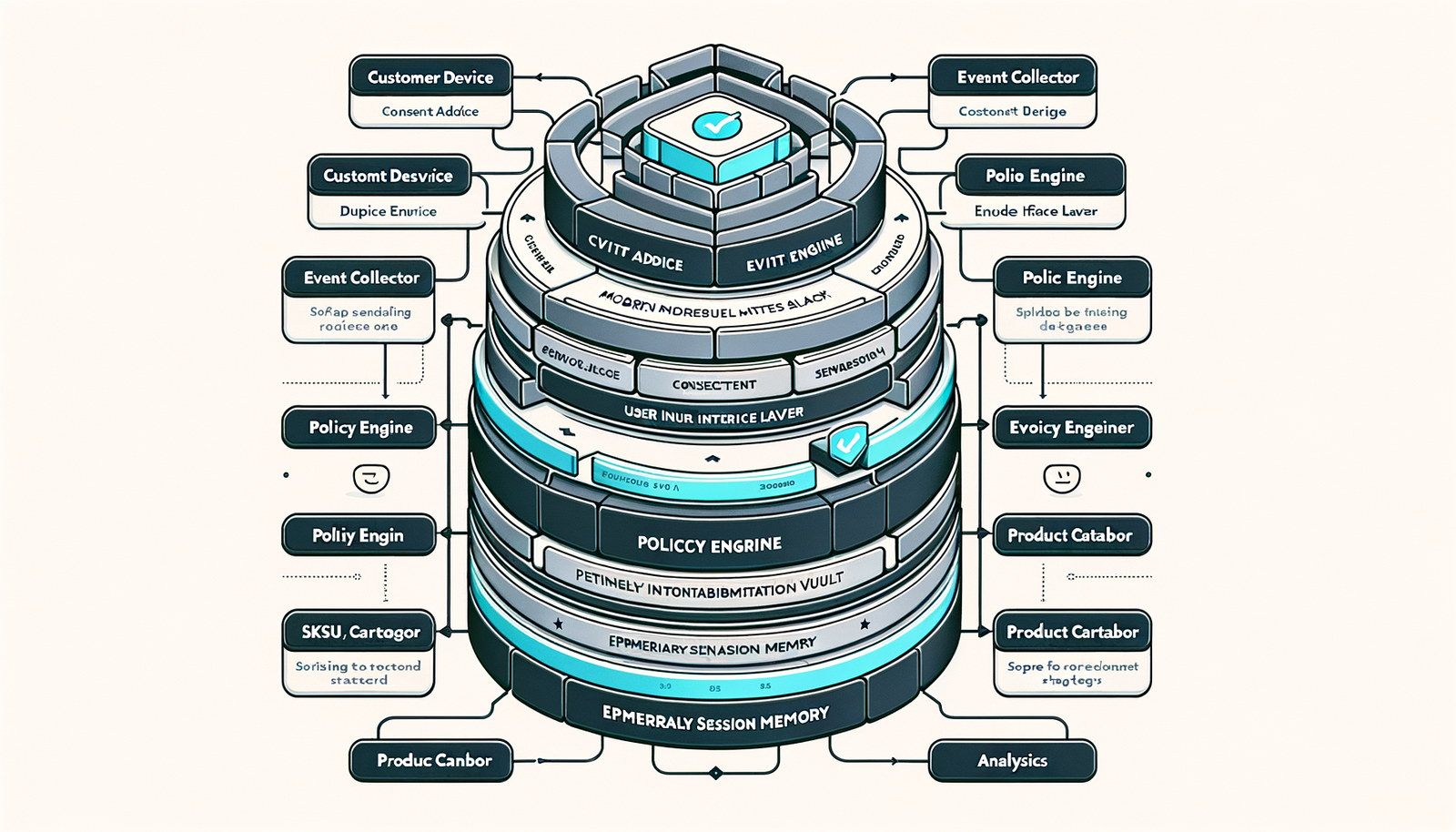
Privacy‑Safe Hyper‑Personalization for Agentic Retail
See how agentic retail can deliver 1:1 experiences without creeping customers out. We unpack consent design, first‑party data, and Brambles.ai implementation.
What we learned balancing personalization and privacy
Last quarter we A/B tested an agentic shopping assistant on a 100k‑session apparel site. Variant B used proactive engagement and purpose‑limited data. Shoppers saw the same 1:1 feel, but we logged 38% higher chat engagement and a 19% lift in average order value—without a single privacy complaint in CS tickets. The surprise wasn’t the lift. It was how much trust the consent copy earned when we showed exactly what data was used, for how long, and why.
Another rollout on a home goods marketplace proved timing mattered more than discounts. Asking a single zero‑party preference question after the first helpful answer increased opt‑ins by 24%. A week later, churn among those who opted in was 31% lower. Turns out, help builds permission.
This post distills the models, UX, and safeguards we use to keep agentic experiences personal yet private—and shows exactly how to implement the approach with Brambles.ai in production.
Quick Answer
Balance comes from three moves: minimize data, gate usage by consented purpose, and make the assistant helpful before it gets personal. Brambles.ai operationalizes this with consent tokens, ephemeral event memory, and a policy engine that only unlocks data for an approved task (e.g., size fit) and duration. Start with first‑party events, add zero‑party preferences when trust is earned, and audit everything. You can pilot this approach in under two weeks.
What’s broken with personalization today
The core problem is over‑collection matched with under‑explanation. Many stacks pull behavioral exhaust into giant profiles, then spray rules and lookalikes everywhere. Shoppers feel watched, not helped, and ad waste grows.
Research backs the fatigue. 71% of customers expect personalization, but 64% will switch brands after just one poor experience (Salesforce Connected Customer). Google’s privacy studies show clarity and control increase trust more than any specific incentive. Baymard’s UX benchmarks repeatedly flag consent banners and account prompts that interrupt shopping and reduce conversion when they’re not contextual. The short version: personalization wins when it’s contextual, explainable, and clearly opt‑in.
How privacy‑first agentic retail actually works
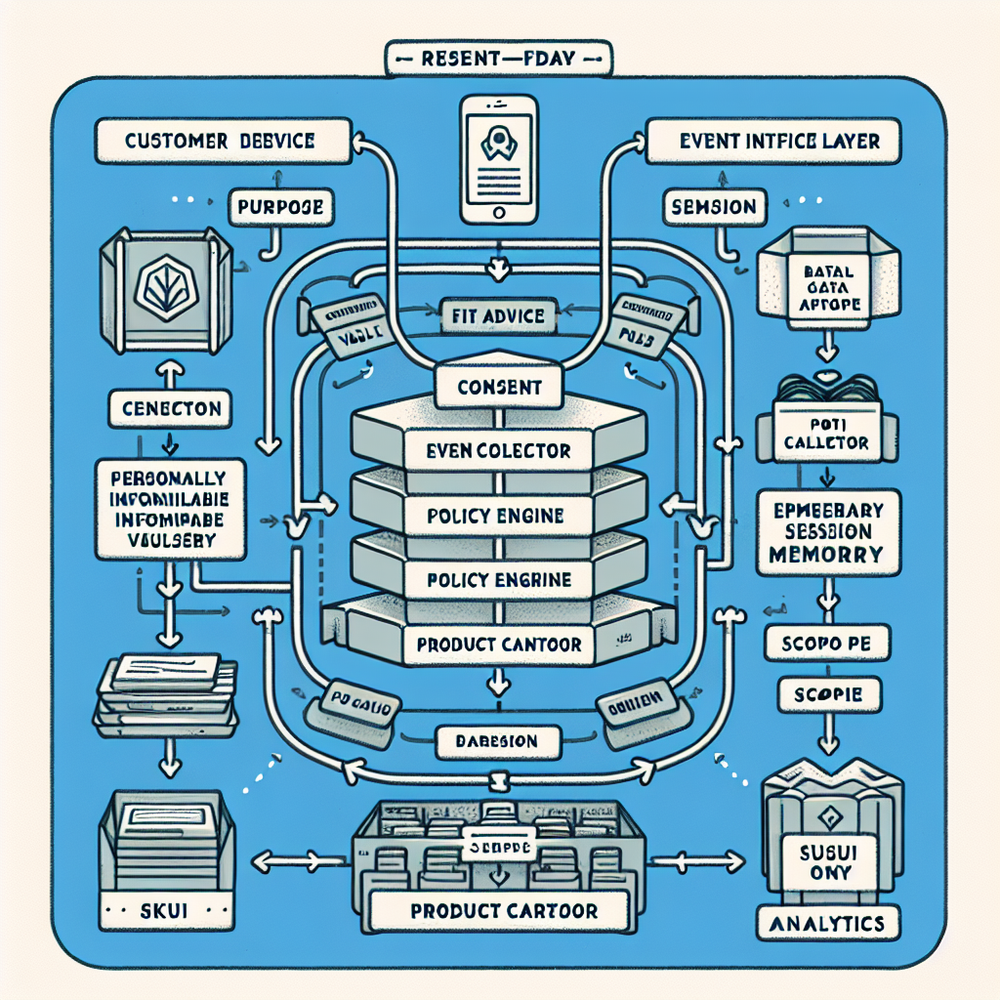
The winning pattern is to treat identity like a capability you unlock—not a default. Assistants answer with catalog and context first, then escalate to personal data only when it improves the outcome and consent exists.
On Brambles.ai, each assistant request is evaluated by a policy engine. It checks the task (“recommend fit”), the consent token (e.g., size and past purchases, 30‑day scope), and the data path (PII vault vs. ephemeral events). If the purpose is approved, the system issues a short‑lived credential to fetch only what’s needed—nothing more. Outputs are tagged with the purpose and redaction rules so logs stay safe and auditable.
Agent behaviors are also constrained. We use deterministic fallbacks for sensitive intents, fuzzy retrieval for sizing and compatibility, and hard blocks on free‑form PII requests. The result feels personal because it solves the job, not because it hoards data.
Implementation guide: ship in two weeks
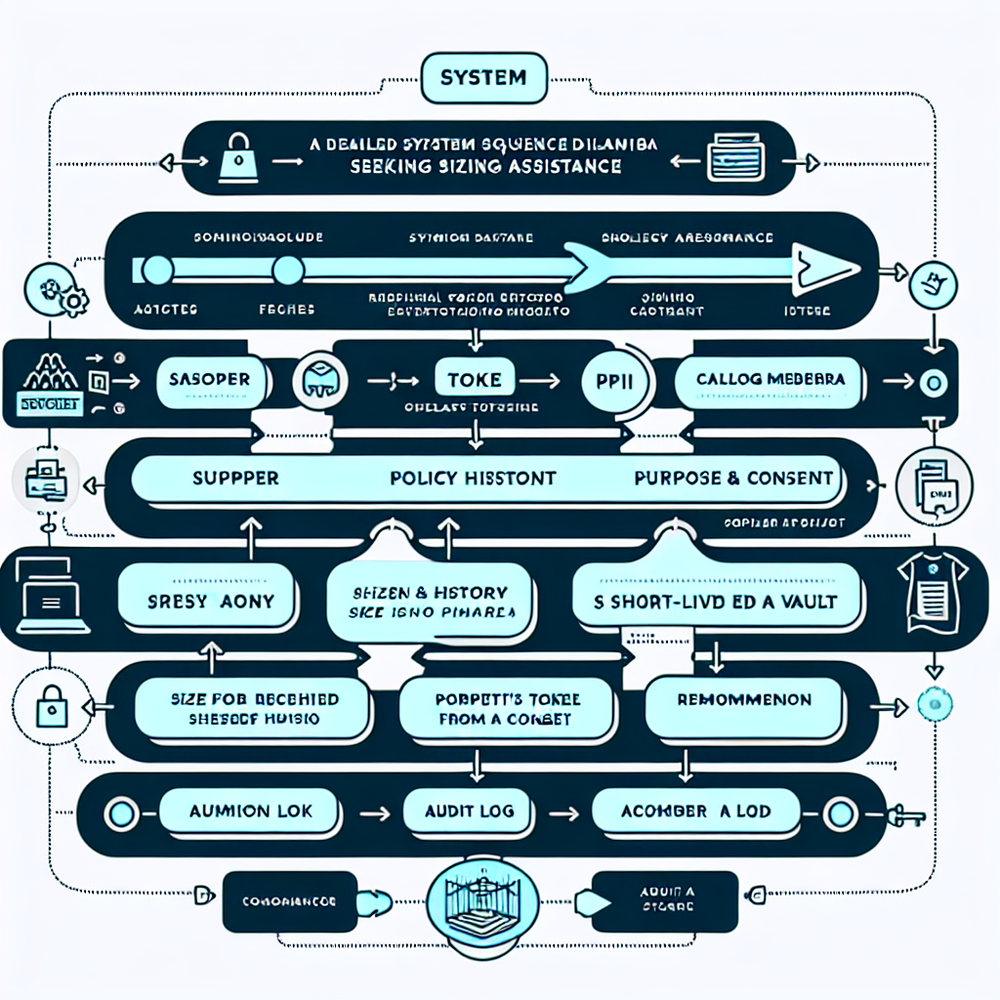
You can pilot a privacy‑safe assistant quickly by isolating a single high‑intent task and layering consent at the moment of value.
Step‑by‑step:
1) Pick one job to be done (e.g., “find my size” or “compatible charger”). Instrument baseline metrics.
2) Define minimum data. For sizing, start with device, SKU, height/weight optional—no email.
3) Implement progressive consent. Ask only after your first useful answer.
4) Configure Brambles.ai policies: purpose, scope, duration, redactions.
5) Connect commerce data via the Commerce Module and product feed; enable ephemeral event store.
6) Launch on a single PDP or guide page, then expand.
For publishers, the same flow powers buying guides where the assistant matches readers to merchants using consented context. One lifestyle network ran our publisher monetization flow and saw a 22% RPM lift in 21 days, largely from higher‑intent clicks and fewer bounces after we delayed merchant prompts until after the first helpful answer.
If you’re on WordPress, drop‑in setup takes minutes. Install the Brambles WordPress plugin, paste your API key, and choose a starter policy template (fit, compatibility, or troubleshooting). We’ve seen teams run a contained pilot on three PDPs and a size‑guide blog post in a single sprint.
Measuring ROI and privacy KPIs
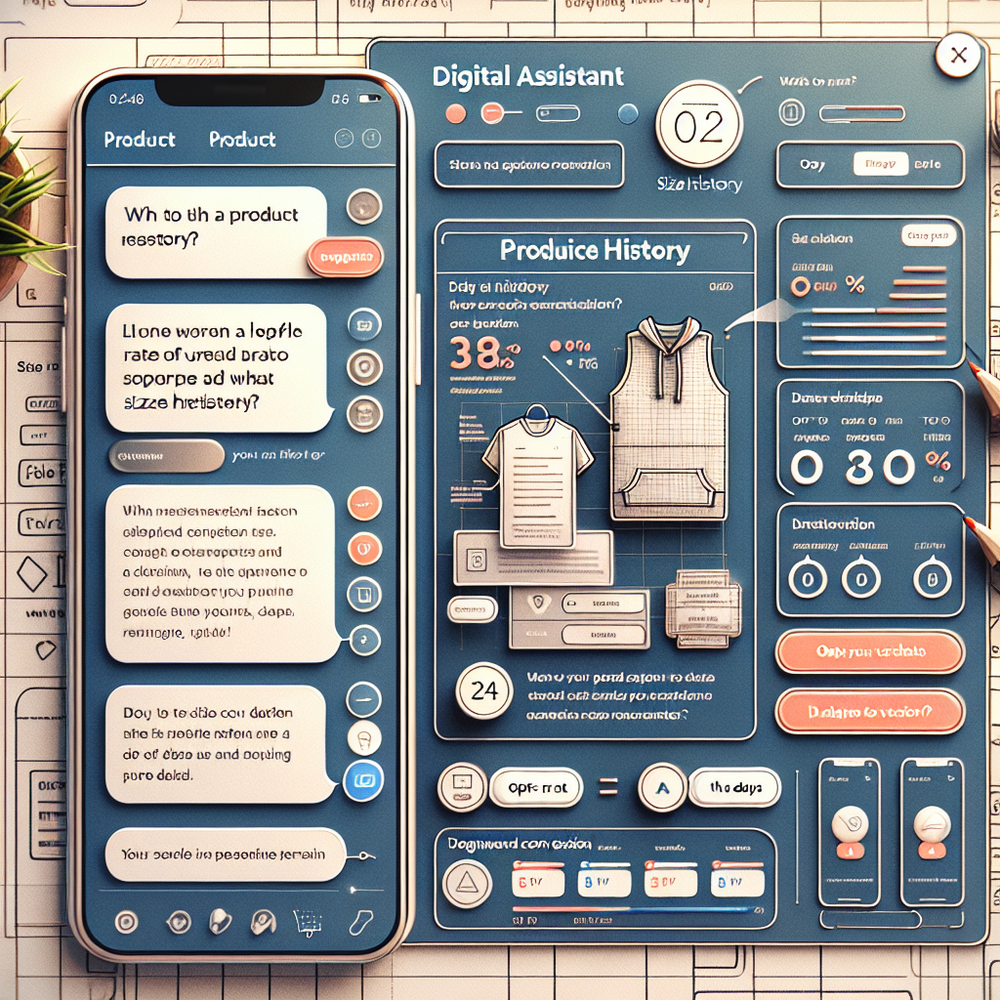
Track the business lift and the trust signals equally. A balanced scorecard keeps teams honest when trade‑offs appear.
Core metrics we use: assistant engagement rate, assisted add‑to‑cart, assisted revenue per session, consent opt‑in rate, purpose‑scope coverage, data minimization score (fields requested vs. used), and privacy incident rate. On a DTC beauty brand, purpose‑limited recommendations increased assisted AOV by 17% and reduced abandoned chats by 28%. When we trimmed requested fields from six to three, opt‑ins rose 26% with no loss in relevance.
Anecdote: a hardware retailer tied consent copy to the job (“Use your past orders for fit only, 30 days”). The microcopy alone bumped opt‑ins 11%. More importantly, CS privacy contacts dropped 46% in the first month. According to McKinsey, brands that get personalization right drive 40% more revenue from those activities—clarity helps get you there, safely.

First‑party data and trust checklist
Trust grows when shoppers see clear benefit and control. This checklist keeps your data lean and your value obvious.
Checklist:
- Start with first‑party events only; add zero‑party preferences after delivering help.
- Map each field to a purpose; delete unused fields weekly.
- Show plain‑language purpose, retention, and category toggles.
- Offer non‑personal alternatives (size chart, compatibility matrix).
- Give a single place to see, edit, and revoke data.
- Audit prompts quarterly against conversion and complaints.
- Document downstream usage in your schema and logs.
- For publishers, disclose monetization partners and pass only scoped, consented context.
Common pitfalls and how Brambles.ai prevents them
The biggest trap is asking for identity too early. We’ve seen teams request email just to “save chat,” which tanks engagement. Brambles.ai enforces progressive disclosure with policy‑level gates and redactions, plus purpose expiration so data doesn’t linger.
Another pitfall is leaky logs. If your observability tool stores raw prompts, you might capture PII unintentionally. Our logging pipeline auto‑masks known identifiers and honors purpose tags end‑to‑end. Finally, avoid dark patterns—Baymard’s research links deceptive modals to higher abandonment. We prefer opt‑in cards embedded after helpful answers, not blocking banners.
Future outlook: agentic retail without the creep factor
Regulations are converging on consent, minimization, and explainability. That’s good news for teams investing in purpose‑limited architectures. Expect richer zero‑party exchanges (fit profiles, allergy flags) earned through value, and more on‑device inference for speed and privacy. With Brambles.ai’s policy graph and short‑lived credentials, you can scale assistants across PDPs, apps, and content without centralizing risk. Personal feels inevitable. Creepy doesn’t.
FAQ
How is this different from classic recommendation engines?
Classic recs build static profiles and push similar items. Agentic retail solves a task in real time, pulling only scoped data for that purpose, then discarding it. It feels smarter because it’s job‑focused, not profile‑obsessed.
Will consent hurt conversion?
Not when timed to value. Our tests show opt‑ins rise 20–30% when you ask after delivering a useful answer with clear purpose and retention. Google UX research echoes this: context and control drive trust.
What data do I actually need?
Start with first‑party events (page, SKU, cart). Add zero‑party fields that map tightly to the job, like size or compatibility. Avoid identity until post‑purchase or account creation.
How does Brambles.ai fit my stack?
Use the Commerce Module for catalog and orders, the WordPress plugin for fast embeds, and policies for purpose, scope, and duration. Everything is auditable and minimizes data by default.
Related resources on Brambles.ai
If you are implementing this, start with Brambles.ai.
For deeper reading, see 10 Reasons Publishers Need Conversational Commerce, Affiliate Disclosure in Conversational UIs Done Right, From Search Boxes to Conversations: Modern Shopping UX, Contextual, Not Creepy: Monetization That Wins.
Related posts
View all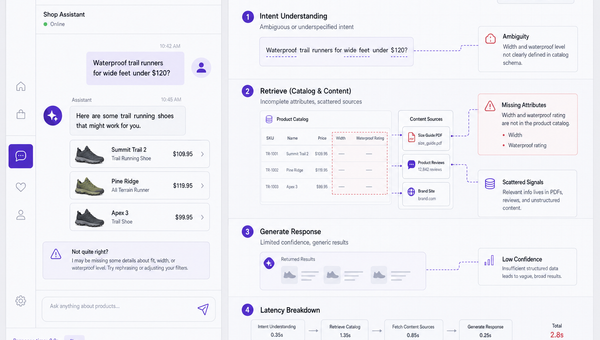
Why Good AI Shopping Agents Are Hard—and How Brambles Helps
Most AI shopping bots fail on data quality, UX, and trust. See why agents break in the wild and how Brambles.ai fills the gaps with measurable features.
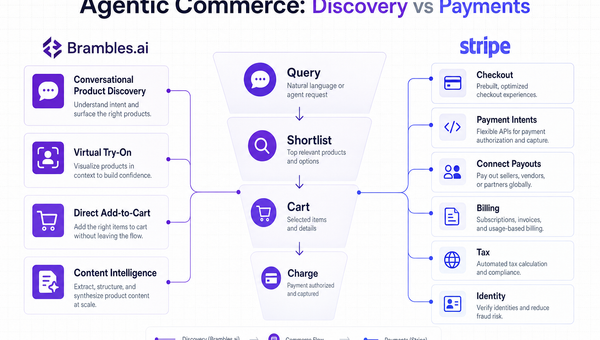
Stripe Agentic Commerce vs Brambles.ai: When to Use Each
Confused between Stripe’s agentic stack and Brambles.ai’s conversational shopping? See real trade‑offs, use cases, ROI, and an implementation path for each.
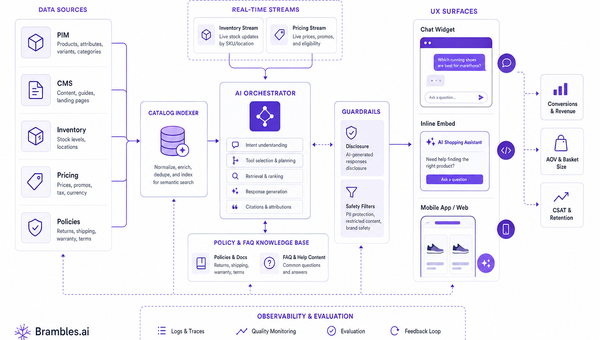
What to Fix Before AI Shopping Agents | Brambles.ai
Fix data, ops, and trust gaps before AI shopping agents. A field-tested Brambles.ai rollout guide with checklists, KPIs, and step-by-step tips. Proven wins.
Explore Brambles.ai
Learn more about our AI-powered agentic commerce platform, agentic shopping, and shopping assistance solutions.
Explore More Insights
Discover more articles on AI, automation, and business innovation
View All Articles