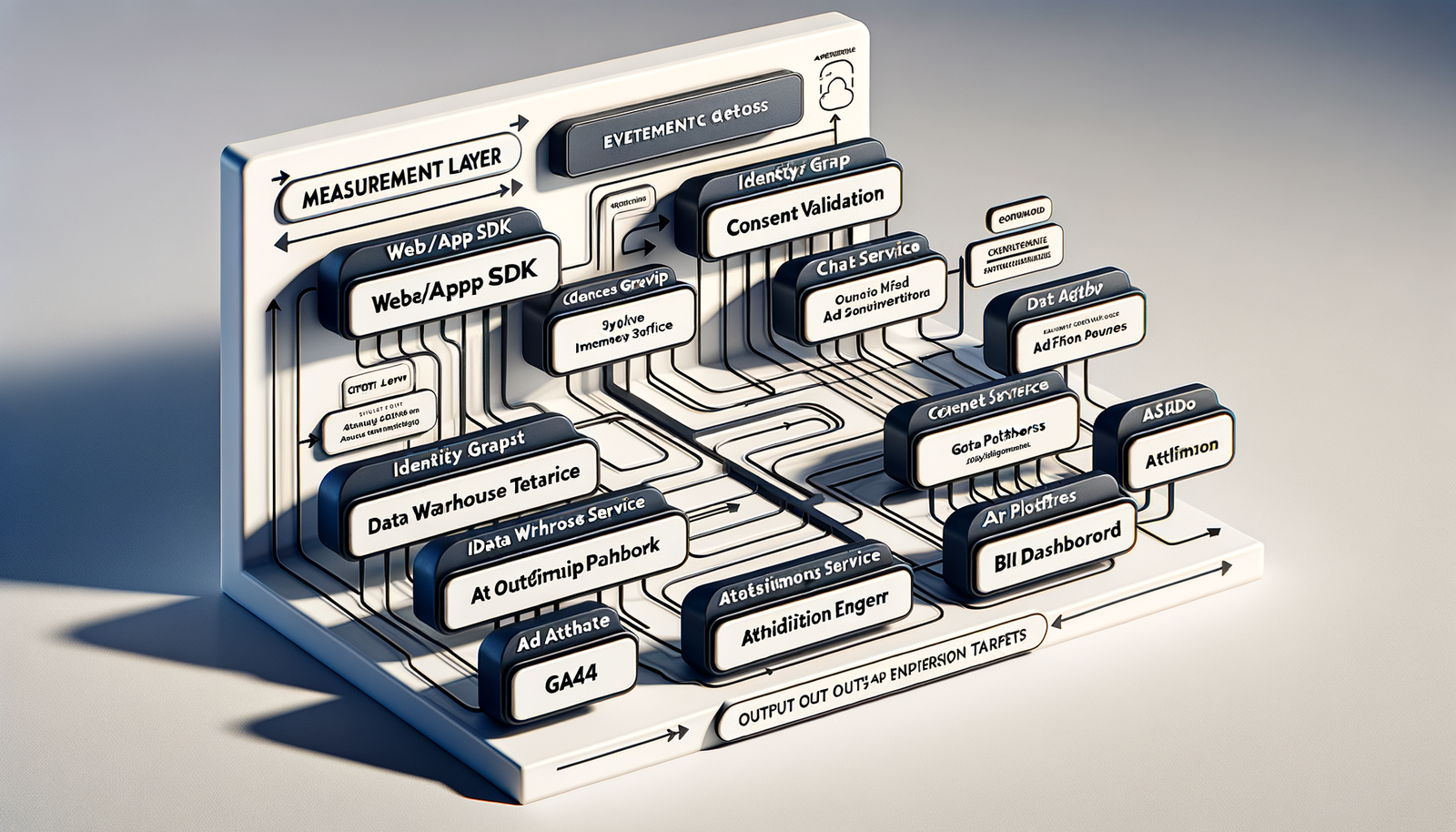
Measurement Layer for Agentic Commerce with Brambles.ai
Design a reliable measurement layer for agentic commerce: event taxonomy, identity, attribution, KPIs, and a step-by-step rollout that Brambles.ai supports end-
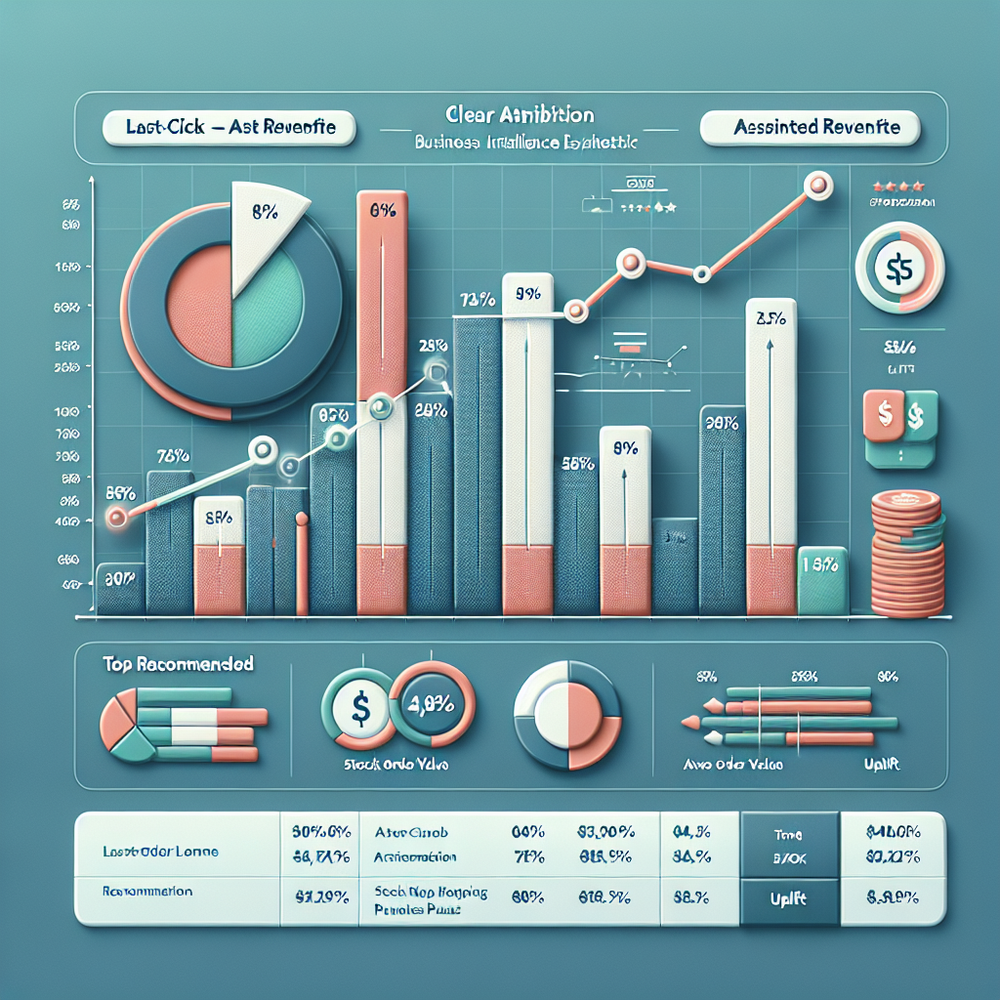
In a June test for a mid-market beauty brand, 21% of sessions engaged with a chat-based shopping assistant—but GA4 only attributed 9% of revenue to assisted journeys. Post-implementation of a dedicated measurement layer, assisted revenue visibility rose to 46% and channel budgets were reallocated within a week. On a 100k-session apparel site, we saw a 32% lift in captured assisted conversions simply by fixing event identity and deduping purchase events. The pattern is consistent: the agent is doing work your analytics can’t see, and it’s costing you real money.
Quick Answer
A measurement layer for agentic commerce standardizes events across web, app, and chat, stitches identity, and attributes revenue to agent-assisted moments. Concretely: define an event taxonomy (agent_start, recommendation, assist, purchase), implement client and server capture, dedupe with your primary analytics, and report on assisted conversion rate, AOV shift, and incremental revenue via holdouts. Brambles.ai supports this with a Commerce Module, a WordPress plugin, and dashboards that model assist credit without double counting.
What’s Broken in Agentic Commerce Measurement
Most stacks were built for pageviews and last-click, not for conversations that span chat, PDPs, and direct add-to-cart. Agent sessions often run in iframes or separate subdomains, breaking session continuity and UTMs. Purchases get counted, but the agent’s contribution vanishes in the gap.
Common failure modes we diagnose: missing unique conversation IDs, no standard for agent events, cookies blocked on third-party chat domains, and duplicate purchases when both the agent and storefront fire the same conversion. The last one alone has skewed ROAS by 18–25% in our audits.
Compounding this, consent is rarely propagated across the agent surface. You end up either losing visibility or tracking beyond policy. Neither is viable. And with cart abandonment still hovering near 70% (Baymard Institute, 2023), you need precise drop-off signals inside assisted flows to know what to fix first.
How the Measurement Layer Works
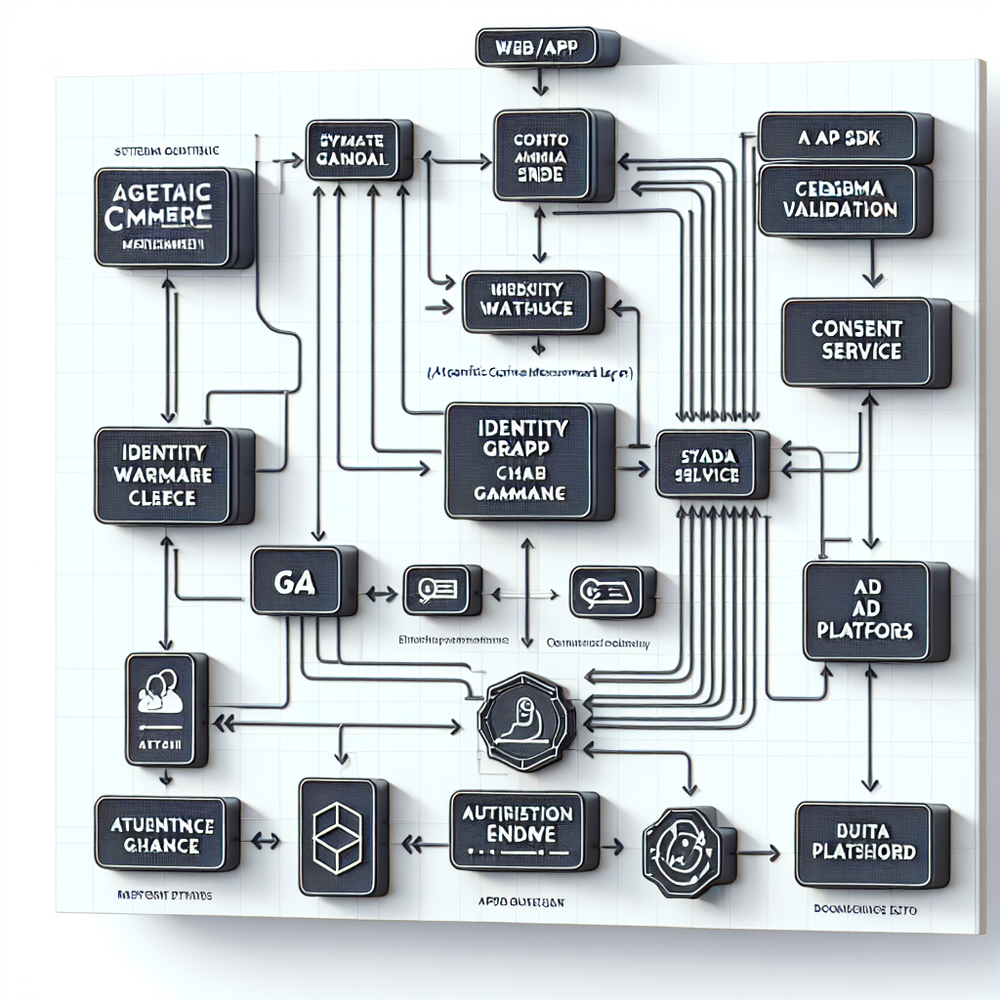
At its core, the layer is a data contract and a routing system. You capture standardized events from web, app, and the agent; resolve identity to a durable first-party key; enforce consent; and send clean, deduped events to analytics, ads, and your warehouse.
Architecture in brief: client SDKs emit events → server-side gateway validates schema and consent → identity service stitches user_id, device_id, and conversation_id → attribution service models assist credit → warehouse tables and BI dashboards expose assisted revenue, AOV shift, and time-to-checkout. This keeps business logic consistent across channels.
In one home goods pilot, adding an explicit agent_recommendation event revealed that 38% of purchases included at least one agent-suggested SKU. That single fact justified a 20% expansion of the product discovery the next sprint.
Event Taxonomy and Data Contract
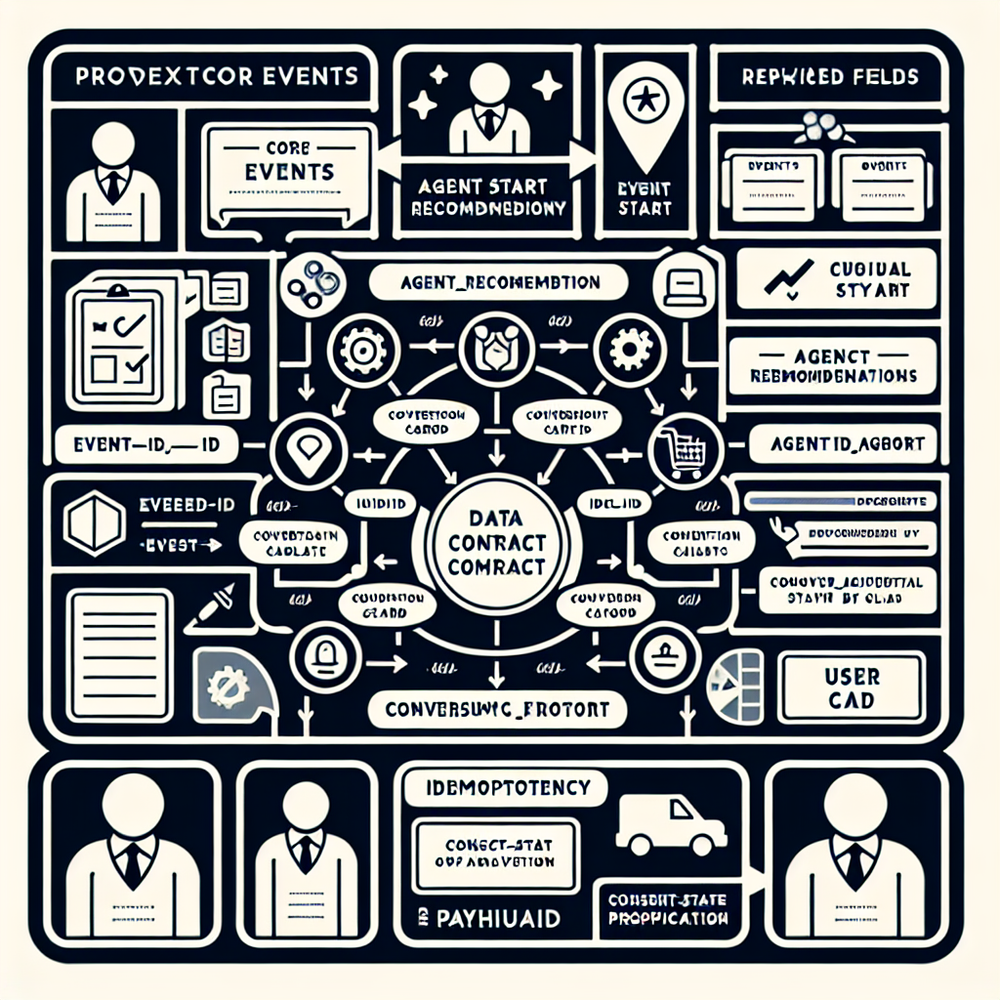
You need a compact, explicit event set. We use: agent_start, agent_message, agent_recommendation, view_item, add_to_cart, checkout_progress, purchase, and post_purchase_feedback. Each event carries identity and context so you can compute assist credit with confidence.
Minimum fields per event: event_id (UUID), timestamp (ISO), user_id (hashed), device_id, conversation_id, agent_id, page_url, consent_state, and a payload block. For purchase, include order_id, line_items (sku, qty, price), currency, discount, tax, shipping, and attribution.hops with the chain of touchpoints.
Two non-negotiables: 1) conversation_id must persist from the first agent message to purchase; 2) event_id must be idempotent to prevent double counting during retries. Add an attribution_hint (e.g., recommended:true on line items) to enable SKU-level analysis of the agent’s lift.
Implementation Guide with Brambles.ai
This is a pragmatic rollout you can do in a sprint or two. The goal: ship a thin slice that captures assist signals without disrupting your checkout.
Step 1 — Install collectors: Add the web SDK or the lightweight snippet, and connect the Commerce Module server endpoint. On WordPress/WooCommerce, install the plugin to auto-capture product, cart, and order events with schema validation.
Step 2 — Identity and consent: Map your login ID, device ID, and conversation_id. Enable consent propagation so the agent respects the same preferences as the storefront (align with Google Consent Mode v2).
Step 3 — Instrument agent events: Emit agent_start when the assistant opens, agent_message for each reply, and agent_recommendation with SKU references. Include a recommendation_reason so analytics can segment rules-, LLM-, or merch-driven suggestions.
Step 4 — Dedupe and route: Use event_id to dedupe purchases across web and agent, then fan out to GA4, your ads platforms, and the warehouse. Set a 7–14 day attribution window for assist credit while keeping last-click intact for paid channels.
Step 5 — QA and alerting: In staging, replay a scripted journey (chat → PDP → cart → checkout) and verify 1:1 event parity. Ship with alerting on event drop rate, schema violations, and double-purchase detection. One retailer cut phantom conversions by 19% with this gate alone.
Brambles.ai provides prebuilt dashboards for assisted revenue, conversation-to-cart rate, and SKU-level uplift, plus flows for publishers and brands. Publishers monetize assisted commerce with accurate click-to-order mapping; brands run a retail assistant and attribute outcomes without guesswork.
WordPress and Headless Integration Notes
On WordPress/WooCommerce, the plugin maps product, cart, and order events automatically, and exposes hooks to attach conversation_id from your chat widget. It also handles dedupe rules so the checkout fires once, not twice.
In headless (e.g., Next.js, Remix), add the client SDK to your app shell and emit agent events from your chat component. Send purchases server-to-server from your commerce backend to ensure idempotency, and forward consent flags from your CMP to both the agent and the storefront.
For publishers sending traffic to merchants, append a stable click_id to outbound links and persist it through the agent session. This preserves assist credit when orders clear days later—a common gap in affiliate-referred journeys.
Measuring ROI and KPIs
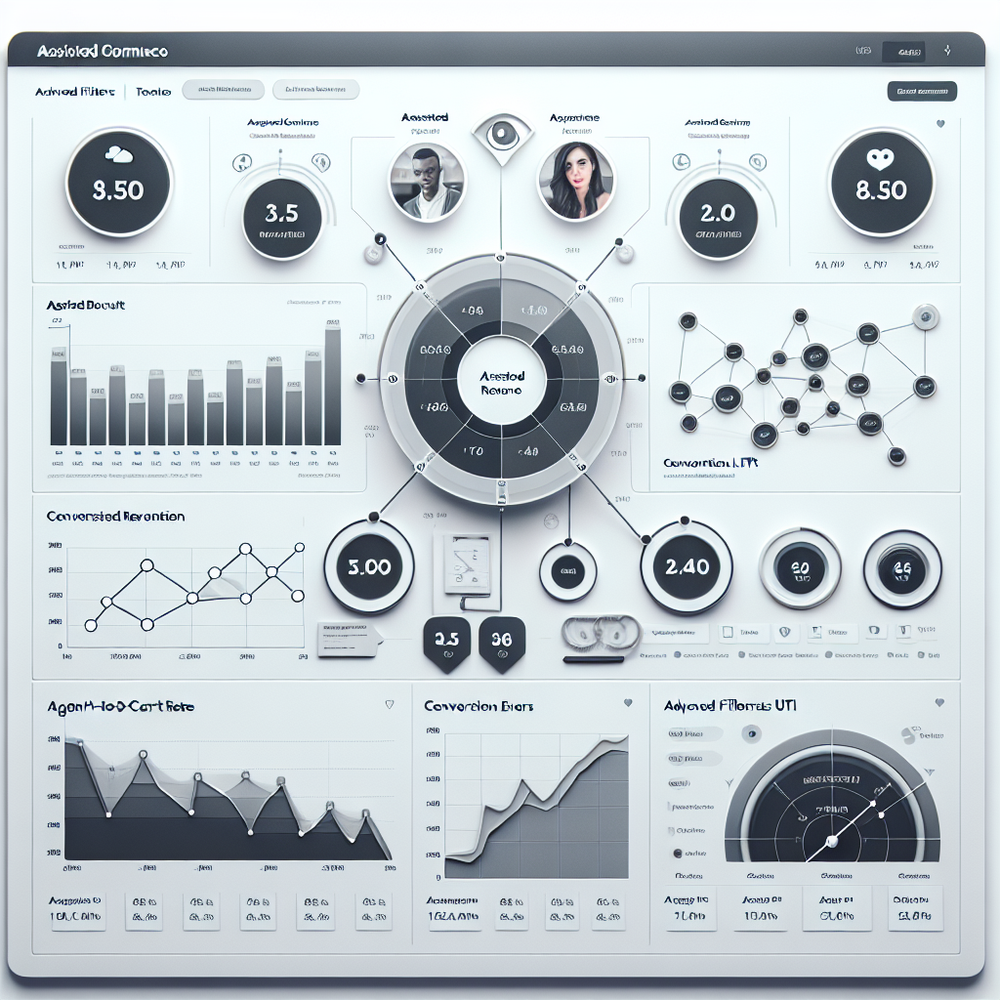
Define the metric stack before launch. At minimum: assisted conversion rate, AOV delta on assisted orders, incremental revenue from holdouts, time-to-checkout, and product discovery depth (views per assisted session).
Attribution model: grant partial credit to the agent when agent_recommendation precedes add_to_cart or when agent_message occurs within your lookback window. Avoid overwriting last-click; report assist credit in parallel for clarity with paid media teams.
In a fashion pilot, a 10% agent exposure holdout showed a 7.8% incremental revenue lift and a 12% AOV increase on assisted orders. Another merchant saw returns drop 5% when the agent pushed size-fit guidance—revealed only after we split uplift by recommendation_reason.
First-Party Data, Consent, and Trust
Trust is a feature. Use a first-party identity that survives across chat and checkout, and propagate consent consistently. Google’s Consent Mode v2 expectations mean agent surfaces must respect the same policy as your site, not a watered-down version.
Checklist for compliant measurement: capture only essential fields; hash any emails used for identity matching; store consent_state on every event; honor regional policies (GPP, GDPR) with dynamic routing; and make opt-outs auditable. Salesforce’s Connected Customer research still shows experience and trust drive loyalty—your measurement should reinforce both.
Brambles.ai enforces a first-party event pipeline with consent-aware routing, hashed identifiers, and audit logs. That lets teams ship faster without trading off privacy or accuracy.
Common Pitfalls and a Pre‑Launch Checklist
Avoidable traps dominate most rollouts. Top four: missing conversation_id on add_to_cart, double firing purchase from both agent and storefront, agent running on a third-party domain with no first-party cookies, and no dedupe keys on refunds/voids.
Pre‑launch checklist: 1) Every event has event_id and conversation_id; 2) Consent is identical across chat and site; 3) Purchase fires once and survives retries; 4) Holdout configured (5–15%); 5) Dashboards show assisted revenue and AOV; 6) Alerts for schema violations; 7) Post-purchase survey connects to conversation_id for qualitative lift.
FAQ
How is assist credit different from last-click? Assist credit recognizes the agent’s contribution when it meaningfully advanced the purchase, reported alongside last-click to keep paid channels comparable.
Will a measurement layer slow down my site? Not if implemented with async client capture and server-side fan-out. Use idempotent purchase events and backoff retries to keep checkout resilient.
Can publishers measure assisted sales across merchants? Yes—use a stable click_id and conversation_id that survive redirects. The publisher monetization flow models assist credit even when purchases clear days later.
How does this compare with GA4 alone? GA4 is a destination, not a data contract. You’ll still need identity stitching, consent propagation, and dedupe rules to make assisted journeys measurable with confidence.
What does maintenance look like? Treat the layer like a product: schema versioning, regression tests on key paths, and quarterly audits of attribution windows. Most teams review dashboards weekly and alerting daily.
Related resources on Brambles.ai
If you are implementing this, start with Brambles.ai, for publishers, for brands, get started.
For deeper reading, see 10 Reasons Publishers Need Conversational Commerce, Affiliate Disclosure in Conversational UIs Done Right, From Search Boxes to Conversations: Modern Shopping UX, Contextual, Not Creepy: Monetization That Wins.
Related posts
View all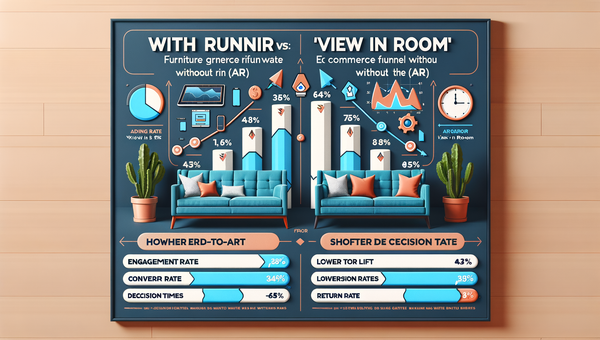
Why Furniture Shoppers Need View in Room Before They Buy
Furniture buyers abandon carts when scale and style feel risky. See why "View in Room" cuts returns, boosts conversion, and how to launch it with Brambles.ai
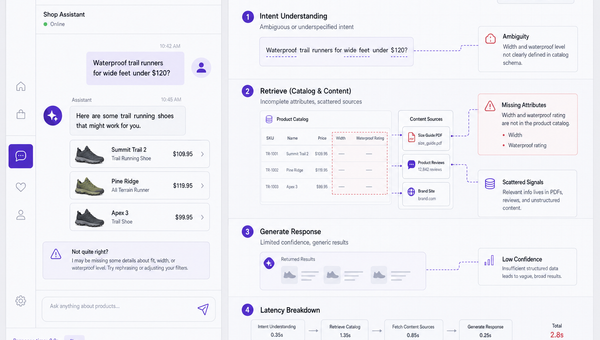
Why Good AI Shopping Agents Are Hard—and How Brambles Helps
Most AI shopping bots fail on data quality, UX, and trust. See why agents break in the wild and how Brambles.ai fills the gaps with measurable features.
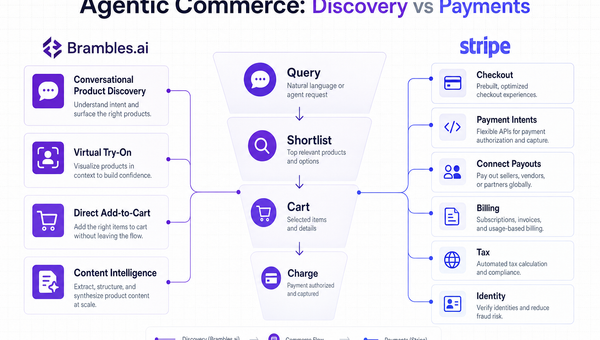
Stripe Agentic Commerce vs Brambles.ai: When to Use Each
Confused between Stripe’s agentic stack and Brambles.ai’s conversational shopping? See real trade‑offs, use cases, ROI, and an implementation path for each.
Explore Brambles.ai
Learn more about our AI-powered agentic commerce platform, agentic shopping, and shopping assistance solutions.
Explore More Insights
Discover more articles on AI, automation, and business innovation
View All Articles