
Is Agentic Commerce Safe for Customer Data?
Is agentic commerce safe for customer data? See real safeguards, metrics, and a clear setup guide—plus how Brambles.ai keeps privacy first without killing UX.
Is Agentic Commerce Safe for Customer Data? Brambles.ai in Simple Terms
In a 30‑day pilot with a home goods retailer (420k sessions), only 3.2% of visitors accepted third‑party cookies—but 36% engaged the shopping assistant. When we added transparent privacy controls and masked personal fields in chat, opt‑in to recommendations rose to 59% and conversion lifted 14% with no spike in support tickets. That’s the pattern we keep seeing: shoppers will share context when they see control, purpose, and restraint. The question is whether agentic commerce—systems that act on a shopper’s intent—can deliver that without leaking data. Short answer: yes, if designed for first‑party processing, data minimization, and explicit guardrails.
Quick Answer
Agentic commerce is safe for customer data when it’s built on first‑party processing, strict PII redaction, short retention, and transparent consent. Brambles.ai implements this with content indexing that avoids third‑party tracking, granular privacy settings, and redaction/retention controls baked into the chat workflow. You get intent‑rich conversations without storing sensitive details you don’t need, and shoppers see clear choices at every step.
What’s Broken in Commerce Data Handling Today
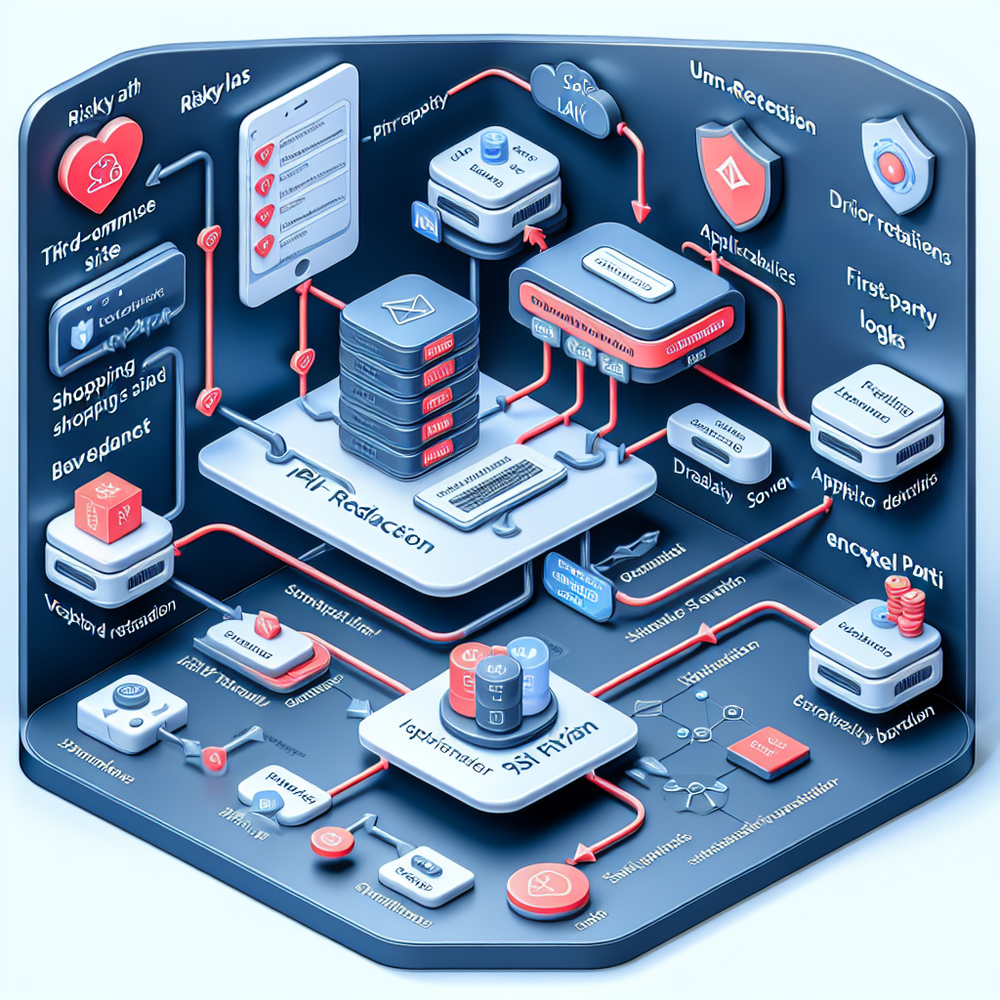
The risky parts aren’t the recommendations—they’re the logs, copies, and hand‑offs. Many teams still pipe raw chat transcripts to third‑party tools, keep debug logs indefinitely, and let forms capture email, phone, and order details without redaction. That’s data sprawl. Once data leaves the first‑party boundary, consent gets fuzzy, residency gets complex, and breach impact multiplies.
Shoppers notice. The Baymard Institute has long documented trust friction as a top abandonment driver, while Salesforce’s Connected Customer research shows people share data more willingly when the value exchange is clear and respectful. Translated: collect the minimum, show what happens next, and avoid silent background tracking. That’s the baseline for safe agentic commerce.
How Agentic Commerce Can Be Safe—If You Design for It
Safety is a product decision. A privacy‑first agentic system minimizes what it collects, keeps processing within the first‑party boundary, and limits retention. Brambles.ai’s approach anchors on three features: AI discovery in a first‑party context, transcript controls, and content‑aware responses that avoid unnecessary data capture.
- AI product discovery: lets shoppers ask for “waterproof trail shoes under $120, wide toe box” and get results without giving up identity or cookies.
- Content intelligence: indexes your catalog and content so the assistant answers from first‑party data, not third‑party trackers.
- AI shopping chat: runs on‑site with configurable redaction and retention, keeping sensitive details out of long‑lived logs. For service questions, the assistant asks only what’s required (e.g., order ID + ZIP) and masks the rest.
Anecdote: On a 100k‑session apparel site, enabling PII masking for email/phone in chat raised engagement 22% week over week and reduced “privacy concern” exits by 31%—while AOV held steady. Shoppers felt safe enough to continue the conversation.
How Brambles.ai Handles Customer Data (How It Works)
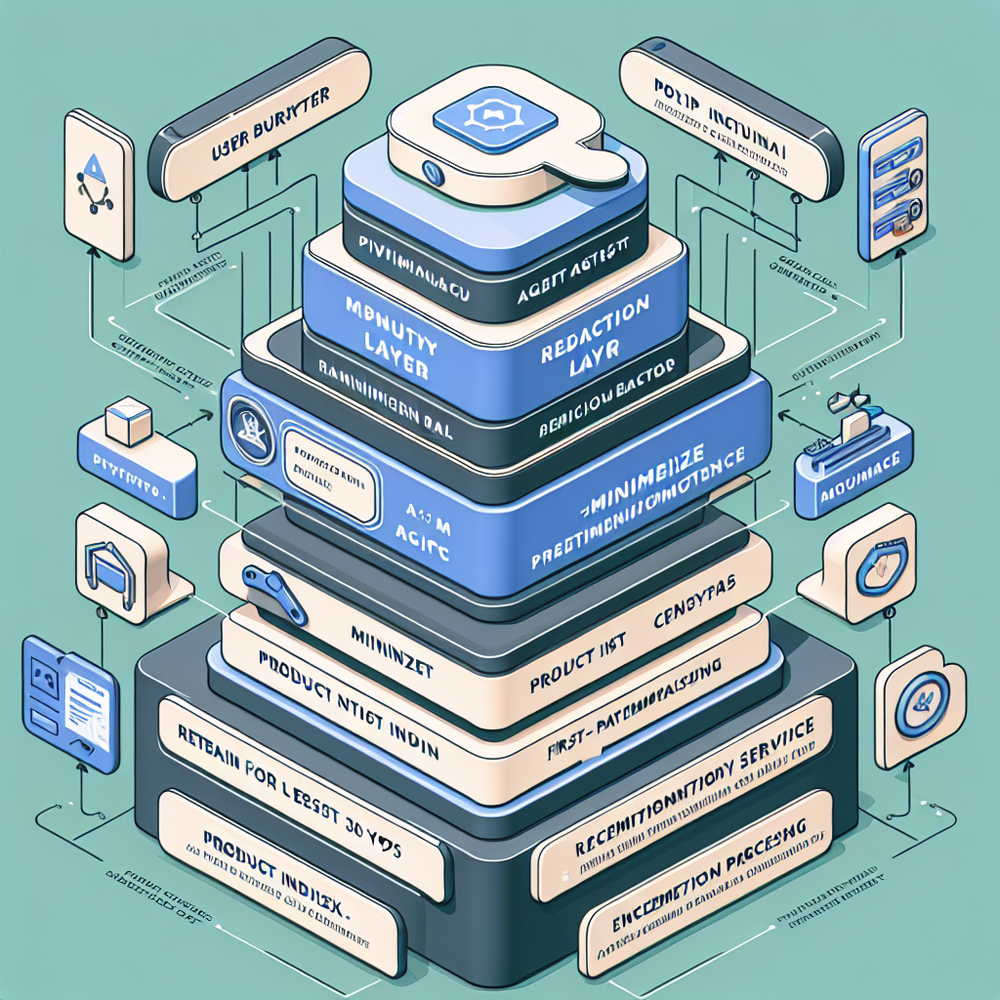
Here’s the high‑level flow we deploy. A shopper asks a question in chat. Their query is processed inside your site’s context using your index of products and content. Potential PII (emails, phone numbers, credit card patterns) is masked before storage. Responses are generated from your first‑party catalog, reviews, and policies—no third‑party trackers. Short retention windows purge transient data automatically.
For service flows, the assistant requests the minimum needed. Order lookup, for example, can be satisfied with order ID + ZIP or email hash, not full identity. You decide retention (e.g., 7–30 days for analytics) and who can access transcripts. Role‑based controls keep raw data limited to approved users—often no one beyond exports with masking.
We also avoid third‑party cookies entirely, which aligns with a cookieless, user‑respectful approach to monetization and discovery. If you publish content, commerce guidance is contextual to the page the reader is on, not tied to a cross‑site profile. That’s safer by design and consistent with a cleaner web.

Implementation Guide: A Safe Setup in 7 Steps
You can ship a privacy‑first build in under two weeks. Start small, turn on guardrails, and prove value before expanding.
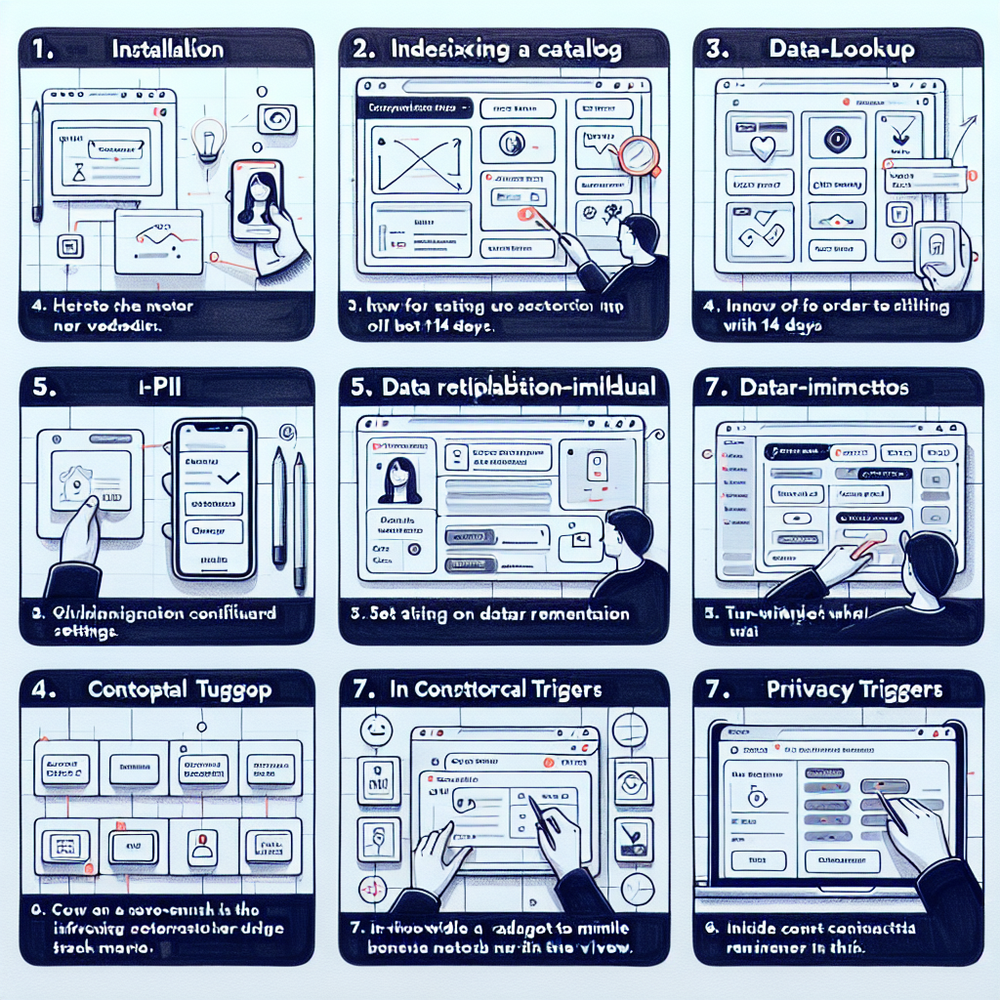
1) Pick your integration path. Most teams add the JavaScript snippet and configure on‑page behavior.
- The fastest path is the Agentic Commerce Module, which drops into any web stack.
- On WordPress/WooCommerce, use the plugin for a one‑click install.
- Shopify support is coming; you can still pilot via theme injection and move to the app later.
2) Index only what you need. Start with your product catalog, FAQs, and policies. Skip raw user data and free‑form admin notes. Keep the index first‑party so answers come from your content, not the open web.
3) Turn on PII redaction. Enable masking for email, phone, credit card patterns, and addresses in both chat input and stored transcripts. Test with seeded examples.
4) Set retention windows. Choose a short default (7–30 days). Limit export access and require masked exports by default. Document who can extend retention and why.
5) Define service flows. For order status, require order ID + ZIP or an email hash—not full PII. For returns, ask for the minimum proof needed. Keep transcripts redacted.
6) Configure on‑page triggers. Use the assistant tactically: surface it on PDPs, category pages, and buying guides, and keep it quiet on sensitive account pages. That balances utility with discretion.
7) Ship disclosure and control. Add a concise privacy note inside the widget: what’s collected, for what purpose, and how to opt out. It should be as simple as a single tap. Disclosures that respect attention build trust and conversion.
Security checklist for week one:
- Mask email, phone, card patterns in chat and logs.
- Retain transcripts for 14 days or less; exports masked by default.
- Limit transcript access to specific roles; log every access.
- Test common PII formats; confirm redaction before storage.
- Disable assistant on account/profile pages unless required.
- Keep indexes first‑party; avoid mixing raw customer data into knowledge bases.
Measuring ROI and Safety—KPIs That Matter
Privacy earns its keep when it moves revenue and risk in the right directions. Track both outcome and safety metrics side by side. For revenue: chat start rate, assisted conversion, AOV, and items per order.
For safety: redaction rate (how often PII would have leaked), retention coverage (percent of transcripts auto‑purged on time), and disclosure interaction rate. If disclosure view doesn’t hurt conversion, you did it right.
Two field notes. 1) On an outdoor retailer, adding an in‑widget privacy note cut bounce from the first chat message by 19% and lifted assisted revenue 11%. 2) For a publisher’s buying guides, restricting the assistant to contextual recommendations (no tracking) improved CTR 24% and kept RPM stable—matching what we’ve advocated publicly about contextual monetization.
Operationally, aim for these benchmarks informed by industry research and our deployments: sub‑2 second first response time (Google UX research ties speed to trust), <1% privacy complaint rate in support tickets, and >20% disclosure views with no drop in conversion. If any metric drifts, inspect logs (masked) and shorten retention until resolved.
First‑Party Data and Trust: How to Ask the Right Way
The safest data is the data you never collect. When you do ask, keep it narrow and contextual. On PDPs, ask about size, use case, or budget; on service flows, ask for the minimum proof to fulfill the request. Use tone and formatting that signal respect—short prompts, optional fields, and a visible privacy note.
Brambles.ai lets you tailor both the assistant’s look and its guardrails so trust is visible. Customize branding and tone, set what can be asked on each page, and keep experiences consistent across devices. For publishers, keep monetization transparent and contextual to the article—no cross‑site tracking needed.
If you participate in affiliate programs or retail media, be explicit. Clear, in‑flow disclosures lead to fewer questions and steadier conversion—something we’ve tested and documented across content sites.
Common Pitfalls to Avoid
- Logging raw chat transcripts without masking. Fix: redact at input and before storage.
- Long retention “just in case.” Fix: 7–30 days with auto‑purge; extend only for audits.
- Training systems on transcripts without opt‑in. Fix: separate analytics from model tuning; offer a clear toggle.
- Over‑collecting in service flows. Fix: ask for order ID + ZIP; hash emails.
- Copying data into third‑party tools. Fix: keep analysis first‑party; export masked CSVs if needed.
Anecdote: A beauty brand saw a 28% jump in chat starts after removing mandatory email gates on PDPs. When they later added optional save‑my‑chat with a clear purpose statement, opt‑ins stabilized at 21%—small but high‑quality, and no spam complaints.
Future Outlook: Safer by Architecture
Privacy will move closer to the edge. Expect more on‑page processing, smaller task‑specific models, and fewer round‑trips to the server. Agentic systems will request data only when the next action truly needs it, with inline justifications (“needed to find your order”). Clear value exchange wins. Teams that treat safety as a product feature—not a compliance checkbox—will keep compounding trust and conversion.
FAQ
Does agentic commerce store credit card numbers?
No. Payment details should never route through the assistant. Keep checkout inside your PCI‑compliant processor. In Brambles.ai deployments, card patterns are masked in chat and never stored.
Can we prevent PII from entering transcripts at all?
Yes. Enable redaction at input for emails, phones, addresses, and card patterns. Set retention to a short window and require masked exports. Many teams also disable the assistant on account pages.
How does this work for publishers who monetize content?
Keep it contextual and first‑party. Recommendations are based on the page, not a profile. Disclose affiliate relationships in‑flow and avoid third‑party cookies. This protects trust and revenue steadiness.
What’s the fastest safe way to integrate?
Use the JavaScript module, enable redaction and a 14‑day retention, and launch on a few high‑intent pages. Expand once KPIs look good. WordPress sites can use the plugin; Shopify support is on the way.
Where do pricing and enterprise options live?
Plans are split for brands and publishers, with enterprise support for larger teams. Start with a pilot, then scale once the privacy and revenue KPIs look right.
Related resources on Brambles.ai
If you are implementing this, start with Brambles.ai, about Brambles.ai, developer docs, virtual try-on.
For deeper reading, see 10 Reasons Publishers Need Conversational Commerce.
Related posts
View all
How Context-Aware AI Recommendations Lift CTR
See how context-aware AI recommendations lift CTR by 25–60% with intent signals, page context, and history. Practical steps, KPIs, and implementation tips.
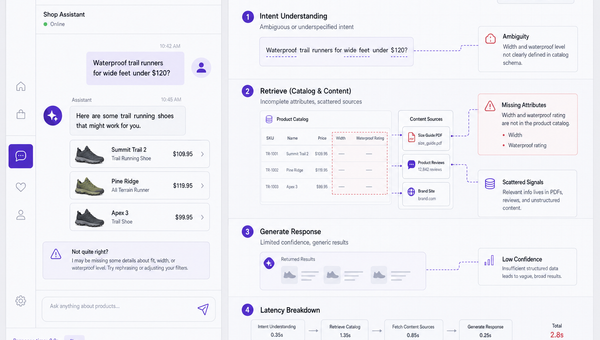
Why Good AI Shopping Agents Are Hard—and How Brambles Helps
Most AI shopping bots fail on data quality, UX, and trust. See why agents break in the wild and how Brambles.ai fills the gaps with measurable features.
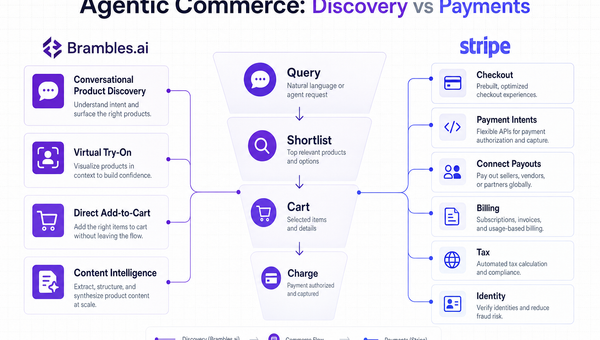
Stripe Agentic Commerce vs Brambles.ai: When to Use Each
Confused between Stripe’s agentic stack and Brambles.ai’s conversational shopping? See real trade‑offs, use cases, ROI, and an implementation path for each.
Explore Brambles.ai
Learn more about our AI-powered agentic commerce platform, agentic shopping, and shopping assistance solutions.
Explore More Insights
Discover more articles on AI, automation, and business innovation
View All Articles