
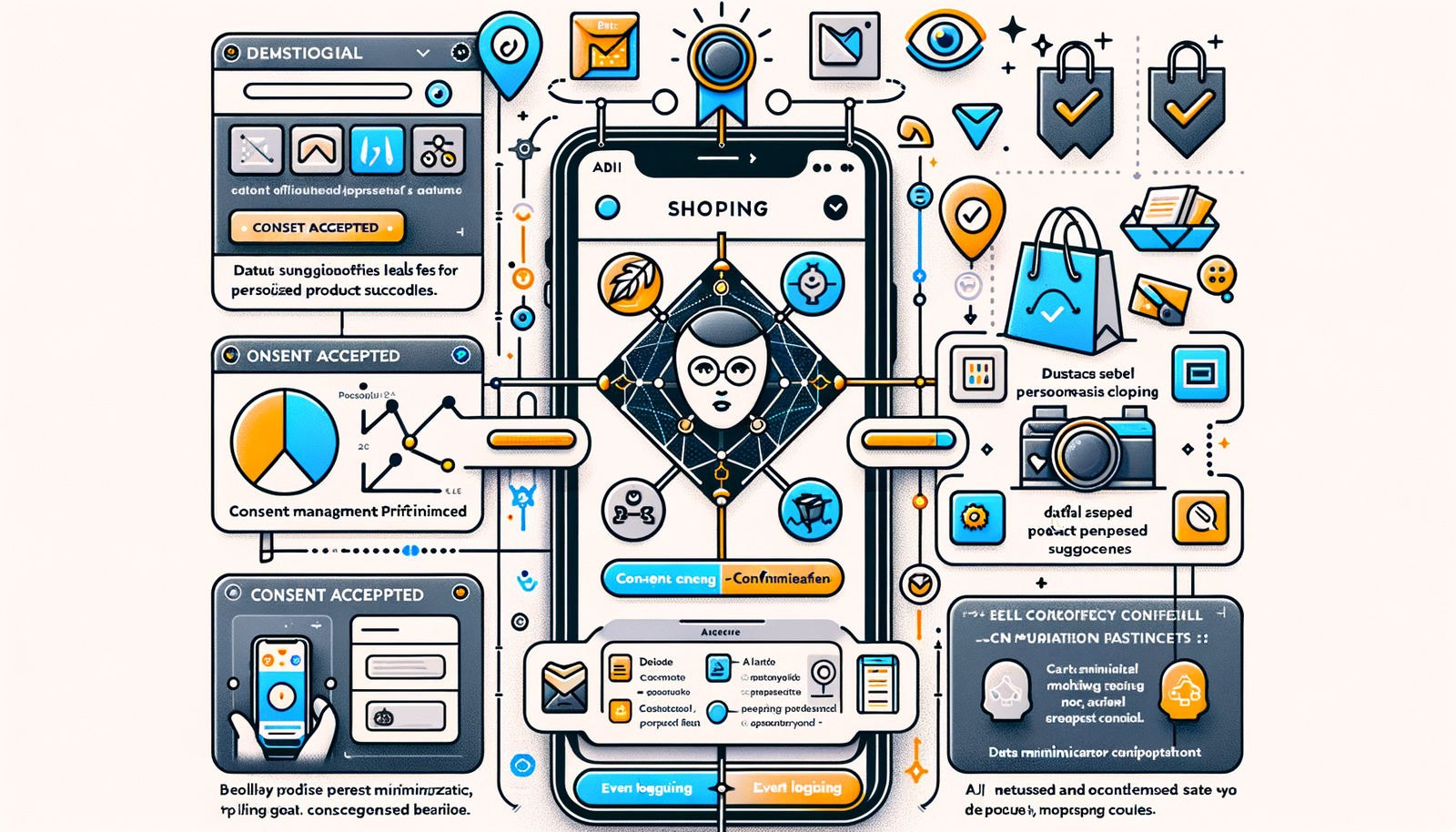
How Brambles.ai Handles First-Party Data and Consent
See how Brambles.ai captures first-party data with consent, minimizes risk, and still drives revenue. Practical flows, KPIs, and an implementation checklist.
How Brambles.ai Handles First-Party Data and Consent
We saw something counterintuitive during a May test: a lifestyle publisher added a consent gate before the shopping chat and still lifted revenue per session by 11%. Why? Opted-in users got richer, on-topic product answers, while non-consented users received high-quality contextual picks that didn’t feel nosy. Opt-outs didn’t tank monetization; they just shifted to intent-driven, non-personalized experiences. On a 220k-session electronics site, tightening purpose scopes in the CMP cut “reject all” by 19% week over week and raised add‑to‑cart from chat by 7%. The pattern held: clearer choices, faster value, less creepiness.
Quick Answer
Brambles’ commerce experiences run on first-party data with consent as a hard gate. If a visitor opts in, the system activates personalization flags (e.g., history, affinities). If not, it falls back to strong, page-contextual results—no tracking cookies required. Data is minimized, scoped by purpose, encrypted, and never used to train shared models without explicit permission. Publishers and brands control retention, territory, and events—so you can drive revenue without sacrificing trust.
What’s Broken With Consent in AI Commerce
Most consent flows were designed for display ads, not conversational shopping. They’re binary, all-or-nothing, and vague. AI assistants need clearer permission boundaries: can we store session history to refine picks? Can we remember sizes? Without nuance, users smash “reject all,” and UX suffers. Baymard’s research shows consent friction and ambiguous copy cause early abandonment; we’ve seen that translate into fewer product interactions and shorter chats.
There’s also a tooling gap. Many CMPs don’t pass granular, real-time signals to the shopping layer, so chat UIs behave the same regardless of choice. Meanwhile, cookie deprecation and signal loss leave teams guessing. The fix is to treat consent as a capability switch inside the assistant, not as a static banner tax. Conversational UX must adapt instantly, showing value even when personalization is off.
How the Consent Architecture Works
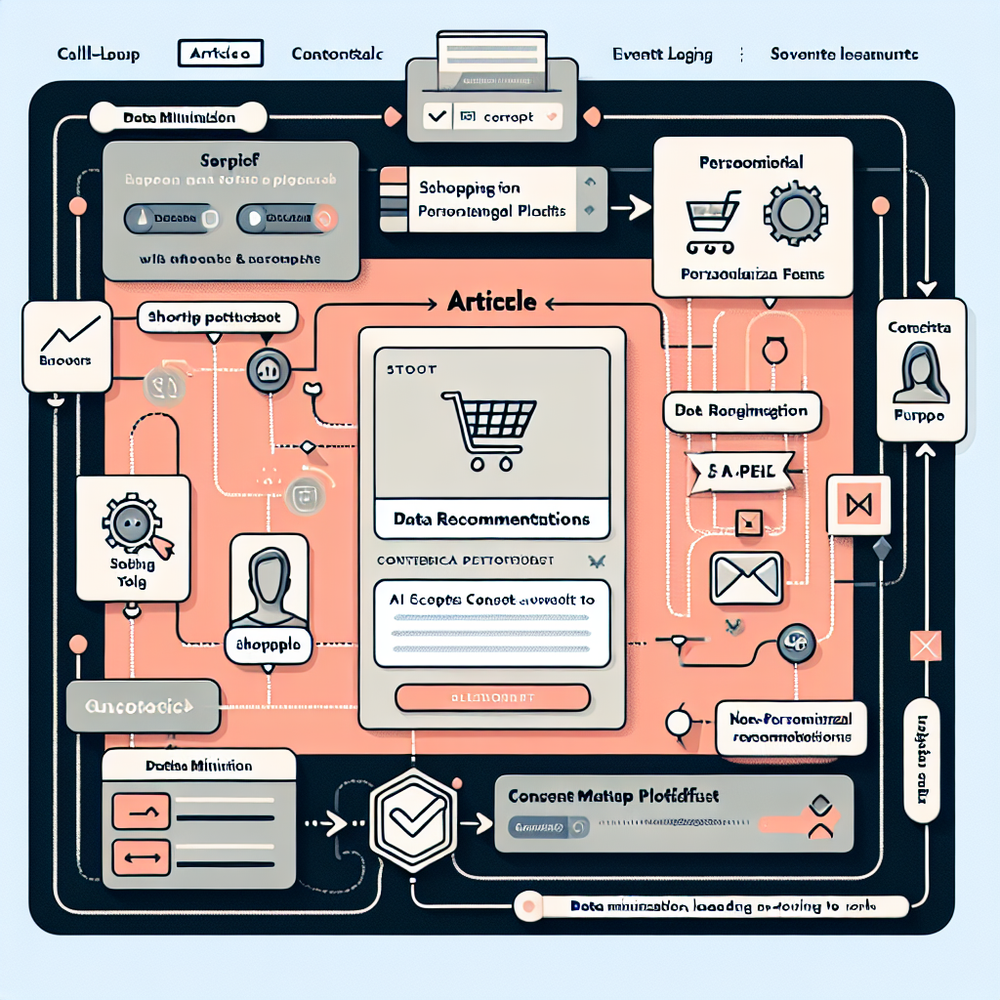
Consent is treated as a set of capability flags attached to a first-party session ID. When the page loads, the assistant requests a signed consent state from your CMP (IAB TCF v2.2 / GPP or custom). That state controls which data pathways activate: personalization memory, cross-session stitching, and sponsored placements. Data is minimized and encrypted in transit and at rest. We separate operational signals (e.g., which button was clicked) from personal signals and apply different retention windows to each.
Feature-level behavior respects consent. AI product discovery uses natural-language queries to find on‑brand items without requiring PII; with consent, it layers in history and affinities for better relevance. Content intelligence indexes your site so the assistant understands categories, attributes, and availability—powering precise results from your own content and catalog. Proactive engagement triggers contextual nudges from any page, but only personalizes when allowed. Affiliate revenue attribution runs with standard parameters and can stay pseudonymous unless the user opts in for deeper tracking.
Brambles.ai also implements a strict memory boundary: transcripts are stored per-tenant, not shared across clients, and excluded from global training unless you explicitly enable a training bucket and present a clear opt‑in. Role-based access, audit logs, and region-based storage ensure enterprise controls without slowing the UX.
Implementation Guide
You can deploy the consent-aware assistant in a week if you line up the moving parts. Here’s the step-by-step we use on launches.
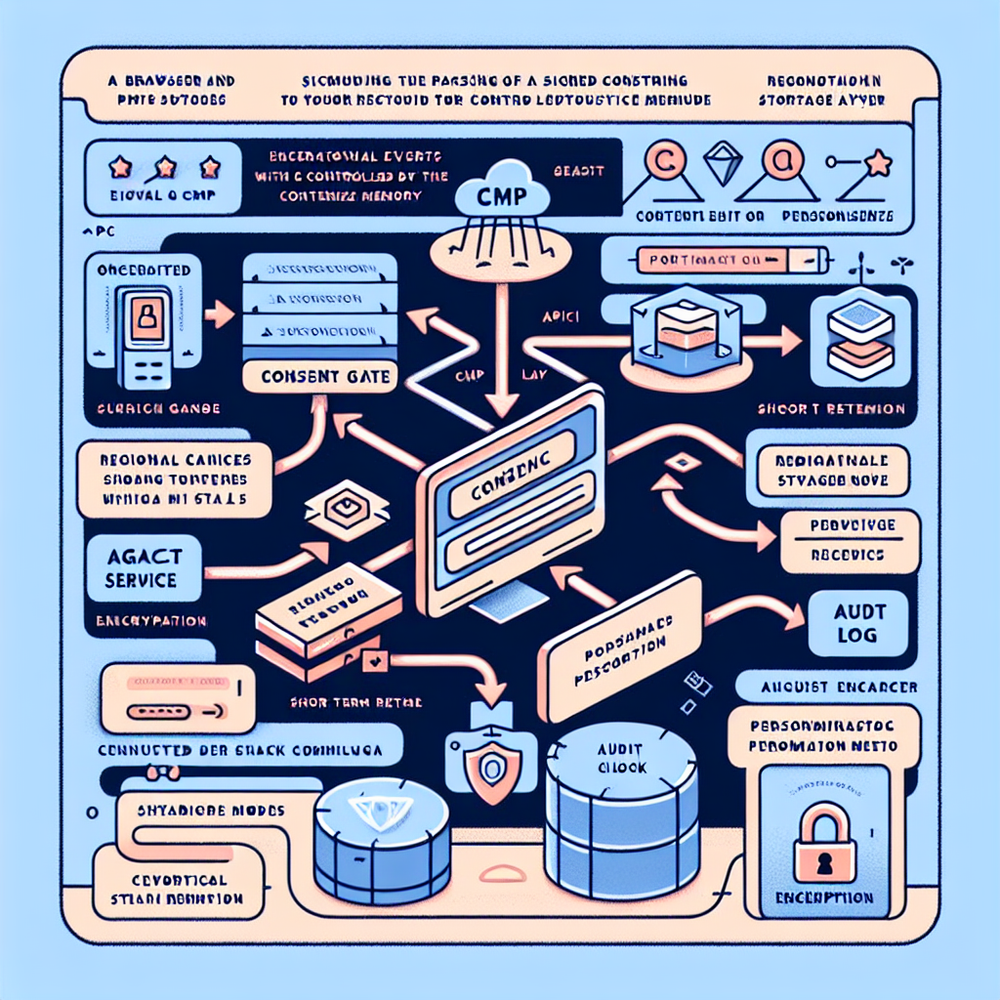
1) Install the Agentic Commerce Module via a single JS snippet. 2) Map your CMP purposes to assistant capabilities (personalization, cross-session memory, sponsored placements). 3) Configure the handshake: pass the consent string on every page view and chat open. 4) Decide retention windows per signal type. 5) Style and tone the assistant to your brand. 6) QA with opt‑in/off variants, including edge cases (incognito, ITP, VPN). 7) Launch an A/B with a clean holdout for two weeks.
CMS specifics: on WordPress, use the plugin for a one-click drop-in and auto-CMP handshake hooks. On Shopify, the App enables theme-level configuration and cart integration. If you need more control, use the developer docs to enable server-to-server events, custom consent scopes, and data residency policies that match your legal posture.
Consent readiness checklist: - Short, plain-language purposes. - A visible “Continue without personalization” path. - Microcopy that states benefits (“fewer irrelevant picks, faster answers”). - Event-level logging for opt status, chat starts, recommendations viewed, add‑to‑carts. - Separate retention for transcripts vs. operational pings. - Territory-aware storage. - Clear link to disclosure and privacy settings from the chat header.
Measuring ROI & KPIs
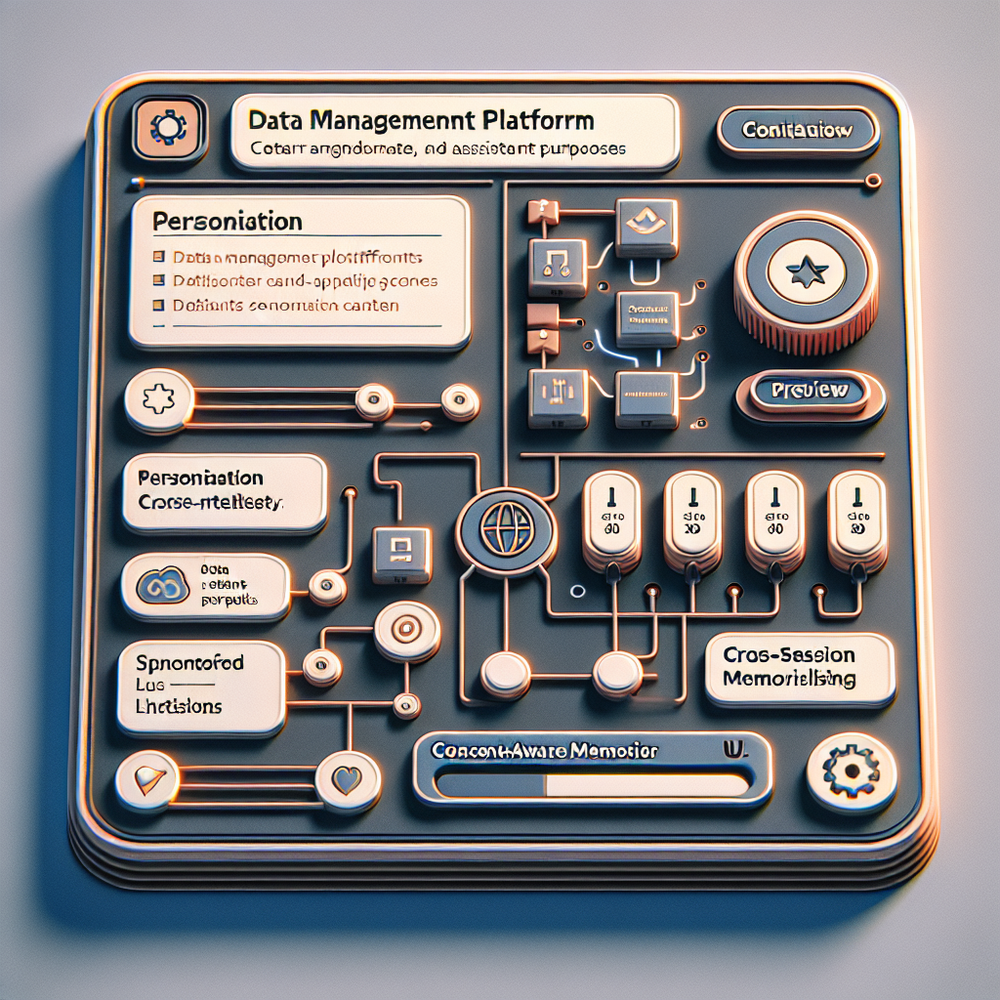
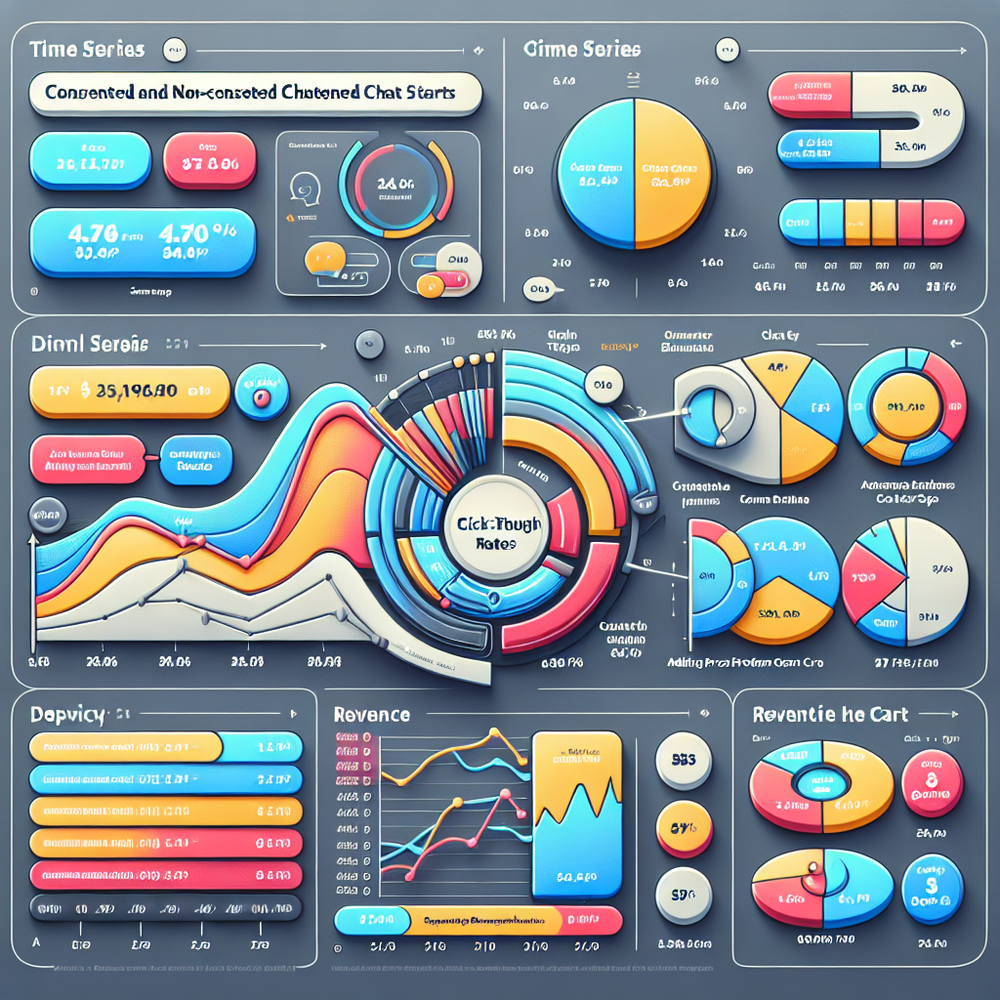
Track both value and restraint. Core KPIs: consented chat start rate, opt-in conversion delta (opt‑in vs. opt‑out AOV, CTR, RPS), fallback performance (contextual-only revenue), transcript opt‑in rate, and time-to-first-useful-answer. A beauty publisher with 1.3M monthly sessions saw a 42% lift in revenue per thousand sessions among opted‑in users and a 9% lift among non‑consented users after tuning copy and defaults.
Improve with experiments: test the consent microcopy, the order of purposes, and the first prompt. Use non-personalized defaults that still feel high-utility—category-savvy and price-aware. If you run sponsored placements, cap the density for non-consented users and disclose clearly. Expect a 5–15% CTR lift from opt-in personalization in retail categories when the pitch is clear and optional, aligning with real-world tests.
First-Party Data & Trust
Trust is earned with clarity and restraint. Use progressive profiling: ask for size, budget, or style preferences only after the assistant proves value. Provide a permanent “Privacy & choices” link in the chat header and let users revisit or revoke. Keep an audit log of consent changes. In our testing, a simple toggle labeled “Use my past picks to improve suggestions” outperformed legalese by 28% in opt-ins.
Feature notes for privacy-safe value: AI product discovery can deliver highly relevant picks from natural language alone; with consent, it remembers brand affinities and exclusions. Content intelligence makes results grounded in your own catalog, reducing noisy external data. Proactive engagement can greet users based on the page they’re on and only personalize after opt‑in. These patterns align with a cookieless future and preserve user agency.
Common Pitfalls and How to Avoid Them
Pitfall: consent state isn’t available at chat open. Fix: pass it via the Agentic Commerce Module and refresh when the user changes settings. Pitfall: mixing operational pings with personal data. Fix: split streams and shorten retention on ops. Pitfall: “training by default.” Fix: default transcripts to analytics-only and require a clear opt‑in for model improvement. Pitfall: ambiguous copy. Fix: make benefits concrete and reversible.
Quick checklist: - Consent state in the first network call. - Separate pipelines. - Human-readable microcopy. - Visible no-personalization path. - A/B test the greeting. - Audit logs on consent changes. - Region-aware storage. - Sponsored placement density caps for non-consented sessions.
Future Outlook: Privacy-Safe Personalization
As third-party cookies fade and Privacy Sandbox matures, first-party signals plus zero-party inputs become the durable edge. The assistant will do more with less—context, catalog intelligence, and optional memory. For visual categories, try-ons can be opt-in experiences that delight without persistent tracking. Keep testing disclosures and defaults; the winners tend to be transparent, reversible, and immediately useful.
FAQ
Can the chat run without tracking cookies?
Yes. The assistant can operate in a contextual-only mode using page content and catalog data. With consent, it adds memory and history. Content intelligence is the backbone here.
How do you handle GDPR/CCPA requests?
Each tenant has scoped data stores with audit trails. You can export, delete, or update records by session or user ID. Retention windows are configurable, and region-based storage is available.
Does consent lower conversion?
Not when it’s clear and optional. In tests, opt‑in personalization consistently lifts CTR and revenue, while non-consented users still see strong contextual results. Proactive nudges help both cohorts.
Will transcripts train global models by default?
No. Brambles.ai isolates transcripts per customer. They’re excluded from shared training unless you explicitly enable it and present an end-user opt‑in.
Related resources on Brambles.ai
If you are implementing this, start with Brambles.ai, publisher pricing, brand pricing, about Brambles.ai.
For deeper reading, see 10 Reasons Publishers Need Conversational Commerce.
Related posts
View all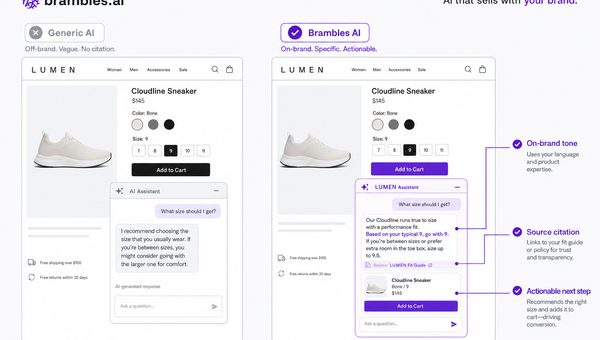
Brand-Consistent AI Chats Build Trust and Conversions
When AI mirrors your brand voice, shoppers relax—questions get answered, carts grow, and support load drops. Learn the playbook to align tone, trust, and ROI.
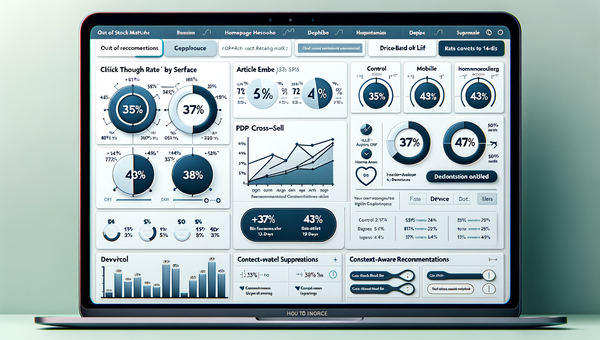
How Context-Aware AI Recommendations Lift CTR
See how context-aware AI recommendations lift CTR by 25–60% with intent signals, page context, and history. Practical steps, KPIs, and implementation tips.

Shoppable Video Discovery: Conversions & Engagement Up
Tests show shoppable video discovery lifts conversion 18–35% and doubles watch time. See the UX patterns, KPIs, and how to deploy it quickly with Brambles.ai.
Explore Brambles.ai
Learn more about our AI-powered agentic commerce platform, agentic shopping, and shopping assistance solutions.
Explore More Insights
Discover more articles on AI, automation, and business innovation
View All Articles