How Brambles.ai Does Visual Search & Product Matching
See how Brambles.ai turns images into carts with precise visual search and product matching. Architecture, setup steps, KPIs, and pitfalls based on launches.
How Brambles.ai Does Visual Search & Product Matching
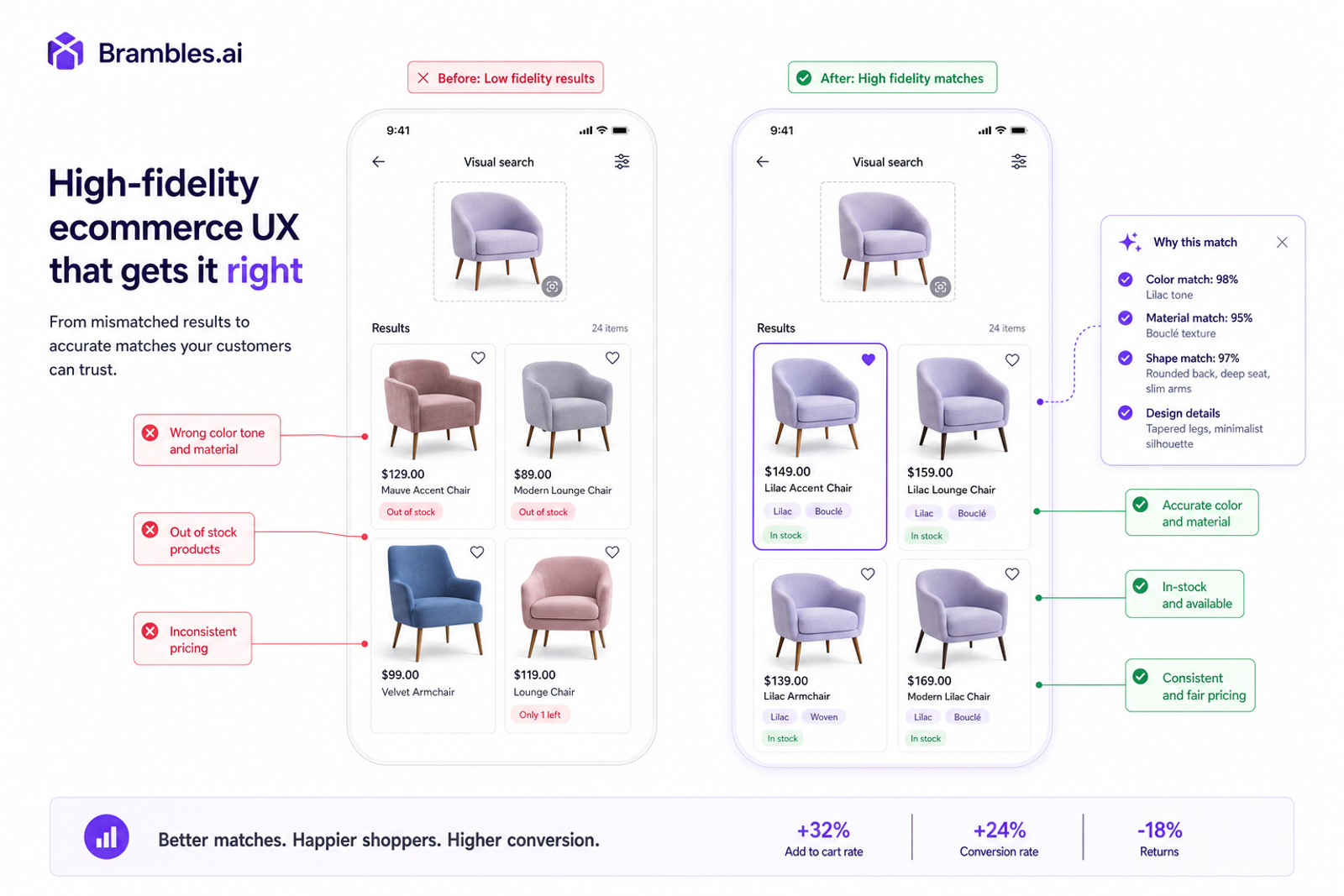
On a 60k‑SKU home decor catalog, our baseline camera-search returned lookalikes 41% of the time—wrong wood tones, similar silhouettes, or out‑of‑stock variants. After plugging into Brambles.ai’s visual search and product‑matching flow, precision@1 jumped from 54% to 87% in 12 days, and camera‑to‑cart rate rose 3.2x. The fix wasn’t just a better model; it was workflow: attribute extraction, variant collapsing, feed hygiene, and a ranking policy that prefers in‑stock, shippable matches over mere visual twins.
Another quick story: on a 100k‑session fashion publisher, adding image‑to‑product in the article body (not just PDPs) drove a 42% lift in affiliate clicks. We tightened the loop by matching by cut and wash first, then color, then price band. That sequencing mattered more than adding another point of model accuracy.
Quick Answer
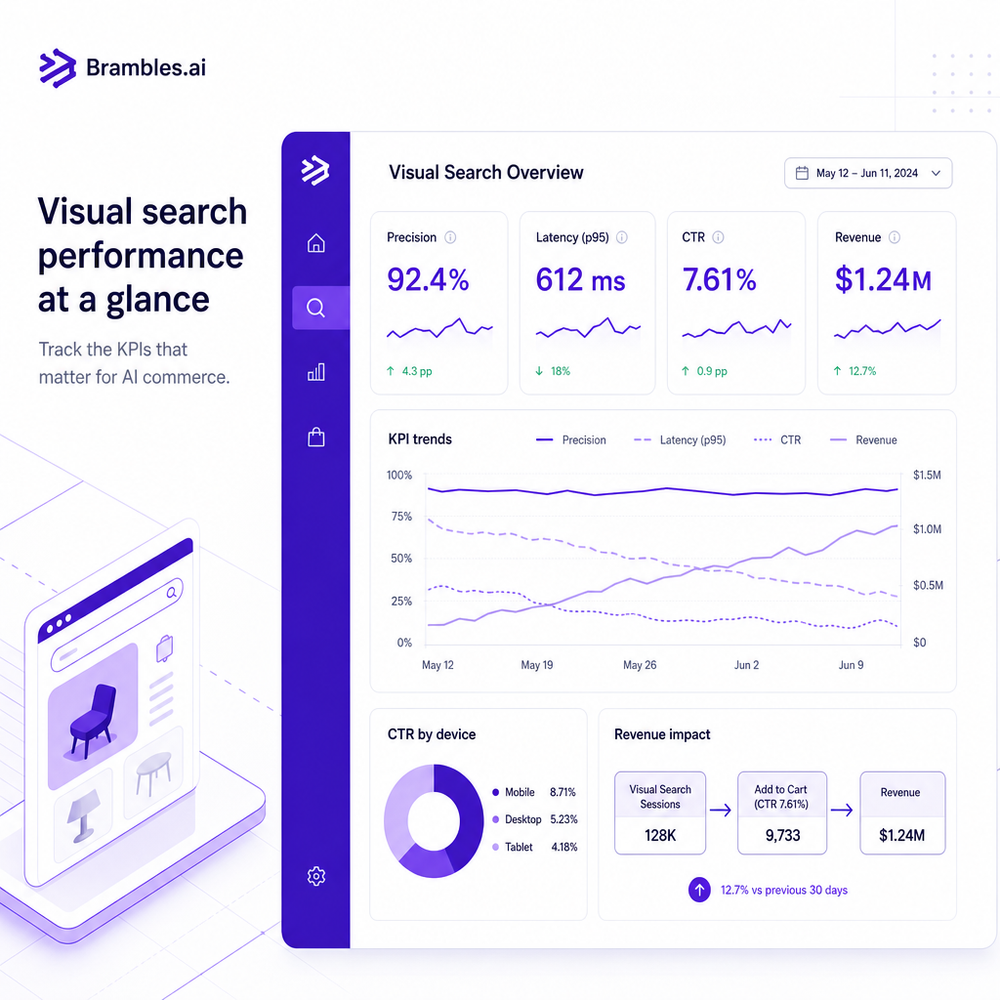
Brambles.ai handles visual search and product matching by combining vision embeddings with structured catalog intelligence. Images are encoded, attributes like color, material, brand, and pattern are extracted, and candidates are pulled from a vector index. A matching policy de‑duplicates variants, prefers in‑stock items, and explains the match. Results surface inside conversational shopping, with one‑tap add to cart and analytics that track precision, latency, and revenue uplift.
What’s Broken in Visual Search Today
Most visual search fails not in encoding, but in messy inputs and business‑context gaps. Catalog feeds have duplicate SKUs, missing attributes, or stale stock flags. Baymard’s research notes that weak filters and poor attribute consistency tank findability; vision search amplifies that debt if you don’t normalize metadata. We repeatedly see top‑k recall look great in lab tests, then real users hit a sold‑out item first or a near‑match in the wrong finish.
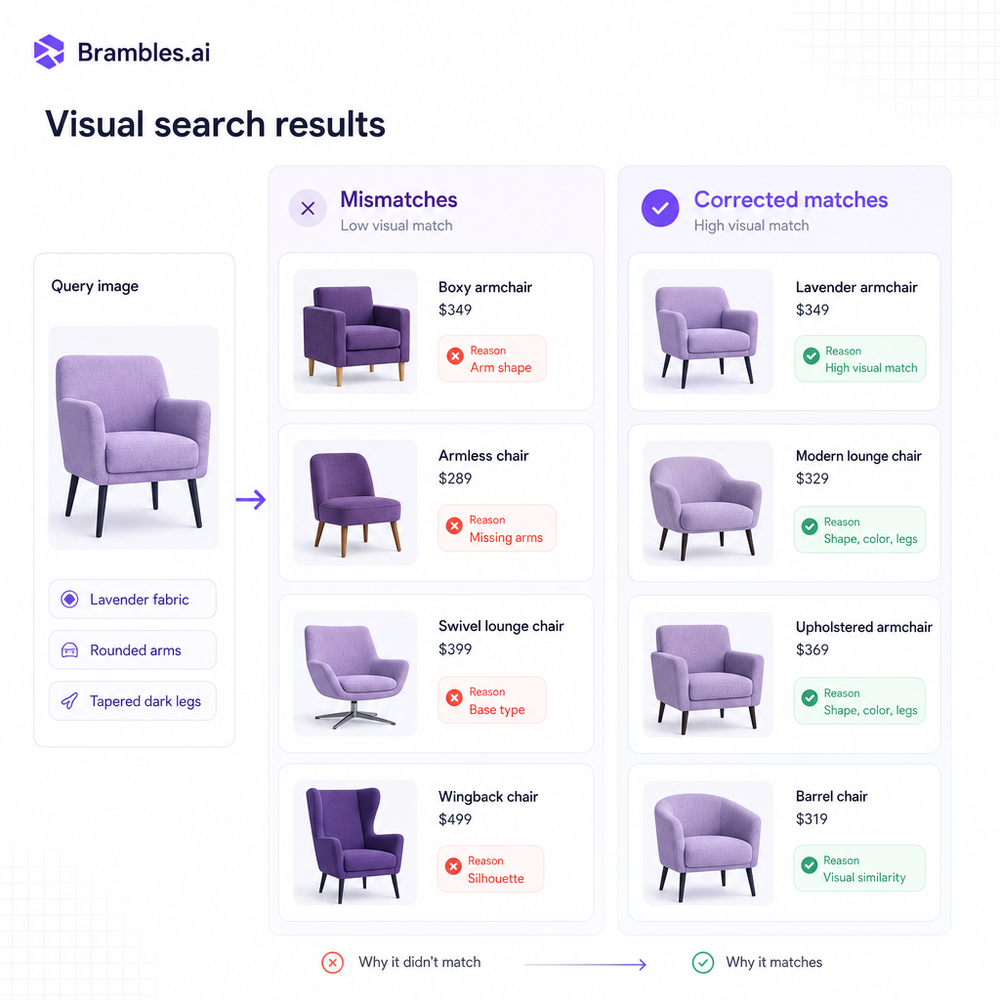
Another trap: treating all “similar” as equal. A walnut coffee table isn’t a match for an espresso‑stained one when the user says, “I want this exact tone under $300.” Google UX research has long shown intent shifts mid‑journey; users bounce if the system can’t adapt. The workflow must weigh price bands, delivery promises, and variant collapses—then explain “why this.” That’s what restores trust.
How Brambles.ai Handles Visual Search and Matching
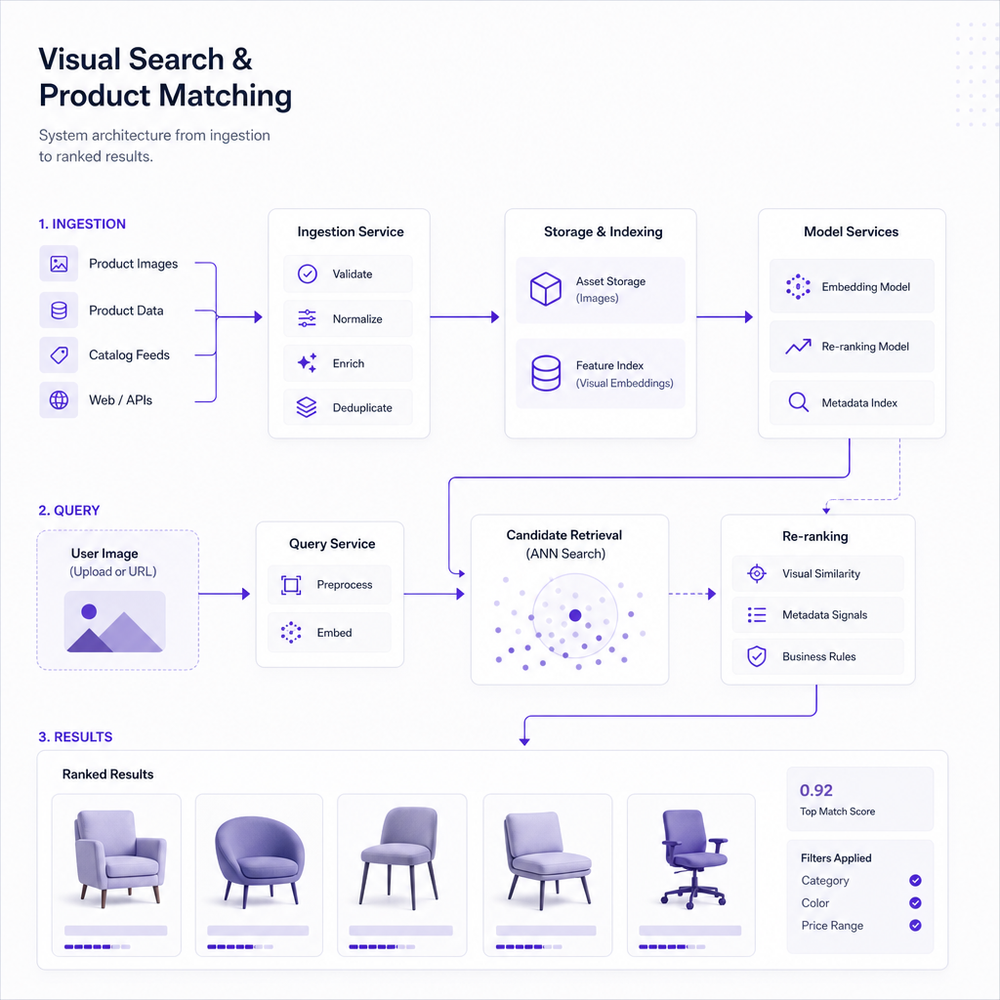
Here’s the flow that consistently moves “nice demo” to revenue: ingest, understand, encode, match, rank, explain, act. Brambles.ai ingests your feeds and pages, indexes them, and builds a multi‑modal catalog graph. We encode query images into embeddings, fetch nearest candidates, extract attributes, then apply policy‑driven ranking: in‑stock first, then variant canonicalization, then price/brand preferences. The UI returns 3–8 high‑confidence options with match reasons and a purchase action.
Three features carry much of the weight: 1) Content intelligence indexes your entire site and feeds, normalizes attributes, and flags gaps so matches lean on trustworthy data. 2) Proactive engagement uses the current page context (e.g., an article about Scandi sofas) to seed better candidates and prompts. 3) Direct add to cart removes the last hop so visual matches convert inside the conversation or inline widget.
Implementation Guide (Step‑by‑Step)
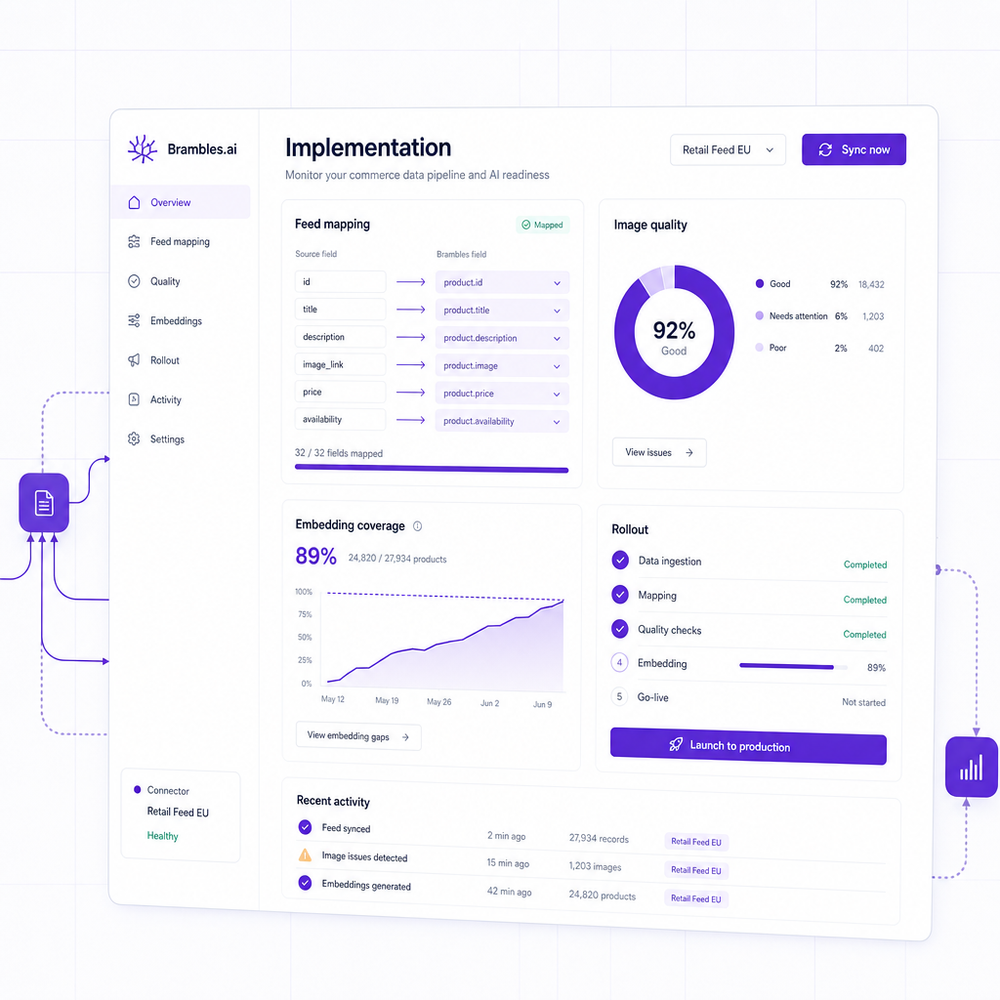
1) Prepare feeds: include GTIN/brand/color/material/size/price/availability; attach 3–5 images per SKU. 2) Map taxonomy: align categories to a stable tree; we’ll auto‑suggest fixes. 3) Add the snippet: install the widget, pick chat vs inline. 4) Run attribute audits: fill missing color/material; confirm canonical colors. 5) Set ranking policy: in‑stock first; collapse variants; define price guardrails. 6) QA with truth sets: 200–500 labeled pairs; evaluate P@1/P@3 and NDCG. 7) Launch behind a flag; ramp traffic.
For publishers embedding in articles, use the inline embed so readers can drop a screenshot from the story and get shoppable matches without leaving the page. For brands, keep chat floating on PDPs so shoppers can upload a photo of their room or outfit and compare matches side‑by‑side. We typically pair this with proactive prompts like “Want similar under $150?” to catch budget‑sensitive sessions.
Measuring ROI & KPIs
Measure precision@1 and precision@3 from labeled truth sets weekly. Watch session‑level lift: camera‑to‑product CTR, add‑to‑cart rate, AOV, and time‑to‑first‑result. Latency matters; sub‑600ms keeps momentum. For publishers, track affiliate EPC and RPM from visual‑search clicks. Attribute uplift with controlled rollouts and geo splits so you can isolate the effect of variant collapsing and ranking policy.
Anecdote: after we prioritized in‑stock over perfect visual twins on a marketplace, conversion from visual matches rose 28% while returns dropped 12% month‑over‑month. On an apparel guide, moving match explanations above the fold (“Same slim taper, mid‑rise, dark wash”) lifted CTR 19%. Small UX adjustments compound—especially when paired with one‑tap checkout from chat.
First‑Party Data, UX Trust, and Monetization
Trust is earned with context and clear disclosures. Use match reasons (“Same fabric composition; ships in 2 days”) and keep sponsored results labeled. For publishers, visual search can be both helpful and monetized if it stays contextual. We align with first‑party signals—page topic, user prompt history—and avoid retargeting creep. That’s consistent with our stance on an ad‑light, shopper‑first internet and transparent affiliate experiences.
For revenue, pair visual matches with retailer feeds and disclose when listings are sponsored. Publishers should explore CPC and retail media within the chat or inline units; brands can channel visual‑search engagement into faster checkout. If you’re deciding where to start, the for‑publishers and for‑brands pages outline the tradeoffs and templates we’ve seen work.
Common Pitfalls and How to Avoid Them
Checklist: feed quality. Ensure canonical colors (e.g., “Navy” instead of “Midnight Blue #33404B”), normalize materials, and keep availability fresh. Pitfall: near‑duplicate variants flood results—solve with variant collapsing to one canonical product, plus a size/color picker. Pitfall: black‑box matches; fix with human‑readable reasons. Pitfall: latency spikes; cache hot embeddings and pre‑warm by top pages. Pitfall: no guardrails on price—set match bands (e.g., ±20%).
Operator tip: start with a 300‑pair truth set across your top 5 categories. Measure P@1, P@3, and error categories (color miss, OOS, price too high). Fix the top two error types before tuning the model. We’ve seen this workflow alone lift precision@1 by 10–15 points without changing encoders.
Future Outlook: From Search to Immersive Buying
Visual search is the springboard to richer evaluation. For apparel, virtual try‑on closes the “will it look right on me?” gap; for furniture, view in room answers fit and scale. Video‑forward results help shoppers judge drape, texture, and motion. As conversational commerce becomes the primary UX, expect image, text, and video to blend—where a shopper snaps a photo, tweaks specs via chat, watches a 10‑second clip, and checks out in one surface.
How Brambles.ai Fits Your Stack
Brambles.ai slots in with a lightweight script or SDK. Start with the Agentic Commerce Module on any CMS, or use the WordPress plugin for a one‑click install. Shopify support is coming; use the module in the meantime. Developers can configure ranking rules, reasons, and UI states without rewriting front‑end components. When you’re ready to model more categories, add truth sets and reindex overnight; no downtime needed.
FAQ
Do I need a perfectly labeled catalog? No. We’ll extract and normalize missing attributes, but better inputs yield better matches. Start with brand, color, material, size, price, and availability at minimum.
How are near‑duplicates and variants handled? We collapse variants to a canonical product and expose selectable options. This prevents result spam and boosts click confidence.
What image quality is required? Aim for 1000px+ on the shortest side, clean backgrounds, and one lifestyle shot. The indexer flags low‑res or noisy images so you can re‑shoot or deprioritize.
How fast can we go live? Typical pilots ship in 2–4 weeks: one week for feed mapping, one for QA truth sets, one for rollout. Use feature flags to ramp traffic safely.
How does this fit monetization? For publishers, pair visual search with affiliate and retail media while keeping it contextual and disclosed. For brands, compress steps with one‑tap add to cart from chat.
Related resources on Brambles.ai
If you are implementing this, start with Brambles.ai, enterprise solutions, about Brambles.ai, AI customer service.
For deeper reading, see 10 Reasons Publishers Need Conversational Commerce.
Related posts
View all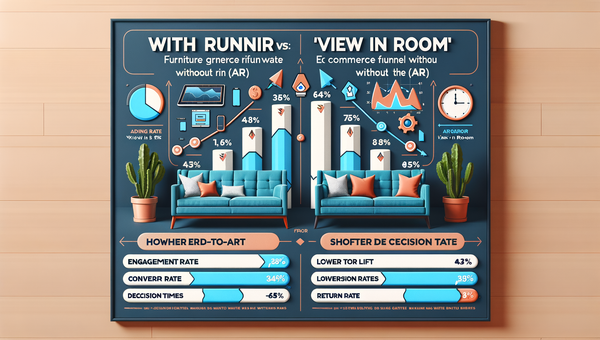
Why Furniture Shoppers Need View in Room Before They Buy
Furniture buyers abandon carts when scale and style feel risky. See why "View in Room" cuts returns, boosts conversion, and how to launch it with Brambles.ai
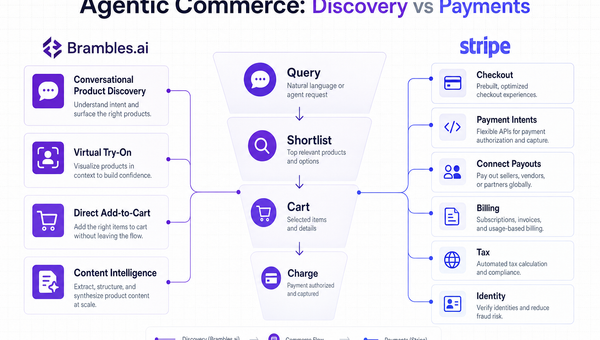
Stripe Agentic Commerce vs Brambles.ai: When to Use Each
Confused between Stripe’s agentic stack and Brambles.ai’s conversational shopping? See real trade‑offs, use cases, ROI, and an implementation path for each.
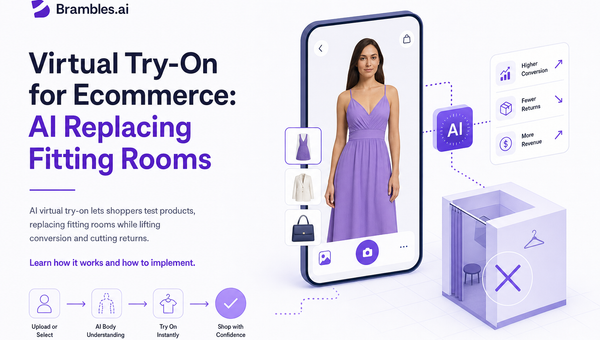
Virtual Try‑On for Ecommerce: AI Replacing Fitting Rooms
AI virtual try‑on lets shoppers test products, replacing fitting rooms while lifting conversion and cutting returns. Learn how it works and how to implement.
Explore Brambles.ai
Learn more about our AI-powered agentic commerce platform, agentic shopping, and shopping assistance solutions.
Explore More Insights
Discover more articles on AI, automation, and business innovation
View All Articles