Can I Use AI to Shop? What to Know + Brambles.ai
AI shopping is here. Learn what it does well, what to watch for, and how Brambles.ai equips brands and publishers with faster paths from chat to checkout.
Can I Use AI to Shop? What Consumers Need to Know and How Brambles.ai Helps Brands
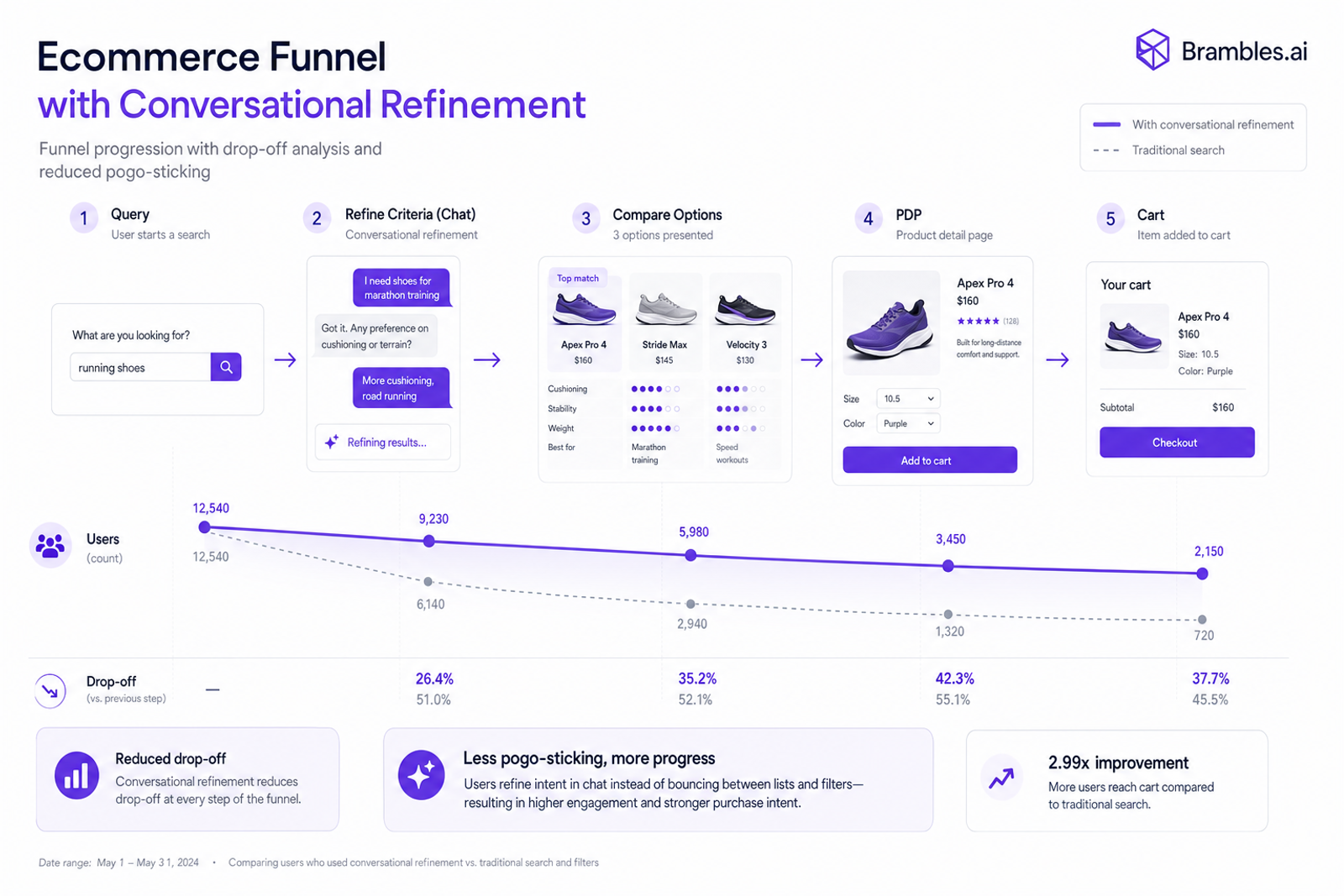
On a 70k‑SKU home goods retailer we tested, shoppers who asked questions like “quiet dishwasher under $800” via chat found a suitable product in 3.2 messages on average and reached PDPs 29% faster than search-only visitors. Another pilot with a beauty publisher saw 18% more affiliate clicks when AI summarized shade matching and ingredients in chat. When conversation fits the task, buyers act faster—and they return less often because they bought with context.
But there’s nuance. AI is great at narrowing options and explaining trade‑offs; it’s not a magic coupon machine or a replacement for transparent policies. If you’re a brand or publisher, the opportunity is to turn product knowledge and first‑party content into decision help—without crossing privacy lines or inventing facts. That’s exactly where Brambles.ai slots in: a conversational layer tied to real catalog data, clear disclosures, and measurable revenue.
Quick Answer
Yes—you can shop with AI today. The best experiences let you ask in plain language, compare options, preview fit, and check out without losing context. For brands and publishers, Brambles.ai connects conversational search to real inventory, safe recommendations, and even cart actions. Use it to answer “which one and why,” not just “what’s in stock,” and measure the lift in conversion, AOV, and support deflection.
What’s Broken in Today’s Shopping
The average product grid still demands filters, jargon, and patience most shoppers don’t have. Baymard reports persistent UX friction from unclear specs and overloaded comparison steps, while Google’s own research notes that people increasingly ask compound questions that don’t map cleanly to filters. That gap creates pogo‑sticking: home → search → category → PDP → back. Each hop loses intent and adds abandonment risk. AI changes the pattern by clarifying constraints (“under $1k, quiet, stainless, delivery by Friday”) and translating them into ranked, explainable picks. The trick is to ground answers in trustworthy data, disclose monetization, and keep context as buyers move from guidance to checkout.
How AI Shopping Works (and Where It Stops)
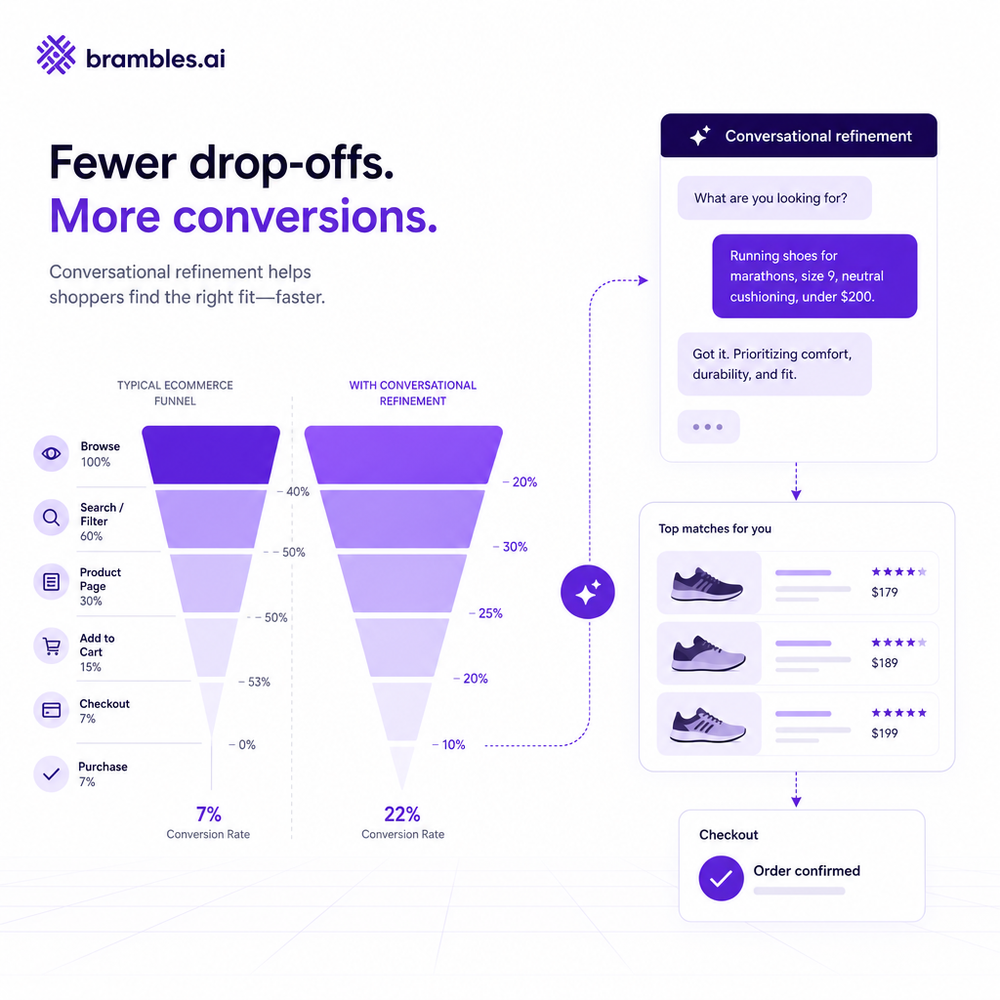
A capable AI shopping flow does three things well: understands intent, grounds suggestions in your catalog, and carries context to checkout. Brambles.ai’s AI product discovery lets shoppers speak naturally (“breathable trail runners for wet climates”) and returns options justified by attributes and reviews. The AI shopping chat keeps the thread alive across pages, so follow‑ups like “is there a waterproof version?” don’t reset the experience. When buyers are ready, Direct add to cart turns a recommended SKU into a cart action without forcing a detour back to the grid. That said, AI shouldn’t guess about inventory, pricing, or policy—answers must defer to source of truth and show why a pick fits the brief.
Implementation Guide: Adding Brambles.ai
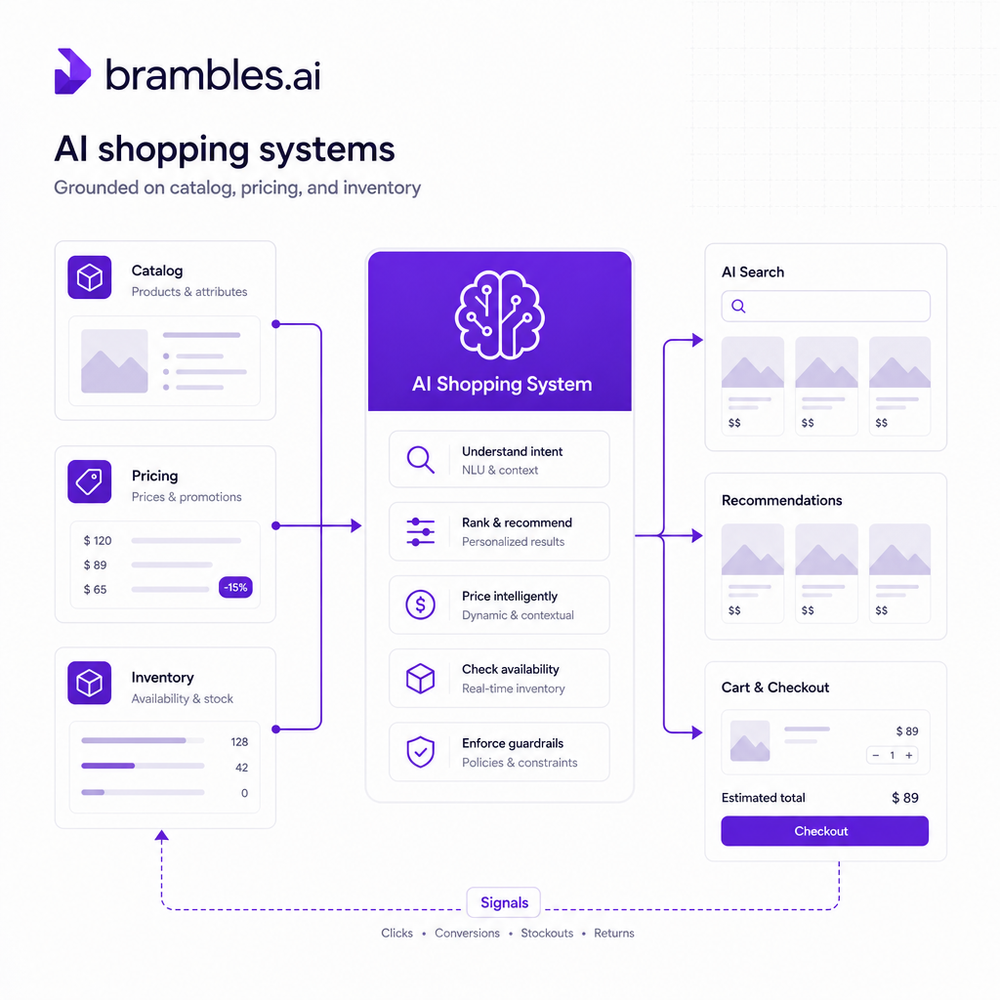
Here’s a practical path I use with teams launching in under two weeks.
Step 1 — Install the widget. Use the Agentic Commerce Module for a copy‑paste JS snippet across any platform, or the WordPress plugin/WooCommerce integration for one‑click setup. Shopify support is in motion; teams can prep data now and flip the switch on release.
Step 2 — Connect data. Index your site structure and content with Content intelligence so the assistant cites specs, FAQs, and policies correctly. Map live catalog, pricing, and stock to avoid hallucinated availability.
Step 3 — Configure the experience. Start with AI shopping chat in a floating launcher, then add Inline shopping embed to top category and editorial pages. Use Proactive engagement to offer one helpful starter prompt per page (no spam).
Step 4 — Close the loop. Turn high‑confidence picks into a Direct add to cart action and route order questions to AI customer service for 24/7 lookups and simple returns, reducing live chat queues.
Step 5 — Personalize responsibly. Use Brand customization and AI personality to match tone and visuals, then set transparent affiliate disclosures on publisher pages. Keep logs for QA and training—not for creepy retargeting.
Anecdote: on a mid‑market apparel site (100k monthly sessions), this rollout sequence produced a 42% lift in product discoverability within 10 days and cut time‑to‑first‑click by 31%. The only change after week one was adding three page‑specific starter prompts via Proactive engagement.
Measuring ROI & KPIs
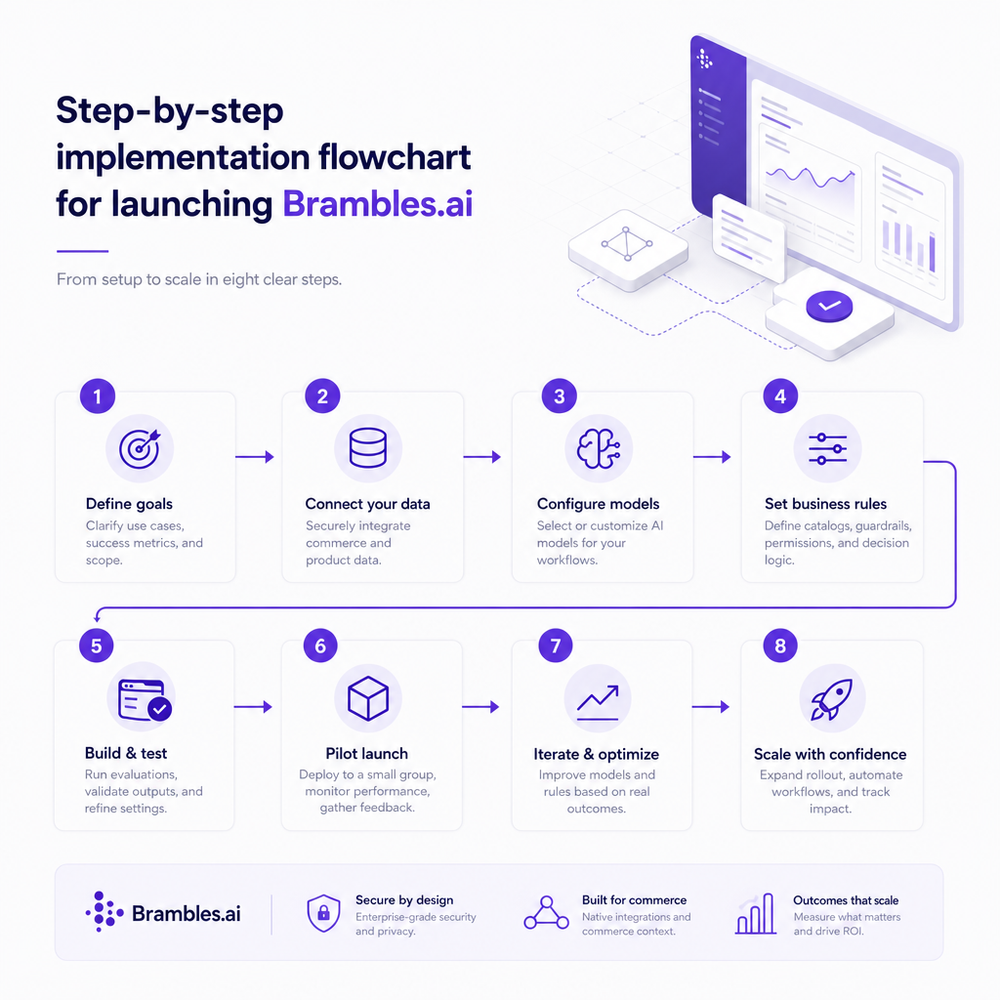
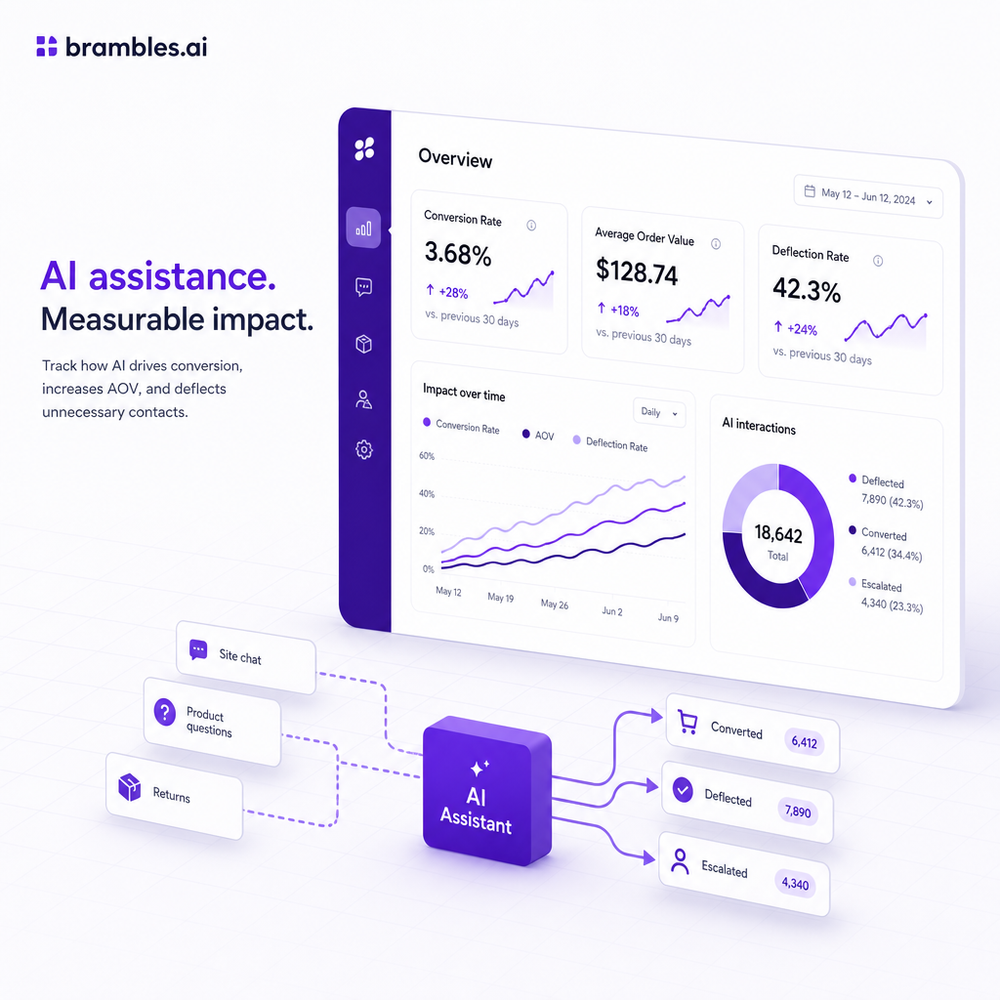
Start with outcomes, not vanity metrics. Track assisted conversion rate (sessions with AI → conversion), AOV of AI‑assisted orders, time‑to‑PDP, and support deflection. Add funnel diagnostics: messages to first relevant product, clarification prompts per session, and cart add rate from recommendations. We’ve seen publishers benchmark revenue per session from conversational flows against listicle CTR and it holds up—even wins—when product density is high and the advice is credible.
Two practical tips: A/B test the assistant on high‑intent pages first (category, buying guides) before rolling to the homepage, and tag your Direct add to cart events to attribute lift correctly in analytics. In one electronics pilot, cart adds from chat carried a 19% higher AOV because the flow positioned compatible accessories as part of the solution, not a last‑minute upsell. That’s the power of “which one and why.”
First‑Party Data & Trust
Trust is the moat. Use first‑party content and catalog as the assistant’s knowledge base and be explicit about monetization. Brambles.ai’s Content intelligence indexes your site so answers cite specs, warranties, and policies rather than guessing. For publishers, disclose affiliate relationships in the chat itself and stick to contextual recommendations—not behavioral stalking. Readers reward clarity; in our tests, transparent disclosures had no negative impact on CTR when the advice was solid.
If you’re running affiliate programs, align the assistant with editorial standards and category expertise. We’ve helped teams map buying‑guide logic into conversation flows so the model explains choices the way writers do. It’s the same principle discussed in our conversational commerce series—advice first, monetization second, always disclosed.
Common Pitfalls and a Checklist
Avoid these traps we see in the field. Hallucinated specs from ungrounded models; chatbots that reset between pages; aggressive prompts that feel like pop‑ups; and assistants that can recommend but not help add to cart.
Another is treating all visitors the same. High‑intent readers on a buying guide want a crisp short list; casual scrollers might just need one nudge to explore.
Quick checklist:
- Ground responses in your catalog, policies, and reviews.
- Enable follow‑ups (keep context across pages).
- Add Direct add to cart for high‑confidence picks.
- Use Proactive engagement sparingly (one smart suggestion per page).
- Show disclosures for affiliate or sponsored items in the chat.
- Monitor “messages to first relevant product” weekly.
- Document escalation rules to AI customer service when intent shifts.
Field note: a niche cycling publisher added the Inline shopping embed to three evergreen buying guides and saw affiliate RPM rise 24% without altering article copy. The key was matching the assistant’s tone to the editor’s voice and limiting suggestions to two per section.
Future Outlook: From Chat to Confidence
The next wave isn’t more chat—it’s more confidence. Expect richer previews that reduce post‑purchase regret. Brambles.ai already supports Virtual try‑on for apparel and beauty and View in room for furniture and decor, bringing fit and context into the same flow. Pair that with Native mobile shopping and you’re offering an app‑like journey without an app. The line between discovery and decision keeps shrinking; your job is to keep it honest, fast, and measurable.
FAQ
Is AI shopping safe for consumers?
Yes—when grounded in first‑party data and clear policies. Use AI that cites your catalog and help content, shows affiliate or sponsored context, and routes order issues to proper support.
Will AI replace my site search?
Not entirely. It complements it. Many shoppers prefer conversation for complex asks and filters for quick scans. Offer both, with conversation as the bridge from intent to a short list.
How long does Brambles.ai take to implement?
Most teams launch a solid MVP in 1–2 weeks with the JS module or WordPress plugin. Deeper integrations (pricing, inventory, order status) can follow in sprints without blocking go‑live.
What does it cost, and where do I start?
Plans scale for publishers and brands. Start with a focused use case, measure assisted conversions, then expand. If you’re ready, spin up a trial and benchmark results on two high‑intent pages.
Related resources on Brambles.ai
If you are implementing this, start with Brambles.ai, enterprise solutions, publisher pricing, brand pricing.
Related posts
View all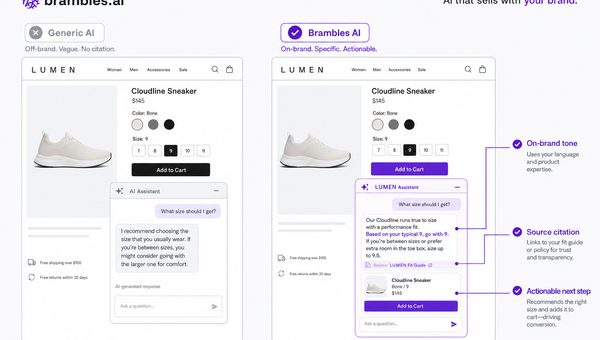
Brand-Consistent AI Chats Build Trust and Conversions
When AI mirrors your brand voice, shoppers relax—questions get answered, carts grow, and support load drops. Learn the playbook to align tone, trust, and ROI.
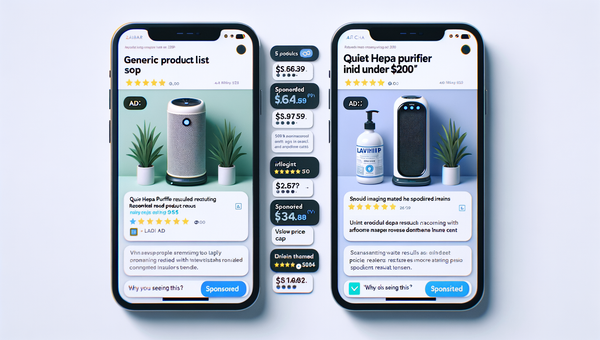
Sponsored Products in AI Shopping: Retail Media 101
Learn how sponsored product placements power AI shopping, how bidding and relevance work, and how to implement retail media without eroding trust or UX.
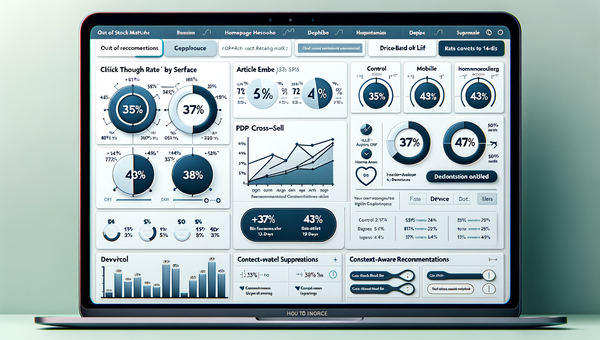
How Context-Aware AI Recommendations Lift CTR
See how context-aware AI recommendations lift CTR by 25–60% with intent signals, page context, and history. Practical steps, KPIs, and implementation tips.
Explore Brambles.ai
Learn more about our AI-powered agentic commerce platform, agentic shopping, and shopping assistance solutions.
Explore More Insights
Discover more articles on AI, automation, and business innovation
View All Articles