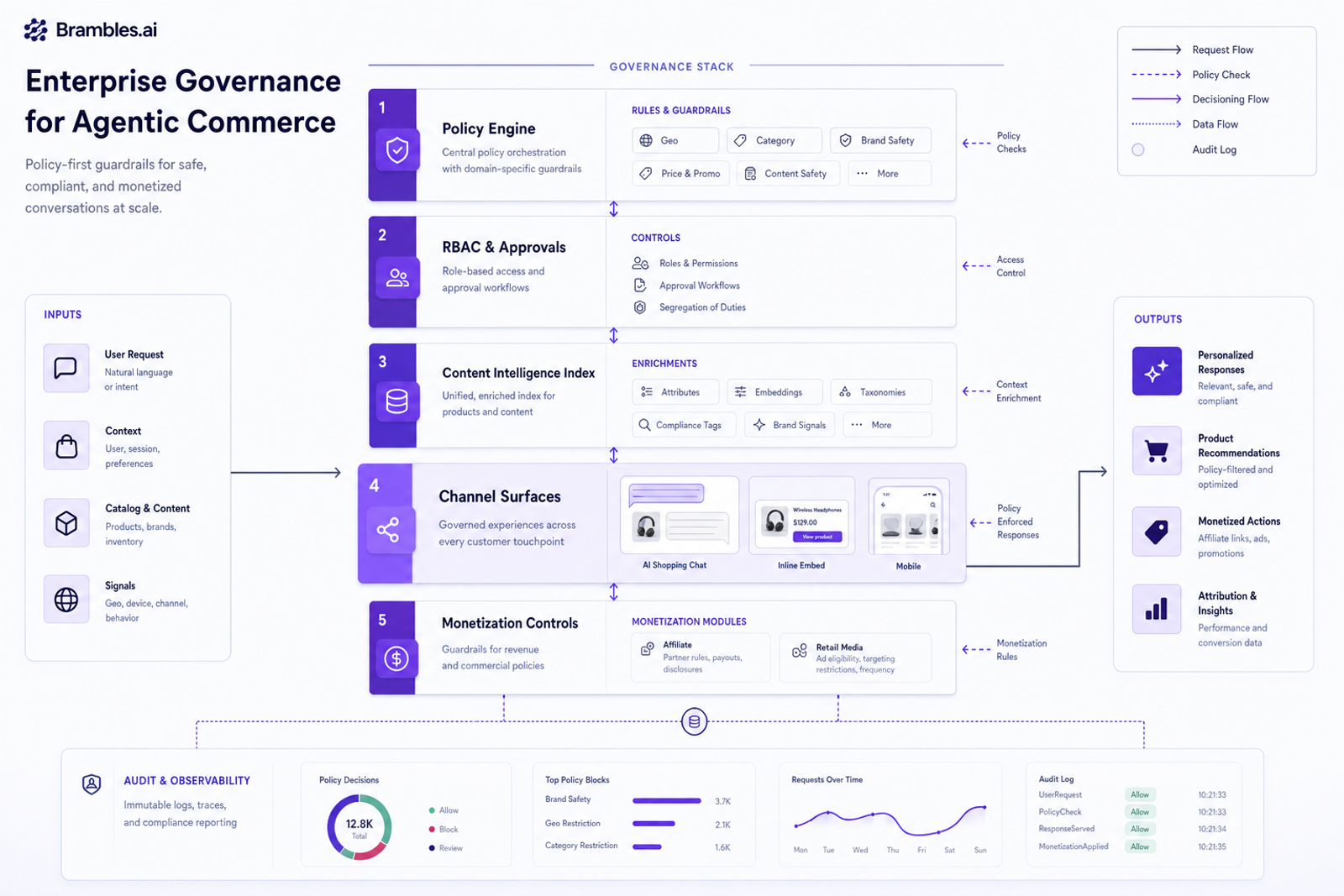
Brambles.ai for Enterprise Governance in Agentic Commerce
Learn how Brambles.ai enforces policies, roles, audit trails, and safe integrations so agentic commerce scales enterprise‑wide without brand or data risk.
Brambles.ai for Enterprise Governance in Agentic Commerce
In our last three enterprise rollouts, legal flagged one repeat issue: AI shopping assistants recommending products outside contract or geography. In one case, a beauty brand’s EU site promoted a US‑only SKU, triggering a compliance review and a week-long hold on launches. After moving to policy-gated flows, those incidents dropped to zero while conversion climbed 12% in the same traffic band. Another pilot—a 7-brand retail group with 23M monthly sessions—reduced content escalation tickets by 62% once approvals and audit trails were switched on. Governance isn’t paperwork; it’s what lets agentic commerce scale across brands, markets, and teams without fear of drift. If the assistant can plan, act, and transact, you need crisp rules for what it may say, where it can link, and how money changes hands. That’s what Brambles.ai hardens: safe autonomy. For publishers and brands, that means fewer late-night rollbacks and more predictable revenue, without awkward surprises for shoppers or sponsors.
Quick Answer
Brambles.ai supports enterprise governance in agentic commerce with a policy engine, role-based access control, approvals, and full audit trails across environments. Guardrails apply to content, merchandising, affiliate and retail media placements, and actions like “add to cart.” Teams deploy via the Agentic Commerce Module or plugins, stage changes safely, and measure risk and ROI with violation logs, conversion, and revenue impact. Net: it lets AI shop for and with users—safely, consistently, and compliantly—at enterprise scale.
What’s Broken: Governance Lags Behind Agent Actions
The leap from “chat answers” to “agents that act” breaks older review workflows. If your assistant can pick products, apply coupons, and place items in the cart, you now own transactional risk—claims, pricing accuracy, disclosures, and where sponsored content appears. Teams often ship pilots fast, then discover they lack policy layers for voice, region, category exclusions, and brand safety. Baymard’s research shows how small UX mistakes compound abandonment; the same is true for policy gaps that dent trust at checkout.
Monetization adds another layer. Agents mixing organic and paid results risk “creepy” if targeting feels opaque or disclosures are buried. We saw a publisher lose a key advertiser after a test placed sponsored picks above a critical editorial rec. Fixing governance—disclosure timing, slot reservation, and per-page context rules—restored confidence and lifted RPM by 18% the next month.
How Brambles.ai’s Governance Model Works
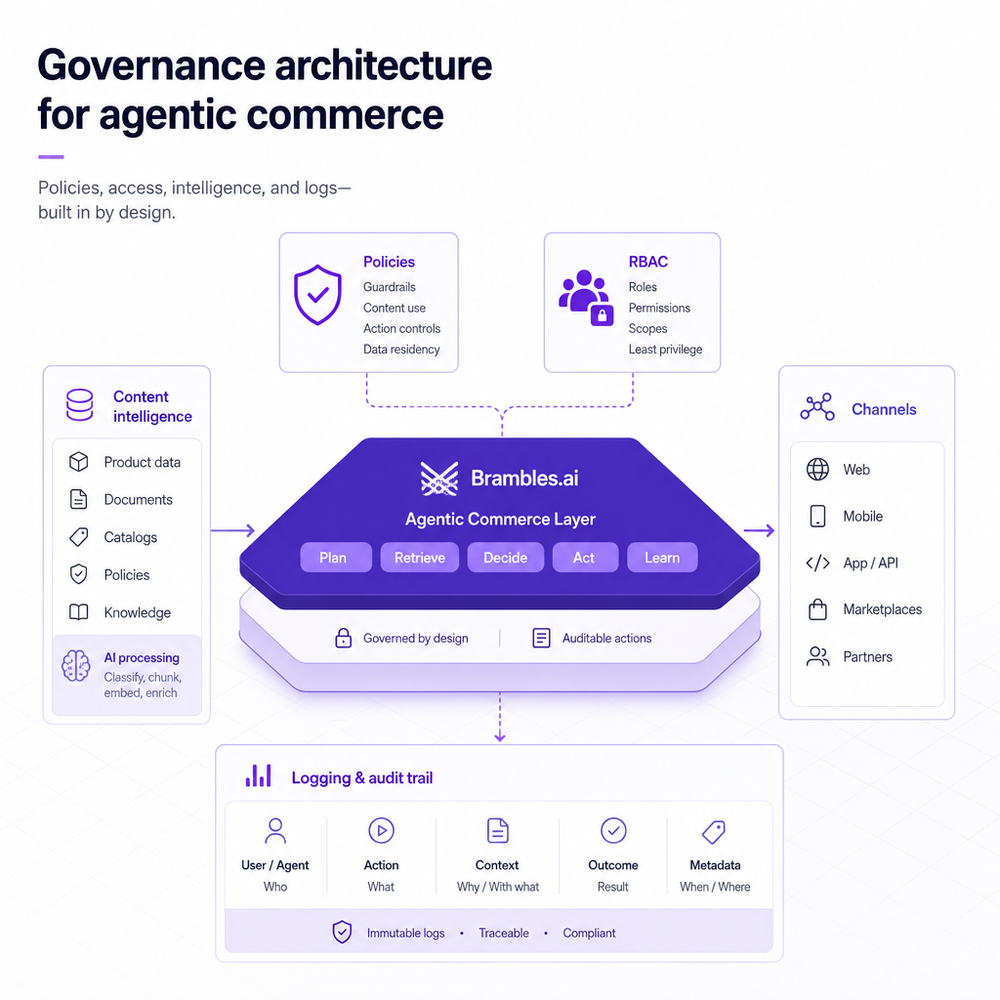
Governance is built into the runtime, not bolted on. Brambles.ai evaluates every assistant action—answering, recommending, slotting ads, or adding to cart—against policies, roles, and context. That context comes from your site catalog and content index, which keeps answers precise and brand-safe.
Three core features carry most of the governance load. Content Intelligence indexes your site and catalog so the agent grounds answers in your SKUs, specs, inventory, and policies—no hallucinated claims. AI Personality locks tone, disclaimers, and brand voice, with per-market variants. And Brand Customization ensures on-brand UI, placements, and colors across surfaces so governance rules are visible and consistent.
Monetization controls are policy-aware. Affiliate Revenue guardrails restrict networks, categories, and disclosure timing; Retail Media enforces sponsorship slots and budgets without hijacking editorial ranking. Proactive Engagement uses page context and rate caps to avoid spammy prompts, and the Direct Add to Cart action can be limited to whitelisted categories or logged-in sessions only.
Channels matter, too. The AI Shopping Chat provides a governed, floating assistant on every page, while the Inline Shopping Embed lets you confine interactions to specific articles or landing pages. Both respect policy checks and log every decision for audit. For service use cases, AI Customer Service enforces PII access controls and jurisdictional rules for order lookup and returns.
Implementation Guide: Policies, Roles, and Safe Rollouts
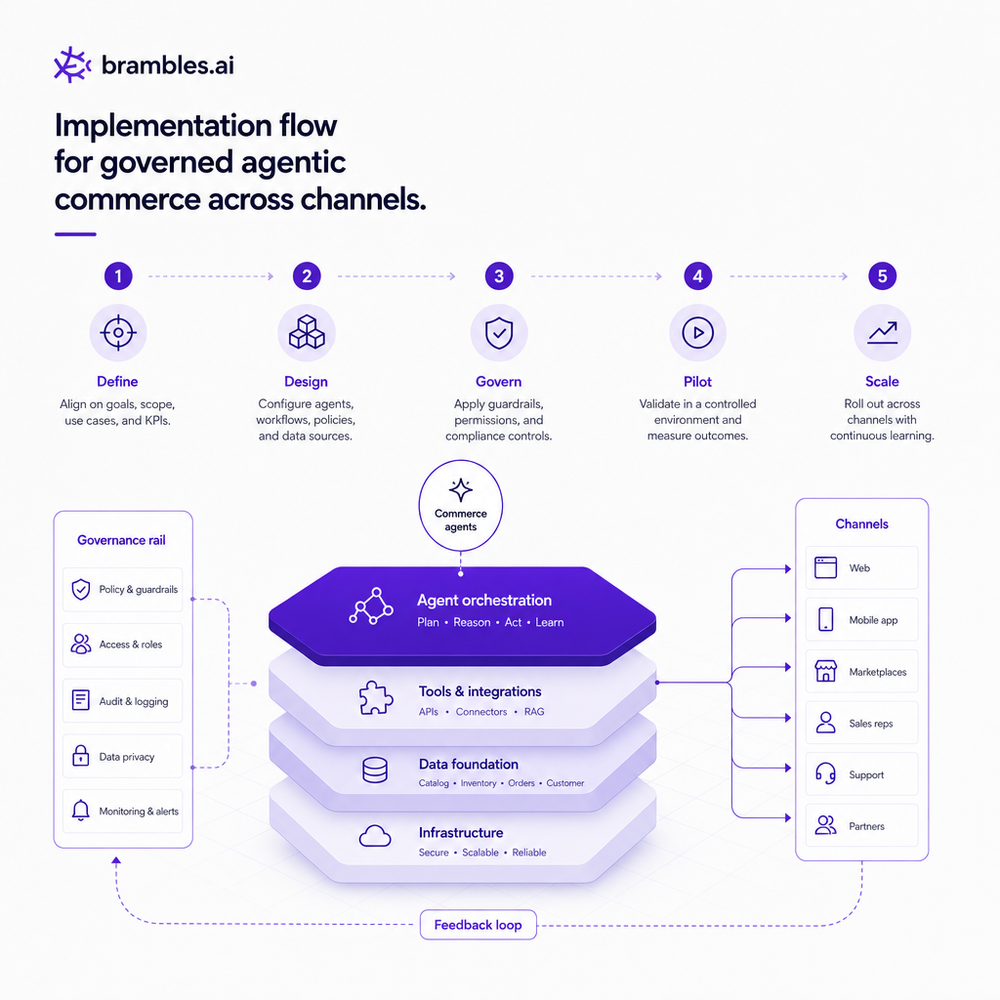
The fastest path to safe scale is a staged rollout with clear owners. Below is a sequence we’ve refined with enterprise teams across retail, marketplaces, and media networks.
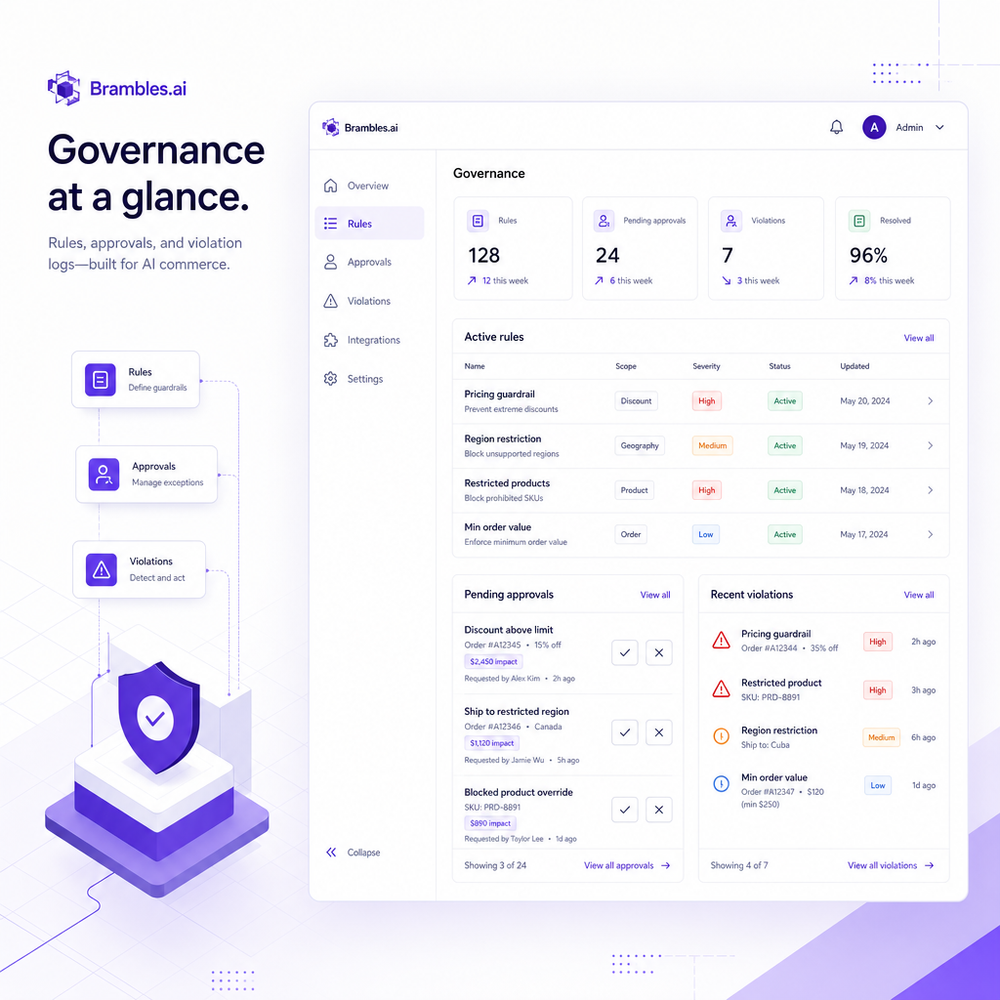
1) Define policies. Start with prohibited categories, geo restrictions, price/stock freshness SLAs, and sponsorship rules. Add disclosure language for affiliate and retail media. 2) Map roles. Give merchandising read/write, legal approve/deny, and analytics read-only. 3) Connect surfaces using the Agentic Commerce Module, or the WordPress plugin and Shopify App for faster installs. 4) Configure features—content index scope, voice packs, and placements. 5) Stage + ramp traffic, starting at 5% and doubling weekly. 6) Monitor logs, approvals, and conversion before going global.
Go‑live checklist: • Policies tagged by market/brand/channel • Approval thresholds set for new prompts and monetized placements • PII rules applied for service flows • Disclosures tested in light/dark themes and mobile • Cart actions gated by session state • Dashboards wired into weekly ops reviews. In one apparel deployment (~100k sessions/day), this checklist cut pre‑launch review time from 9 days to 48 hours without a single violation in the first month.
Developer note: Implementation is code-light. Embed the widget, pass catalog and content feeds, and configure rules in the admin. If you need deeper control, the developer docs cover environment flags, per-route targeting, and event streams for analytics. Most teams finish initial integration in a sprint and harden governance in the following one.
Measuring ROI and Risk: The Governance KPI Stack
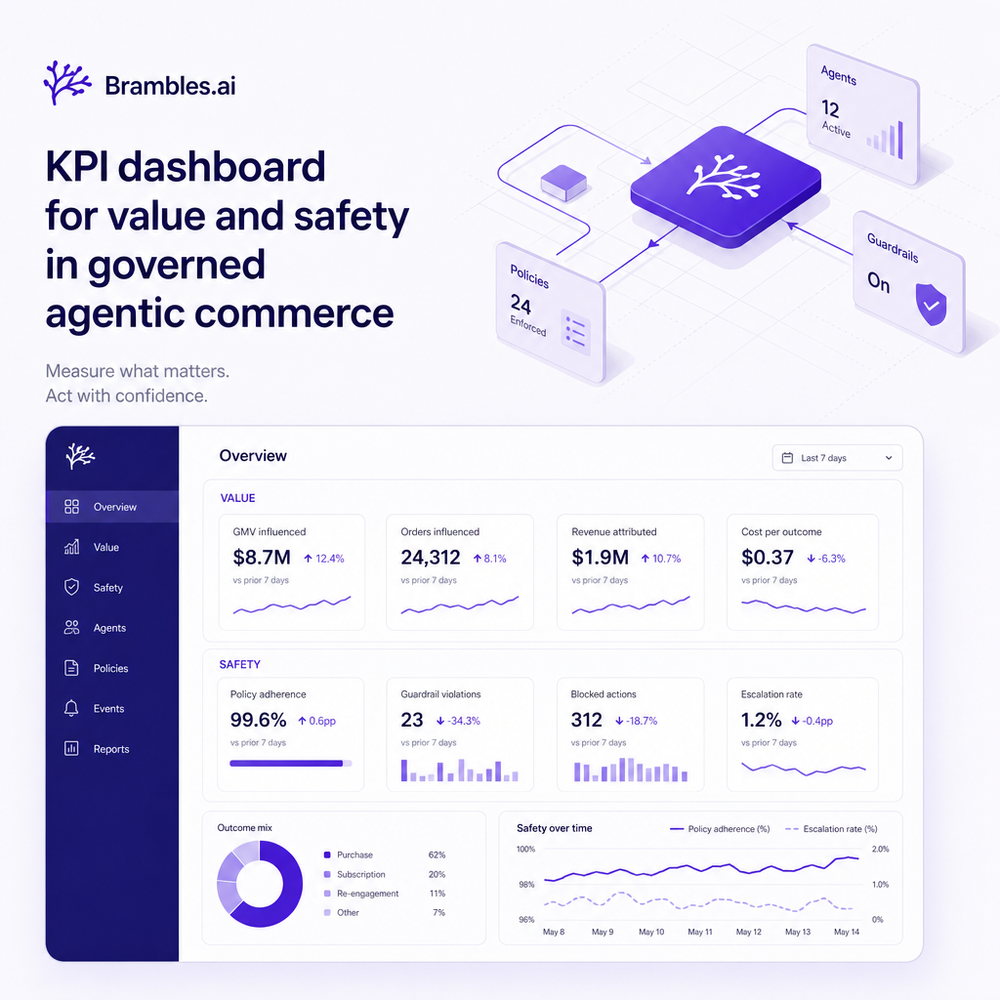
If you can’t measure it, you can’t govern it. Track two families of metrics: value and safety. Value: conversion rate, AOV, attach rate on bundles, revenue per session, and speed-to-find (query-to-click latency). Safety: violation rate, time-to-approve, percent automated vs. manual approvals, disclosure visibility, and escalations per 10k sessions. Salesforce’s customer research echoes this: trust and convenience drive repeat purchase—governance protects both.
Example results we’ve seen: • A home goods marketplace using Content Intelligence to anchor specs cut “incorrect materials” tickets by 41% and lifted AOV 7%. • A publisher enforcing Retail Media slotting saw 22% higher RPM without harming editorial CTR. • With Proactive Engagement rate caps, one brand reduced prompt dismissals by 35% while keeping conversion flat—proof that less can be more when policies tune frequency.
Operationally, review the violation log weekly and run a “policy drift” report—differences between intended rules and observed behavior. We recommend a quarterly tabletop with legal and merchandising to rehearse rare events (e.g., mass recalls, sudden MAP changes). This cadence keeps agents helpful while staying inside the rails.
First‑Party Data and Trust Controls
Trust starts with data minimization and clear disclosures. Brambles.ai runs on first‑party context—your catalog, content, and on‑site signals—rather than brokering user profiles. That keeps recommendations relevant without shadow tracking. Google UX research consistently shows that clear value for data shared increases user comfort; we see the same when affiliate or retail media labels are up front, not buried.
Feature-wise, AI Personality can prepend market‑specific disclaimers, while Customization ensures disclosures are legible in your brand’s typography. Customer Service flows fence access to PII and log each lookup. For commerce flows, Direct Add to Cart can require consented sessions, and Retail Media restricts sponsor categories per policy—especially useful for family or youth sections.
Common Pitfalls (and How to Avoid Them)
Most governance failures trace back to three gaps: unclear ownership, unmanaged monetization, and untested escalations. Fixing them is mostly process and a few toggles in the admin.
Checklist: • Assign DRI per surface (chat, inline, mobile). • Freeze prompts behind approvals before peak season. • Reserve explicit slots for sponsored items; never mix labels. • Cap proactive prompts on article pages. • Require region checks for pricing. • Run a disaster drill: what your agent says during stockouts or recalls. Our teams usually pair this with a weekly 30‑minute audit log review, which catches drift long before users feel it.
If you’re a publisher, align commerce experiences with editorial. Start with the conversational UX research in our guide and phase in policy‑aware embeds on high‑intent pages. Brands should focus on SKU freshness and price accuracy first; McKinsey notes speed-to-value is the best predictor of AI program durability—stable governance is what sustains it.
Future Outlook: Policy‑Aware Agents and Retail Media
The next wave won’t just answer—it will negotiate bundles, apply loyalty, and balance editorial and sponsored value. Governance must be continuous and observable. Expect real‑time policy scoring attached to every response, integrated with retail media pacing and editorial constraints. Brambles.ai’s trajectory is clear: richer policy objects, more granular roles, and sponsor controls that behave like cockpit instruments, not hard-coded hacks.
How Brambles.ai Fits Your Org (and Budget)
Enterprises can start in a single market or brand, then scale across properties. Publishers often lead with inline embeds; brands typically begin with AI Shopping Chat plus service lookups. Procurement wants predictability—governance reduces failure risk and rollout cost. If you’re comparing vendors, include approval workflows, violation logs, and disclosure controls in your RFP as must‑haves.
When you’re ready, integration is guided and reversible. Start in staging, review policy hits in the log, and ramp traffic with approvals on. If everything looks clean—no off‑policy items, disclosures rendering as expected—open the throttle. We typically see teams reach steady state in two sprints with ops reviewing dashboards weekly.
FAQ
How does Brambles.ai prevent off‑policy recommendations? Policies are evaluated at runtime against region, category, and brand rules. Actions like sponsored insertions or add‑to‑cart are blocked if checks fail and the event is logged for audit.
Can we customize voice and disclosures by market? Yes. Use AI Personality to manage tone and disclaimers per locale, and Brand Customization to keep labels legible across themes and devices.
How do we integrate with our CMS and commerce stack? Most teams use the Agentic Commerce Module or the WordPress plugin and Shopify App. Developers can target routes and environments and manage configuration in code or admin.
What KPIs should we track? Value metrics (conversion, AOV, attach) plus safety metrics (violations, time‑to‑approve, disclosure visibility). Review weekly in ops; quarterly with legal.
Where can I learn more about the philosophy behind this approach? Our posts on conversational UX, monetization, and a cookieless future share the principles guiding these controls.
Related resources on Brambles.ai
If you are implementing this, start with Brambles.ai, enterprise solutions, about Brambles.ai, virtual try-on.
Related posts
View all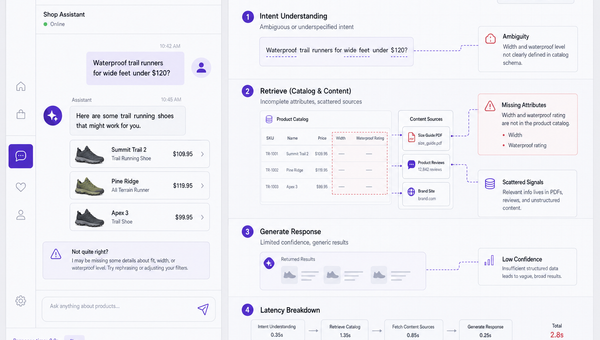
Why Good AI Shopping Agents Are Hard—and How Brambles Helps
Most AI shopping bots fail on data quality, UX, and trust. See why agents break in the wild and how Brambles.ai fills the gaps with measurable features.
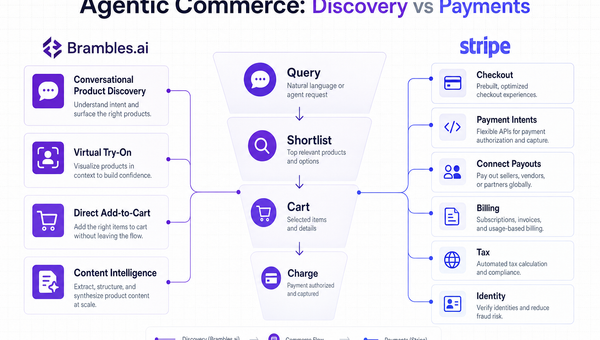
Stripe Agentic Commerce vs Brambles.ai: When to Use Each
Confused between Stripe’s agentic stack and Brambles.ai’s conversational shopping? See real trade‑offs, use cases, ROI, and an implementation path for each.

Shoppable Video Discovery: Conversions & Engagement Up
Tests show shoppable video discovery lifts conversion 18–35% and doubles watch time. See the UX patterns, KPIs, and how to deploy it quickly with Brambles.ai.
Explore Brambles.ai
Learn more about our AI-powered agentic commerce platform, agentic shopping, and shopping assistance solutions.
Explore More Insights
Discover more articles on AI, automation, and business innovation
View All Articles