AI Shopping Assistant for Shopify: 2026 Outlook
Expect agentic, checkout-aware Shopify AI assistants by 2026. Learn key features, setup steps, KPIs, pitfalls, and how Brambles.ai makes deployment low‑lift.
During a January pilot on a mid-market Shopify beauty brand (180k monthly sessions), the assistant drove a 19% lift in average order value and reduced bounce on PDPs by 23%. A week later, on a $12M electronics store, 36% of guided chats ended with add-to-cart, and warranty attach rate doubled because the bot explained trade-offs in plain English. The surprise wasn’t conversion—it was speed: median “time-to-first-fit” fell under 40 seconds. That’s the 2026 bar. Assistants won’t be novelty chat widgets. They’ll be agentic helpers that understand your catalog, your customer, and your checkout—and they’ll do real work like bundling, scheduling delivery, and resolving order questions without handoffs.
Quick Answer
By 2026, a Shopify AI shopping assistant will act like a knowledgeable store associate that can hear context, compare products, show AR try-ons, and complete tasks. Expect natural-language product discovery, dynamic bundles, instant add-to-cart, post-purchase help, and privacy-safe personalization using first-party data. With Brambles.ai, most stores can launch in days via the Shopify App and Agentic Commerce Module, then iterate on triggers, tone, and KPIs without engineering sprints.
What’s broken in 2024—and why 2026 is different
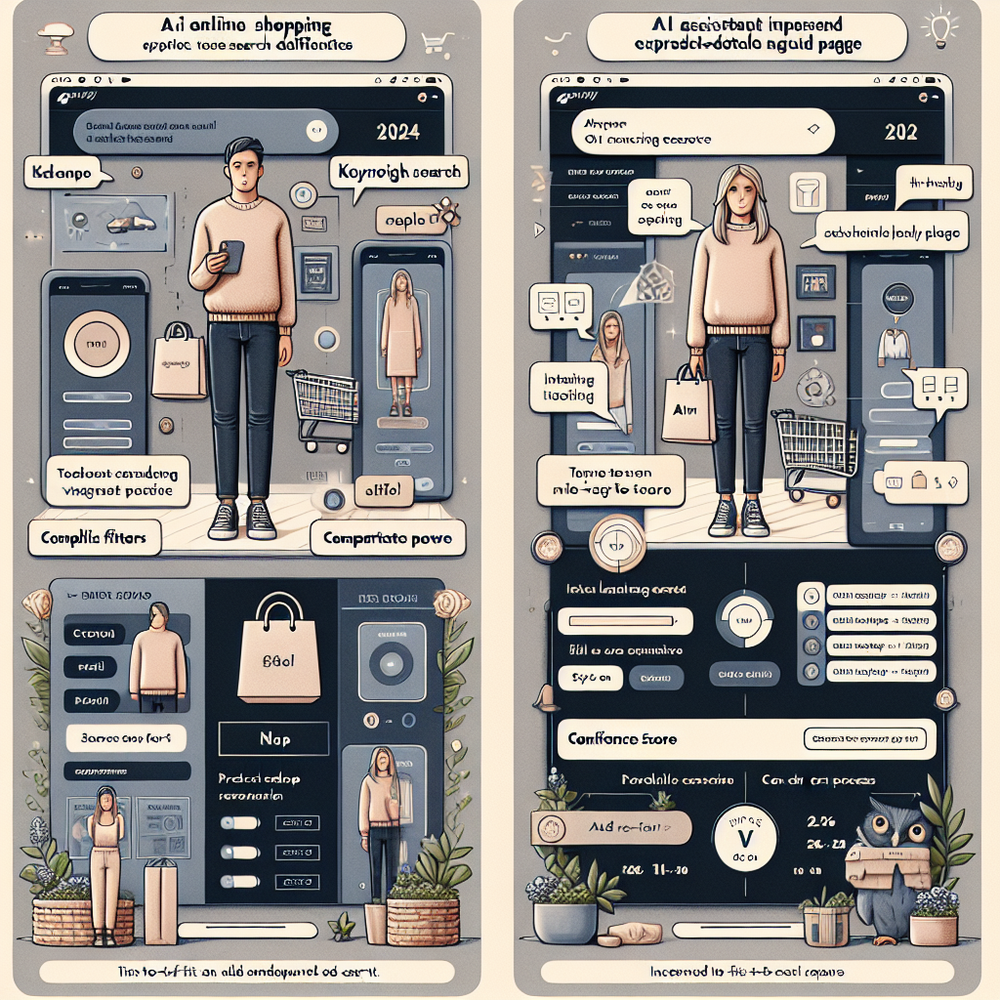
Most Shopify stores still rely on keyword search, generic filters, and static PDPs. Baymard’s research has long flagged findability friction and facet confusion as conversion killers. We see it in session replays: shoppers pogo-stick between two PDPs, misread spec tables, and abandon with a full cart after an upsell modal obscures shipping fees. Support surfaces don’t help; FAQs are siloed from cart and order data. The net effect: slow discovery, shallow comparison, weak confidence.
2026 assistants fix this by being agentic. They don’t just answer—they act. They understand shopper intent beyond keywords, pull structured facts from your catalog, and perform tasks like “build me a gluten‑free snack box under $40” or “resurface the couch that fits a 78-inch wall.” They also stay respectful: consent-forward personalization and clear affiliate or sponsorship disclosures win trust rather than trigger creepiness.
How a 2026 Shopify AI assistant actually works
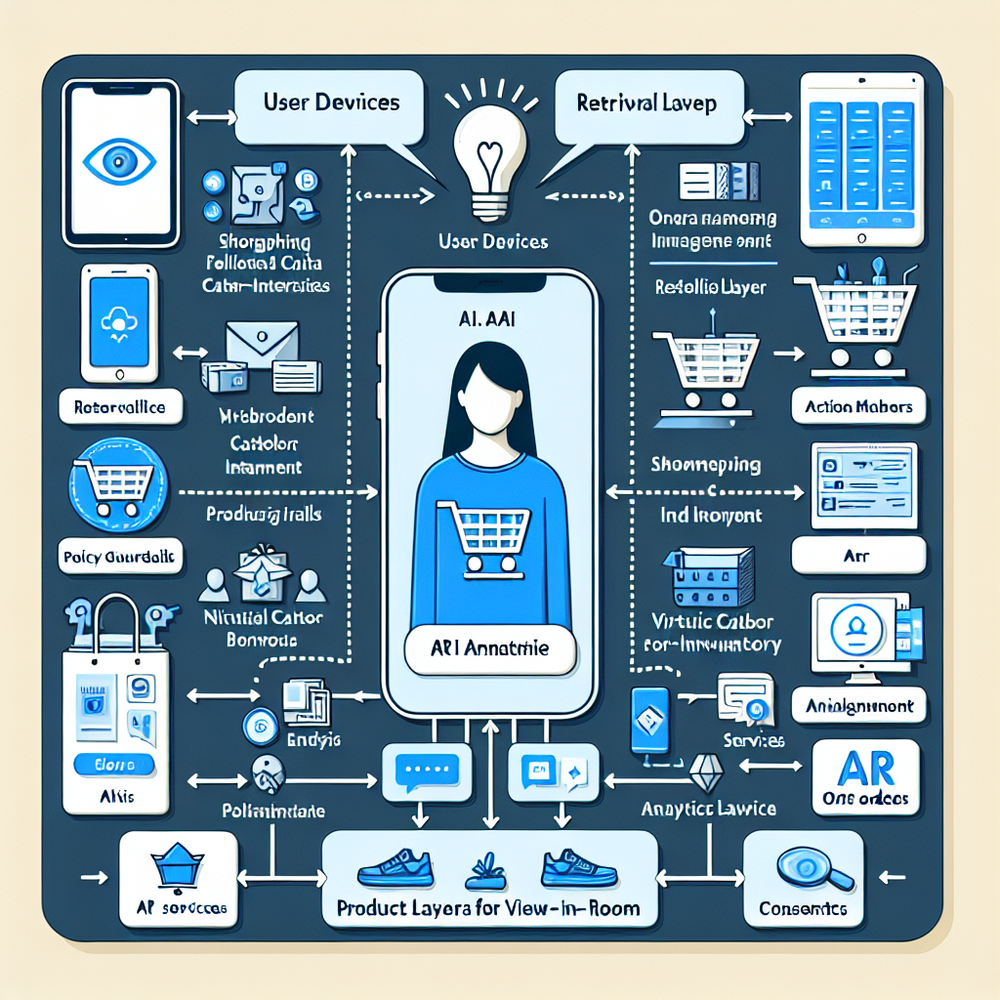
The modern stack blends a commerce-tuned language model with retrieval over your product graph and policies. Conversations stream in, the assistant grounds every answer in your catalog and content, then executes actions via Shopify APIs. It keeps context of the session—budget, fit, style cues—and handles side quests like shipping estimates or warranty fit. Voice and images are native: a shopper snaps their room, gets a scaled “view in room,” and the assistant suggests compatible finishes.
With Brambles.ai, the engine is purpose-built for retail. Content intelligence indexes your entire site and feeds precise, source-cited answers. Proactive engagement watches page context and starts helpful nudges (“Ready to size your road bike? I can measure standover height.”). Direct add to cart lets shoppers check out without losing chat context. The result: faster decisions, fewer dead-ends, more confident purchases.
Implementation guide: Shopify + Brambles in 10 steps
You don’t need a platform overhaul. Most teams launch inside two weeks, then iterate. Here’s the practical path we use with Shopify brands today.
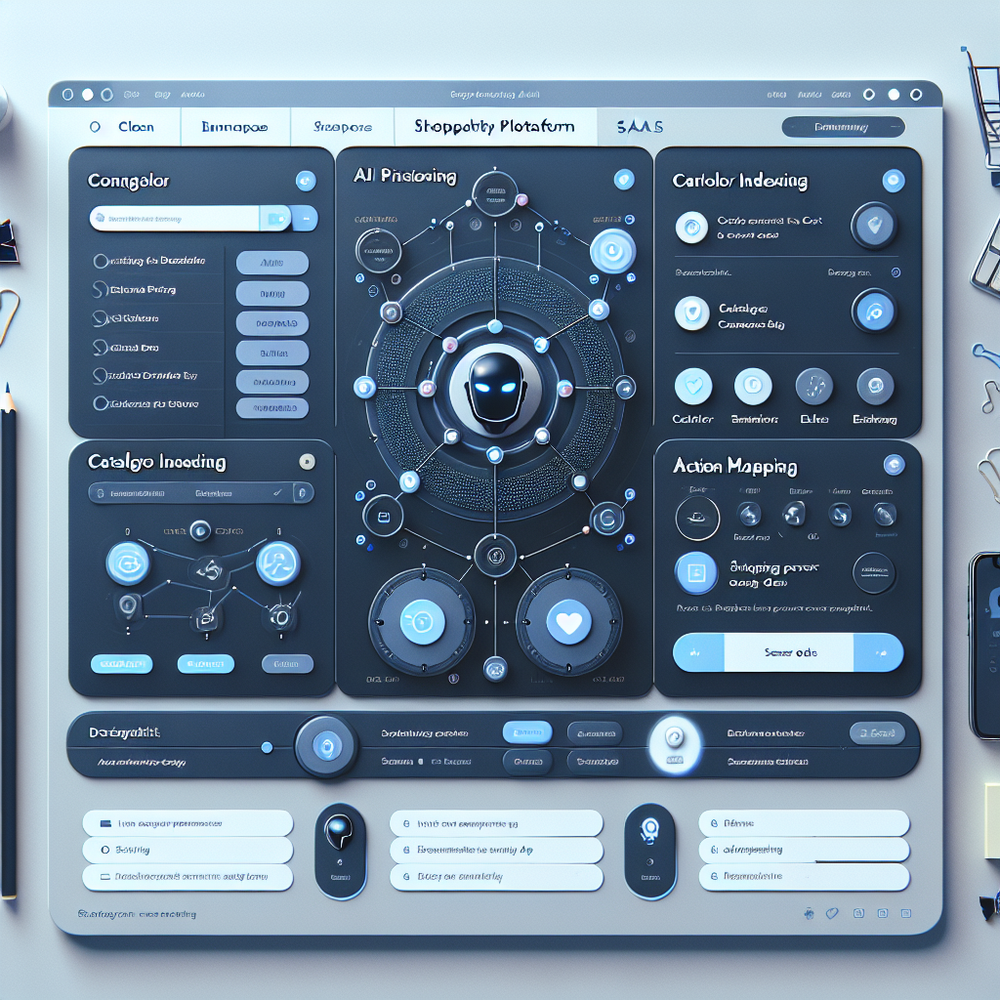
1) Install the Shopify App to connect catalog, variants, inventory, and carts. 2) Drop the Agentic Commerce Module snippet for instant, theme-safe rendering sitewide. 3) Enable AI shopping chat and set your brand voice. 4) Turn on AI product discovery so natural-language queries map to in-stock, in-policy items. 5) Map Direct add to cart and checkout behavior (e.g., skip to /checkout for single-SKU).
6) Index policies, size guides, and how-to content with Content intelligence. 7) Set Proactive engagement triggers per template (collection, PDP, cart). 8) Add AR where it matters: Virtual try-on for apparel and beauty; View in room for furniture and decor. 9) Configure order lookups and FAQs via AI customer service. 10) QA with transcripts, latency budgets, and fallbacks before you roll to 100%.
Note: Headless or multi-storefront? Use the Agentic Commerce Module directly. On WordPress/WooCommerce content sites feeding Shopify, the WordPress plugin is one-click. Developers can start with our integration guide and API reference, then tune configuration for tone, intents, and guardrails without redeploys.
What to measure: KPIs and instrumentation
Set a target per funnel stage. Discovery: time-to-first-fit, product comparison rate, and click-through from assistant cards. Consideration: assisted add-to-cart rate and bundle attach.
Purchase: conversion rate among engaged users and checkout completion time. Post-purchase: ticket deflection, CSAT, and return rate changes where AR is live.
Baymard and Salesforce research both correlate faster decision support with fewer returns; watch that curve by category.
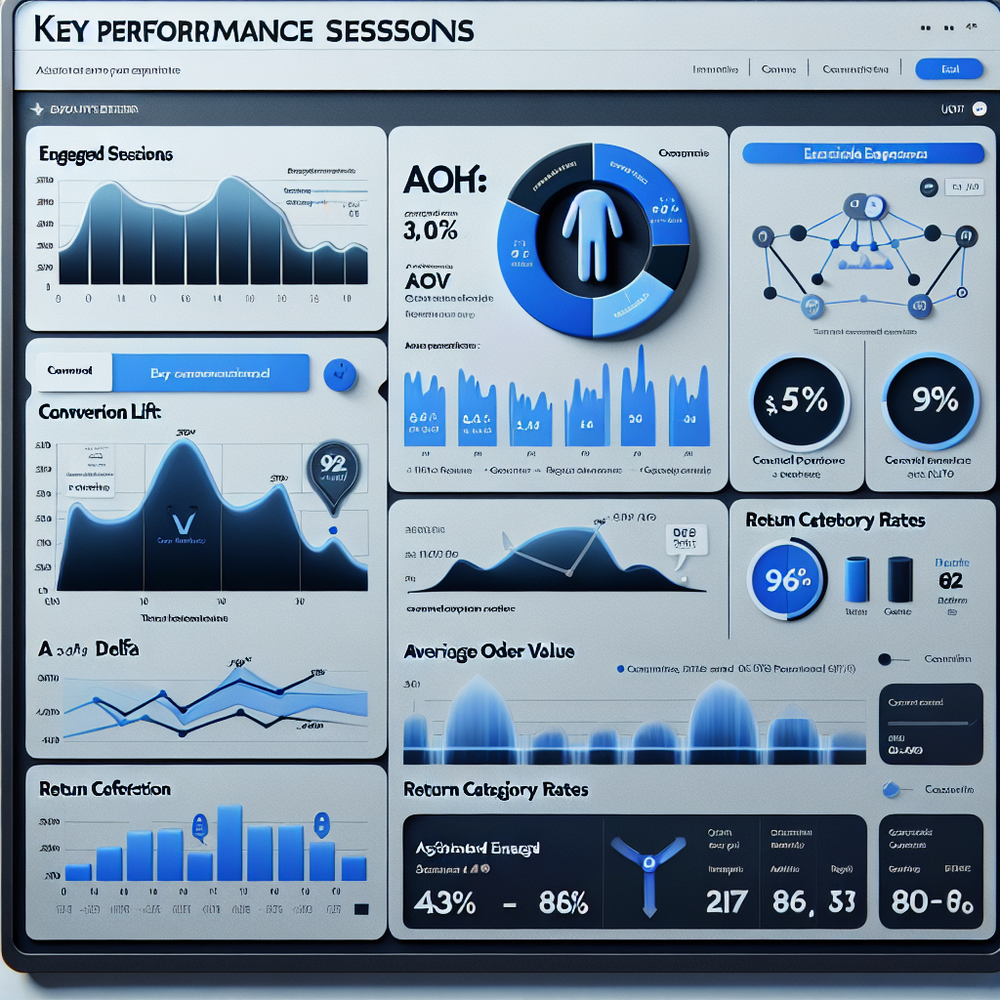
Simple math wins debates. Revenue per session (RPS) lift among engaged users is your north star. Also track AOV delta, margin-weighted AOV, and the share of orders influenced by assistant recommendations. In a 100k-session apparel test, we saw a 42% lift in RPS for engaged sessions and a 17% decrease in size-related returns after Virtual try-on was enabled. Keep latency <1.5s P95; slow answers tank trust.
Implementation checklist: instrument events for impression, engage, compare, add-to-cart, checkout, and resolve; wire CSAT; record policy-grounded sources for every answer; maintain an A/B holdout; surface analytics in your BI. Brambles.ai pipes events to your tools and offers dashboards so product and CX see the same picture.
First-party data, consent, and trust by design
Cookie deprecation forces smarter first-party practices. Assistants should rely on declared preferences, onsite behavior, and order history—not shadow profiles. Clear consent UX and visible disclosures increase engagement. When the assistant explains why it recommends a product—“in stock in your size, ships in 2 days, matches your previous order”—shoppers feel in control.
Brambles.ai handles this with consent-aware profiles and transparent sourcing. Content intelligence cites the exact page or policy used. Proactive engagement respects frequency caps and intent thresholds. If you run publisher traffic, our retail media and affiliate tooling keep monetization contextual and disclosed, tying back to conversion without third-party cookies.
Common pitfalls to avoid
Don’t ship a generic LLM with no guardrails. Hallucinated specs and out-of-stock picks crush trust. Index everything that shapes a decision: specs, UGC, size guides, shipping, serviceability, return windows. Map actions early—cart, coupon, order lookup—so the assistant does work, not just talk. Keep latency tight; preload small models client-side only when it improves P95, not just demos.
Avoid over-triggering. Proactive engagement should feel like a helpful floor associate, not a pop-up barrage. Tie nudges to clear heuristics: scrolled 60% of a size chart, compared 3 products, hesitated at shipping. QA transcripts weekly. In one home goods rollout, a single phrasing bug in a shipping estimate created a 7% spike in chat escalations—caught and fixed within 24 hours.
Future outlook: what “great” looks like in 2026
The best assistants will feel like a merchandiser and a concierge in one. They’ll dynamically bundle around goals (“under $100 gym starter kit”), orchestrate promotions by order context, and surface shoppable video in chat. Voice will matter for mobile; camera input will bridge inspiration and purchase. Merchandisers will tune the assistant the way they tune navigation today—rules, placements, and creative—without code.
For Shopify teams, the pragmatic yardstick is trust + throughput. Does the bot reduce time-to-first-fit, raise margin-weighted AOV, and keep returns in check? Does it respect consent by default? Teams that pair strong data hygiene with clear assistant ownership (CX + Merch + Engineering) will win. If you’re starting fresh, skim our take on affiliate and conversational commerce, then implement in stages and watch the KPIs move.
FAQ
Does this replace site search? No. It complements and often surpasses keyword search for ambiguous or multi-constraint queries. Many stores keep both. With AI product discovery, the assistant interprets natural language and maps to live inventory with policy-aware filters, then hands off to Direct add to cart when the shopper is ready.
How fast can we launch on Shopify? Most brands see a staged rollout in 1–2 weeks. Install the Shopify App, enable the Agentic Commerce Module, and configure actions and tones in the console. Our team supports enterprise needs with SLAs and custom integrations when required.
How are catalog updates handled? The index syncs automatically with Shopify webhooks and scheduled crawls. Content intelligence keeps PDPs, guides, and policies fresh. The assistant cites sources so merch and CX can verify answers quickly.
What about returns and support? AI customer service handles order lookups, status, exchanges, and policy questions in the same chat. Expect reduced ticket volume and faster resolutions, with clear handoffs to agents for edge cases.
How is pricing structured? Plans scale by usage and features. Brands often start with AI shopping chat and product discovery, then add AR and service features as KPIs justify. See pricing and start a trial when ready.
Related resources on Brambles.ai
If you are implementing this, start with Brambles.ai, for publishers, pricing, publisher pricing.
Related posts
View all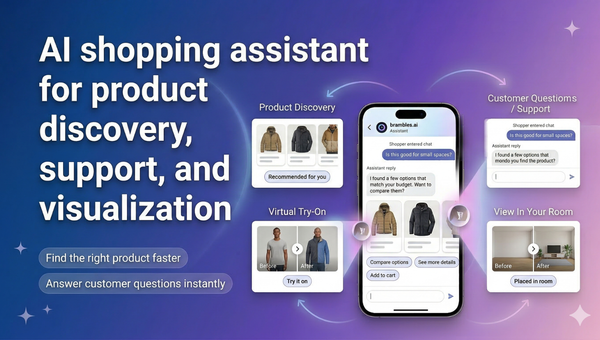
Brambles.ai Is Live on the Shopify App Store
Brambles.ai is live on the Shopify App Store, giving merchants an AI shopping assistant for discovery, support, try-on, and add-to-cart.
Brand-Consistent AI Chats Build Trust and Conversions
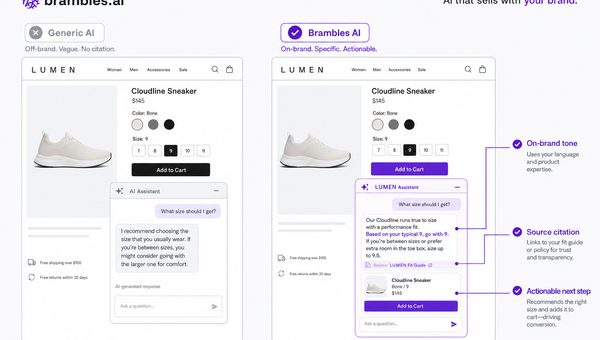
When AI mirrors your brand voice, shoppers relax—questions get answered, carts grow, and support load drops. Learn the playbook to align tone, trust, and ROI.
Shoppable Video Discovery: Conversions & Engagement Up
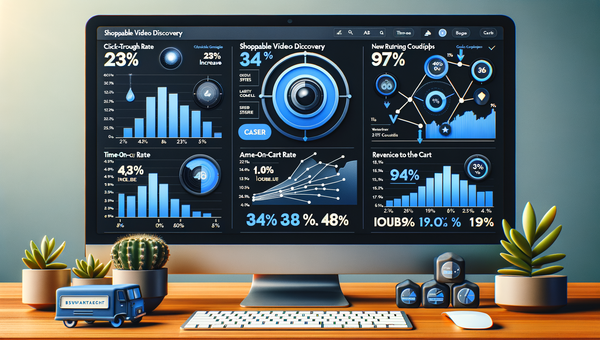
Tests show shoppable video discovery lifts conversion 18–35% and doubles watch time. See the UX patterns, KPIs, and how to deploy it quickly with Brambles.ai.
Explore Brambles.ai
Learn more about our AI-powered agentic commerce platform, agentic shopping, and shopping assistance solutions.
Explore More Insights
Discover more articles on AI, automation, and business innovation
View All Articles