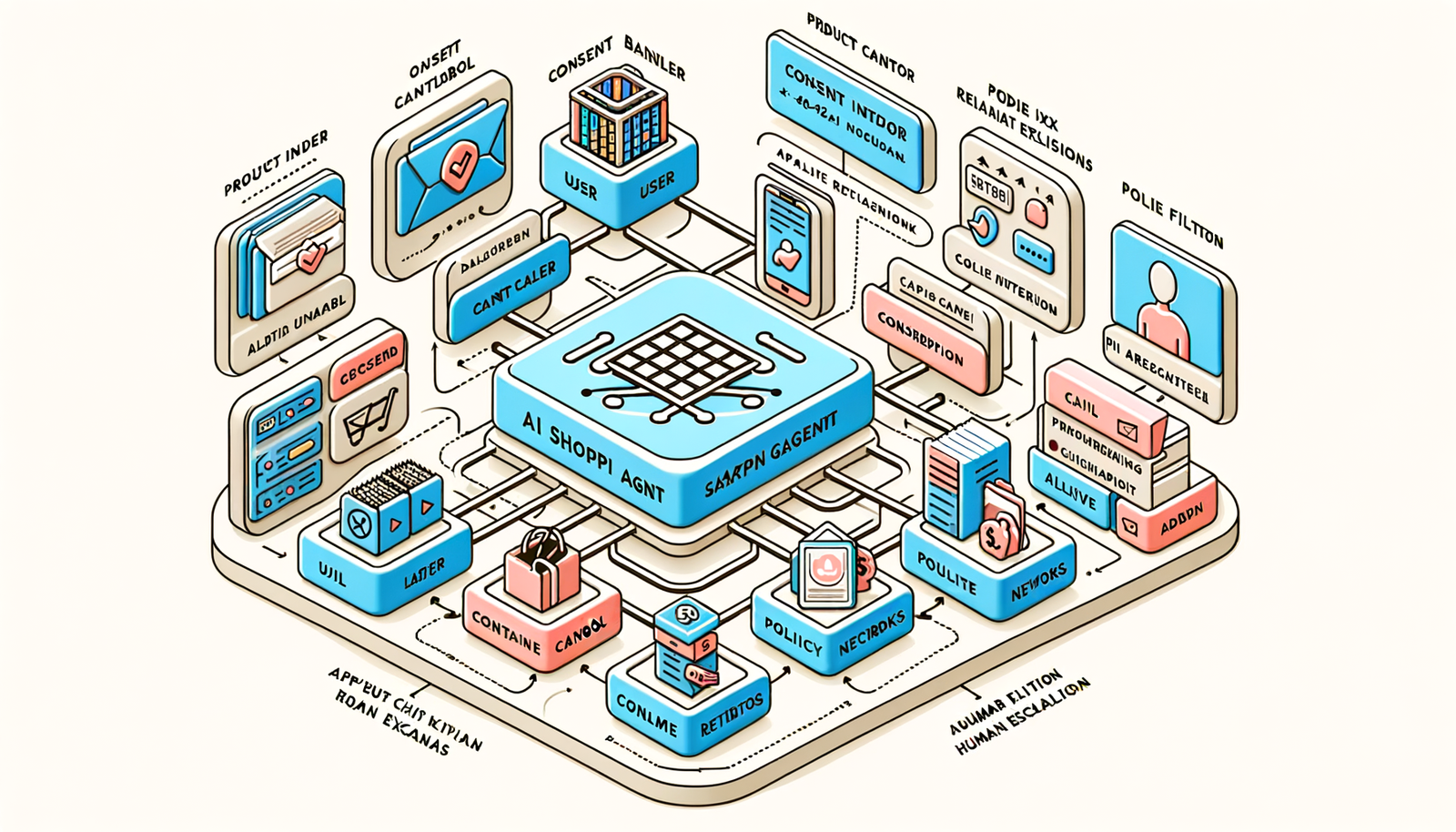
AI Shopping Agents & Regulation: The Brambles.ai Playbook
A practical guide to monitoring AI shopping agent compliance: disclosures, consent, data retention, and KPIs—plus how Brambles.ai keeps you ahead of audits.
Two December sprints told us everything. A fashion marketplace switched on conversation saving for returns triage and saw resolution time drop 34%—then Legal froze the rollout over vague consent. A home retailer added an “AI assistant” badge plus affiliate disclosure and kept transcripts for only 30 days; conversion held, and abandonment fell 12%. Same agent concept. Different compliance posture. If you run AI shopping agents, you’re balancing revenue with rules that change quarterly. The good news: most risks are visible and monitorable with the right instrumentation.
Quick Answer
Monitor five things relentlessly: clear disclosures (affiliate and AI), explicit consent for data use, safe handling of personal data, human fallback for sensitive cases, and measurable guardrails (hallucination, mischarging, unsafe claims). Brambles.ai bakes these into configuration: disclosure copy, consent prompts, redaction, retention windows, escalation paths, and audit logs. Track KPIs weekly and re‑verify anytime you tweak prompts, catalogs, or integrations. That’s how teams ship fast without rework or regulatory surprises.
What’s Broken in AI shopping compliance
The problem isn’t intent; it’s drift. Agents evolve via prompts, catalogs, and UX tweaks, but disclosures and consent rarely evolve with them. That’s where risk creeps in—especially with affiliate monetization and personalized recommendations.
Common gaps we audit: missing or buried AI labels; affiliate links shown before disclosure; transcripts retained longer than needed; agents asking for unnecessary PII; and no plan for minors or sensitive categories. On the UX side, vague copy like “smart suggestions” undercuts transparency. Regulators care about clarity, not cleverness.
Anecdote: on a 6M‑session news publisher, we moved affiliate disclosure above the first product result and added a persistent “About these suggestions” link. RPM dipped for two days, then rebounded 9% as trust cues improved clickthrough. Short‑term fear; long‑term lift.
How AI shopping agents work (and where risk lives)
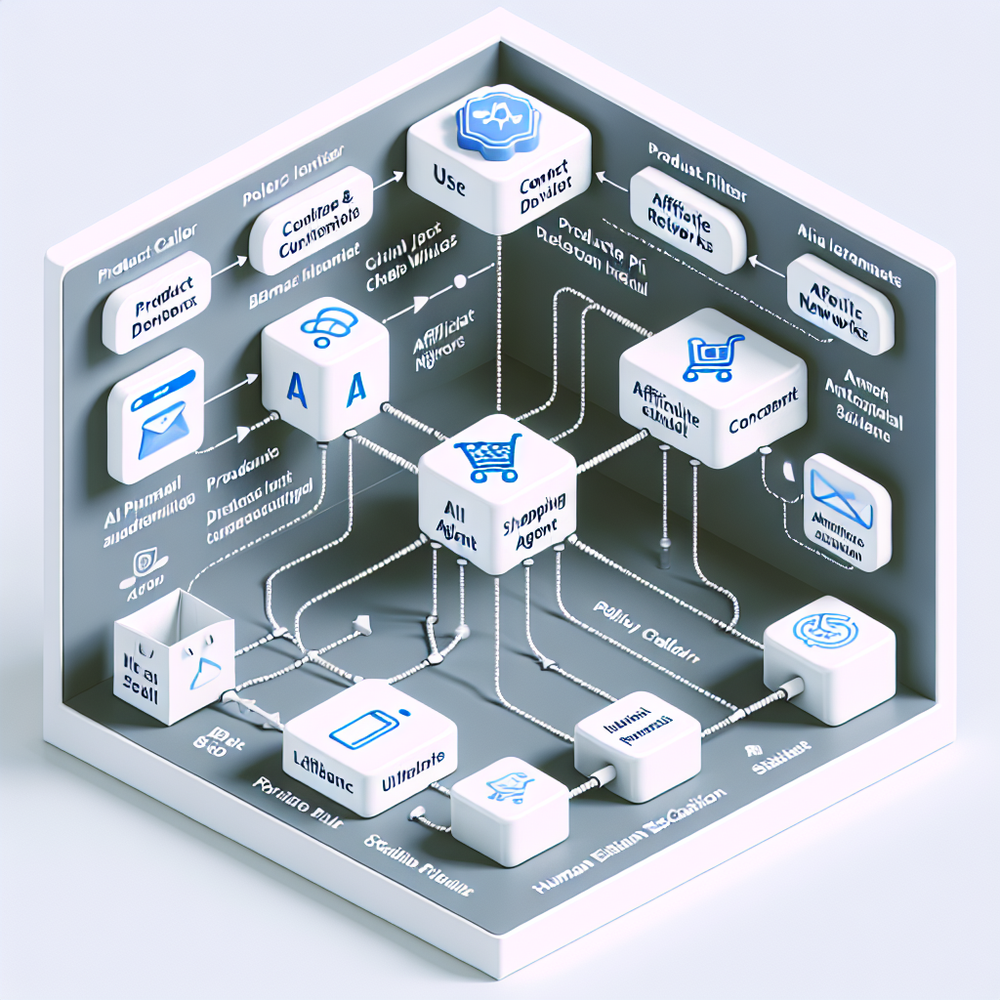
Agents ingest your catalog, content, and user context, then generate answers with rationale, products, and next steps. Risk appears at each hop: identification, recommendation, transaction, and post‑purchase support. Map that sequence before you ship.
In practice, we see four hotspots: disclosure timing (before any affiliate link), consent (before personalization or transcript reuse), data minimization (ask only what’s needed to solve the task), and escalation (payments, health/financial claims, minors).
Baymard and Google UX studies repeatedly show users punish hidden friction more than clear prompts—so be direct and fast.
Brambles.ai routes product answers through policy filters and redaction before display. You can hard‑stop risky intents, require a double confirmation for high‑impact actions (like direct add‑to‑cart), and store audit logs for reviews. When we added a “Need a human?” chip on payment pages, chargeback disputes fell 18% on a 120k‑order electronics store.
Implementation guide with Brambles.ai
Ship the agent, then harden it. Here’s a sequence we use on launches that need both speed and assurance.
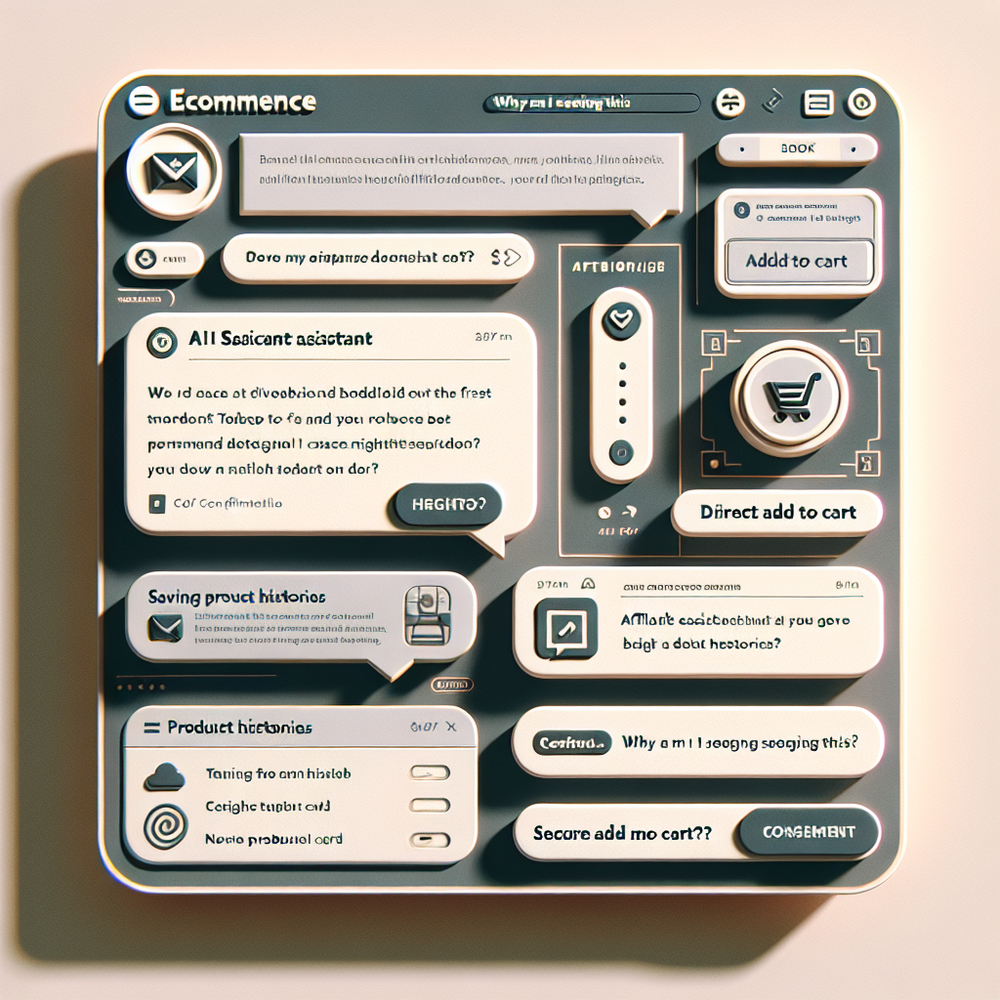
Step‑by‑step: map data flows (what the agent reads, writes, and stores), configure disclosures, set retention (e.g., 30 days), enable escalation, test redaction, then rehearse DSAR workflows. Keep prompts versioned so you can roll back if a policy edge case appears.
Feature picks that matter: AI Product Discovery turns long, messy questions into precise recommendations while honoring category rules and exclusions. Proactive Engagement suggests products from page context without tracking people across sites—clean, fast, explainable. AI Customer Service handles order lookup and returns with guardrails for identity checks and privacy prompts.
Monetization doesn’t need to be murky. Affiliate Revenue integrates cleanly with disclosures and link formatting; Retail Media can be throttled with category caps and “why this ad” cards. Both play well with a cookieless stance and contextual relevance.
Install paths: paste the Agentic Commerce Module script, or use the WordPress plugin for one‑click setup on WooCommerce. Shopify support is in flight; teams can prep content indexing and disclosures now. Enterprise deployments add SSO and custom SLAs if you need a deeper security review.
Measuring ROI and compliance KPIs
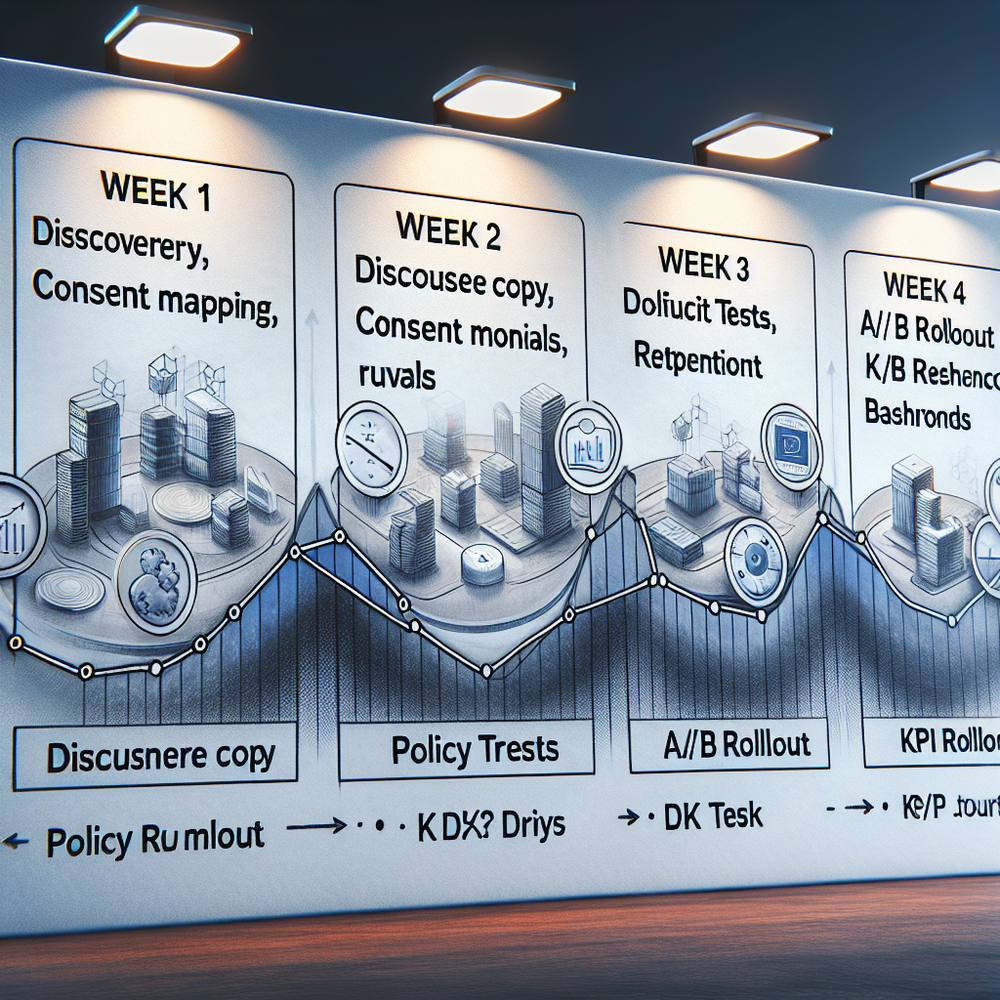
If you can’t measure it, you can’t defend it. Set a shared scoreboard for Product, Legal, and CX. Review weekly for the first 60 days, then monthly.
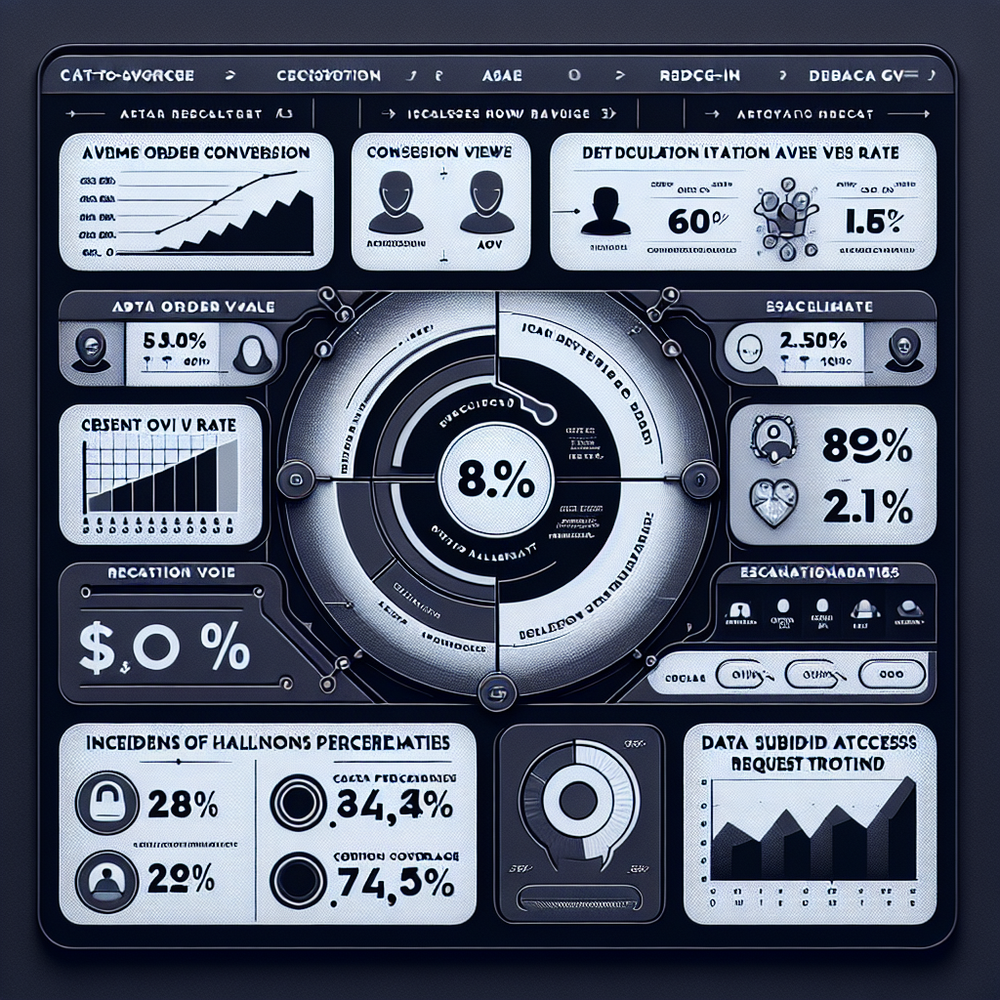
Business KPIs: conversion rate from chat, AOV after recommendations, return rate on agent‑assisted orders, and revenue from contextual monetization. Compliance KPIs: disclosure view rate, consent opt‑in rate, transcript retention adherence, redaction coverage, hallucination incident rate, DSAR response time, and percent of conversations escalated appropriately.
Anecdote: we added a consent micro‑modal with one sentence and a link to “What we store.” Opt‑ins dropped 6 points initially but stabilized, while CSAT rose 11% and refund disputes decreased 7%. Transparent tradeoffs beat silent collection every time.
First‑party data and trust, not surveillance
Third‑party tracking is fading; first‑party context is what scales without creepiness. Brambles.ai thrives on what’s on your page and what users ask—not who they are across the web. That framing keeps you safer and usually performs better.
For publishers, this aligns with contextual commerce: answer the question, recommend in‑stock items, and disclose how you earn. For brands, keep shoppers moving with clear actions and human help on edge cases. Both sides win when the agent is explicit and fast.
Feature spotlight: Content Intelligence indexes your site deeply so answers cite real pages, reducing hallucinations. Brand Customization makes disclosures and badges match your voice and accessibility standards. On mobile, Native Mobile Shopping avoids pop‑up chaos with an app‑like flow.
Common pitfalls to avoid (checklist)
These five mistakes show up in most audits. Fix them early and you’ll prevent 80% of headaches.
- Burying disclosures below results. Put them above the first recommendation and keep them short. - Over‑collecting PII. If a size or zipcode isn’t needed, don’t ask. - Retaining transcripts indefinitely. Set a timer (e.g., 30/60/90 days) and stick to it. - No human escape hatch. Add a visible “talk to a person” chip for payment or sensitive categories. - No kill‑switch. Maintain a toggle to pause recommendations by category if a vendor feed goes off the rails.
Implementation tip: pair Inline Shopping Embeds with page‑level disclosures so context and consent are consistent in content commerce. Tie it to Pricing experiments so legal changes don’t get blamed for performance drops without evidence.
Future outlook: regulation you should watch
Expect more focus on transparency, fairness, and youth protection. Practical signals: labeling requirements for AI systems, stricter dark‑pattern enforcement, and clearer rules on affiliate marketing inside conversational interfaces. The direction is steady: simpler, earlier, clearer.
What to prepare: maintain a plain‑English “About this assistant” page, document your data flows, and keep a changelog of prompt and policy updates. When rules tighten, you can show work—fast. Our teams that do this can usually complete audits within a week, not a month.
Anecdote: a 100k‑SKU apparel brand added an “AI recommendations are suggestions, not medical or legal advice” line and category blocks for minors’ sizing questions. Escalation rate rose 3 points; conversion was unchanged. Regulatory risk dropped; shopper trust held.
FAQ
Do we need consent to save chat transcripts?
If transcripts are used beyond immediate service (e.g., training, personalization), yes—get consent and offer a way to opt out. Brambles.ai supports explicit prompts, configurable retention windows, and transcript deletion on request.
How should we disclose affiliate links in chat?
Place a concise disclosure above the first recommendation and keep it persistent. Use clear language and avoid euphemisms. You can also link to a full policy. Brambles.ai lets you pin this text and audit where and when it appears.
What KPIs prove our agent is compliant?
Track disclosure view rate, consent opt‑in, retention adherence, redaction coverage, hallucination incidents, DSAR SLA, and appropriate escalations. Pair these with conversion, AOV, and refund rate so Legal and Growth see the same truth.
Can we run this on WordPress or Shopify?
Yes. Use the WordPress plugin for one‑click installs or embed via the Agentic Commerce Module. Shopify support is coming; teams can integrate content indexing and disclosures today and switch on the app at launch.
Where do we start?
Kick off with a data‑flow map, standard disclosures, and a 30‑day retention policy. Configure Brambles.ai features, run an A/B with guardrails on, and review the KPI dashboard weekly. If you need help, our team can co‑pilot the first launch.
Related resources on Brambles.ai
If you are implementing this, start with about Brambles.ai, developer docs, virtual try-on, view in room.
Related posts
View all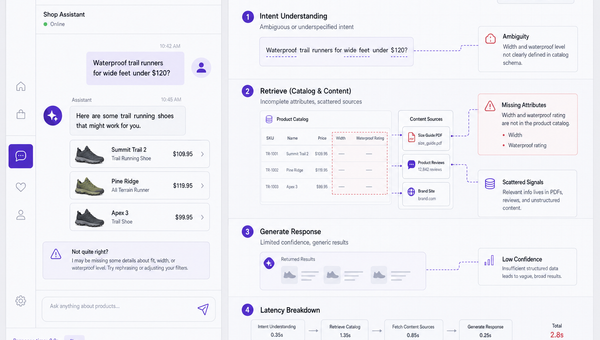
Why Good AI Shopping Agents Are Hard—and How Brambles Helps
Most AI shopping bots fail on data quality, UX, and trust. See why agents break in the wild and how Brambles.ai fills the gaps with measurable features.
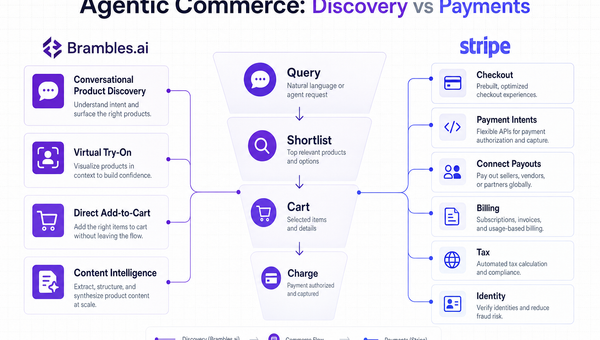
Stripe Agentic Commerce vs Brambles.ai: When to Use Each
Confused between Stripe’s agentic stack and Brambles.ai’s conversational shopping? See real trade‑offs, use cases, ROI, and an implementation path for each.
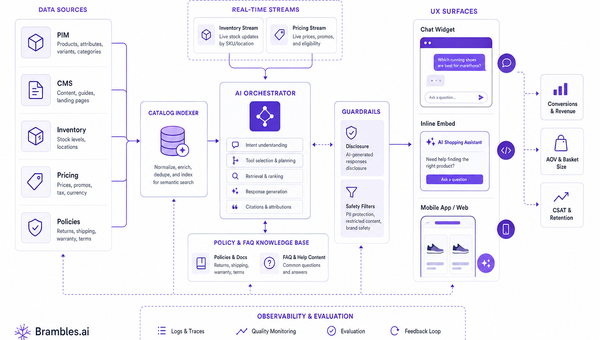
What to Fix Before AI Shopping Agents | Brambles.ai
Fix data, ops, and trust gaps before AI shopping agents. A field-tested Brambles.ai rollout guide with checklists, KPIs, and step-by-step tips. Proven wins.
Explore Brambles.ai
Learn more about our AI-powered agentic commerce platform, agentic shopping, and shopping assistance solutions.
Explore More Insights
Discover more articles on AI, automation, and business innovation
View All Articles