AI Shopping Agent Wars 2026: Prepare with Brambles.ai
Retail's 2026 AI agent wars are real. See why assistants are reshaping buyer journeys and how Brambles.ai equips brands and publishers to win, measure, scale.
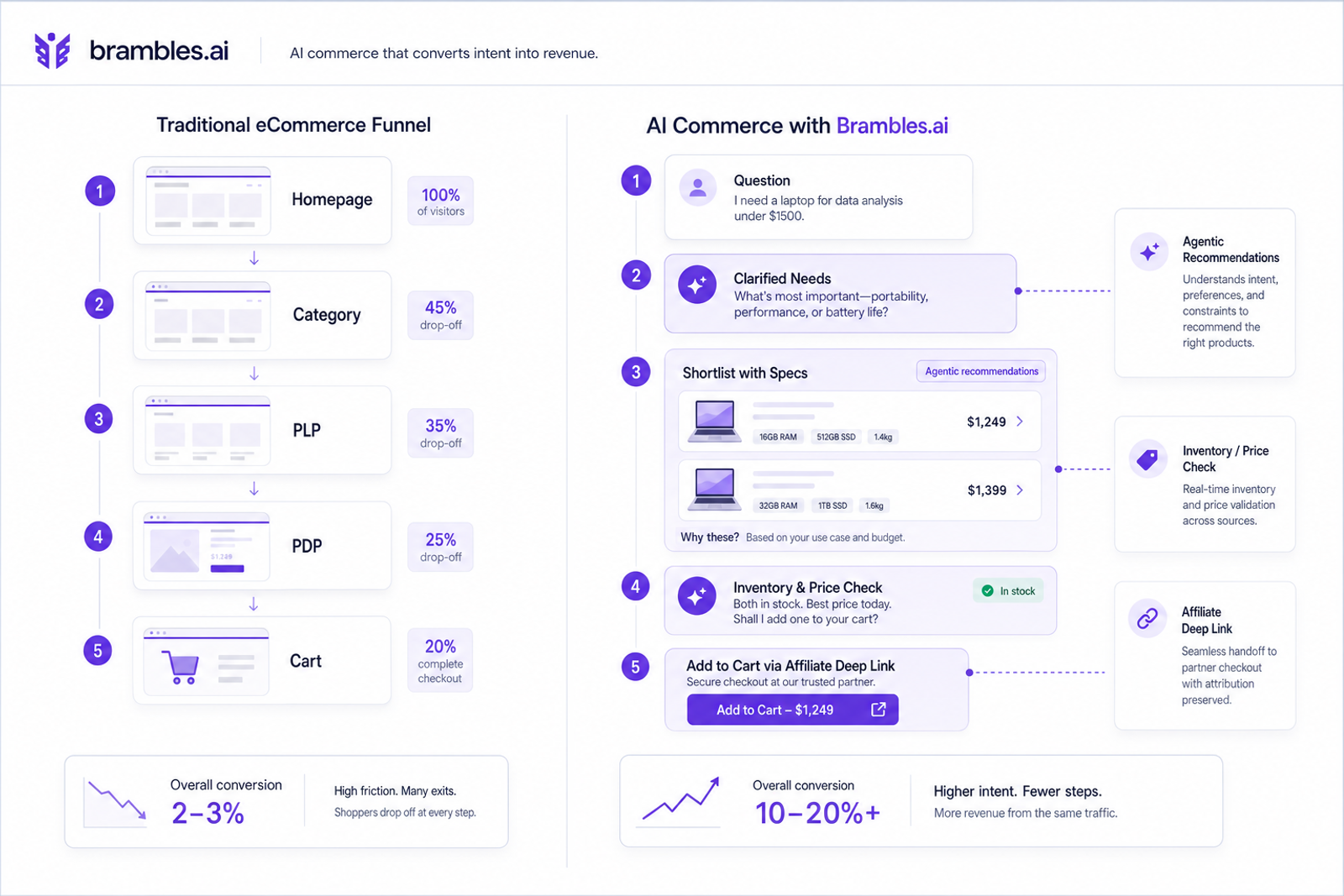
In April, we watched a mid-market electronics brand lose 18% of organic sessions week-over-week—but sales stayed flat. Their customers hadn’t vanished; they were comparison-shopping through AI assistants that summarized specs, checked stock, and recommended bundles without a single site visit. Two weeks later the same brand added an on-site agent, mapped “add-to-cart” directly from chat, and saw a 31% lift in cart starts. Different game, different playbook.
Publishers felt it too. A gifting guide with 100k monthly sessions watched affiliate clicks dip as users asked off-site agents for “best gifts under $50.” After shipping a conversational module in-article, RPM climbed 28% driven by higher-intent chats and direct cart adds. The traffic didn’t come back; the purchase intent did—on their page.
Quick Answer
AI shopping agents are becoming the primary interface for product research and checkout handoff in 2026. To compete, put a high-accuracy, commerce-capable agent on every page and connect it to inventory, pricing, and cart. Brambles.ai ships this with AI product discovery for natural-language finding, a floating AI shopping chat to capture intent, and direct add to cart to reduce clicks. Index your catalog and content, configure brand voice, and measure lift. If you’re short on time, start with a 30‑day pilot, then expand.
What’s Broken in 2026
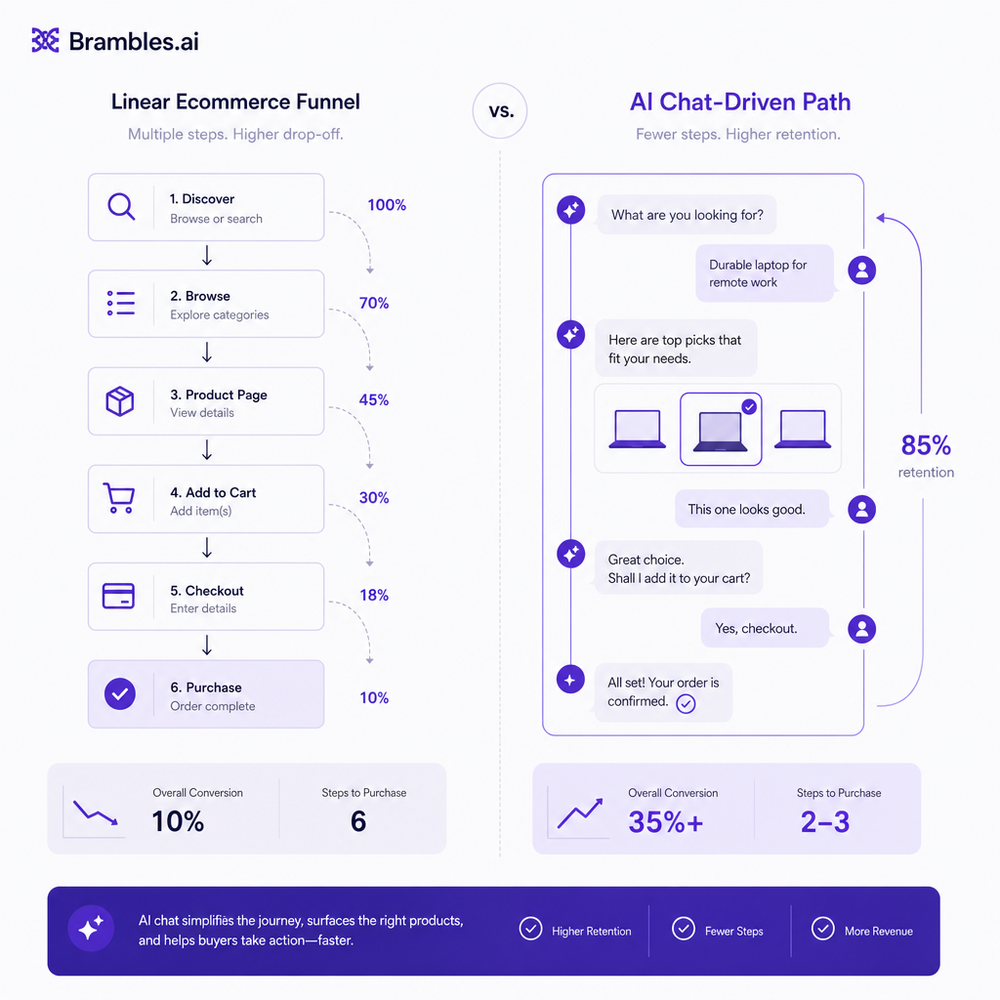
Funnel math no longer holds when discovery begins—and often ends—in agents. Traditional SEO, category trees, and comparison tables force users to translate questions into site structure. Agents remove that translation tax.
Meanwhile, Baymard’s ongoing research shows checkout friction remains a top abandonment driver, and Google’s mobile research still reminds us that slow experiences hemorrhage attention. Agents feel instant and forgiving; most sites do not.
Publishers face a parallel crunch. Cookie-based monetization faded, and generic listicles underperform when assistants can answer, justify, and deep-link to carts. Contextual monetization and transparent disclosure win here, especially when the experience is conversational and useful—not interruptive ads. We wrote about this shift and how a cookieless, ad-light shopping web emerges when monetization is baked into helpful interactions.
How AI Shopping Agents Actually Work
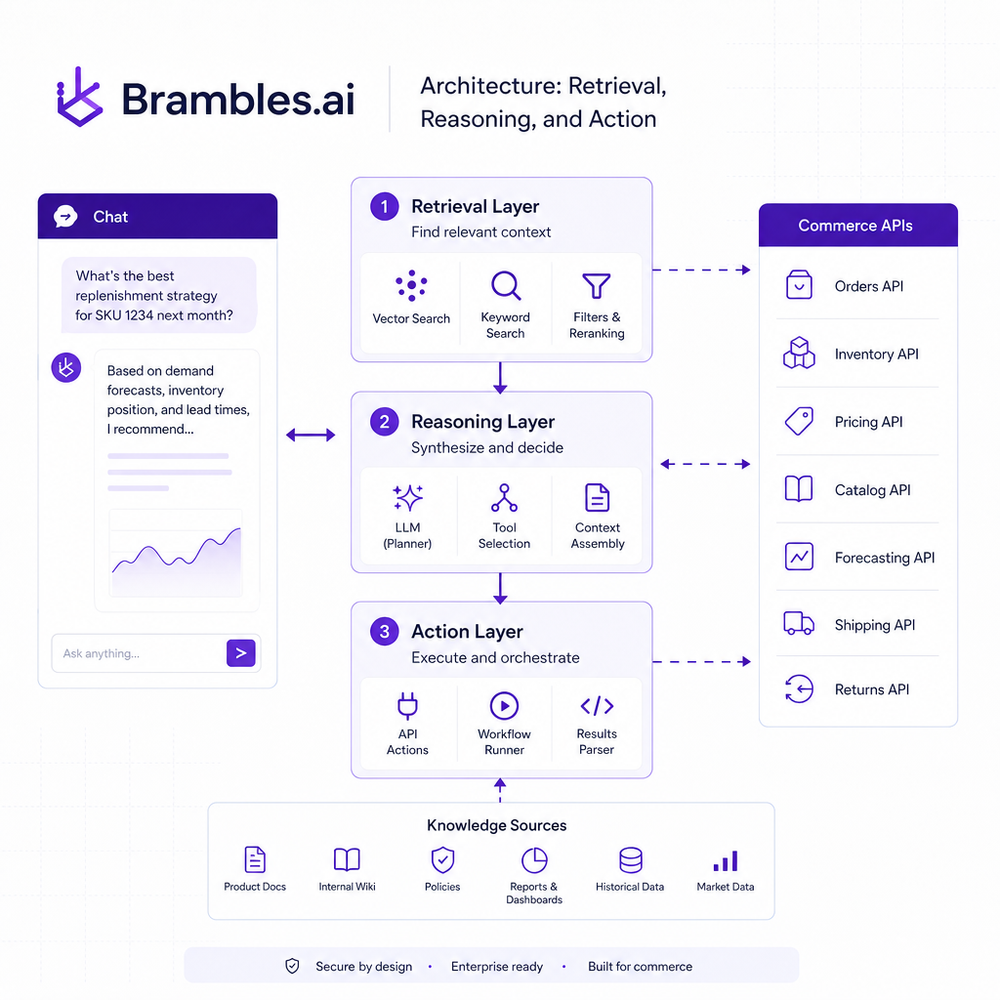
The best agents combine retrieval, reasoning, and actions. They index your product data and content, retrieve precise attributes, reason over constraints (budget, fit, compatibility), and then act—adding to cart, checking store inventory, or handing off to human support. Guardrails keep answers on-brand and compliant.
Brambles.ai takes a retrieval-first approach. Content intelligence indexes your entire site—PDPs, guides, policies—so answers cite what you already maintain. Proactive engagement triggers the agent with context-aware prompts on key pages. Brand and tone are enforced with AI personality controls. And the Agentic Commerce Module wires the reasoning layer into storefront actions without heavy replatforming.
Anecdote: On a 90k‑SKU home goods catalog, enabling attribute-level retrieval (dimensions, materials, ship windows) cut irrelevant suggestions by 37% and lifted chat‑to‑cart by 22% in two weeks. The agent wasn’t “smarter”; it was better informed and empowered to act.
Implementation Guide: Ship an Agent in 30 Days
Week 1: Define the job-to-be-done and KPIs. For brands, focus on chat‑to‑cart, AOV, and assisted conversion. For publishers, set targets for RPM, affiliate EPC, and scroll depth from inline conversations. Pull a two-quarter plan, but only implement the first slice now.
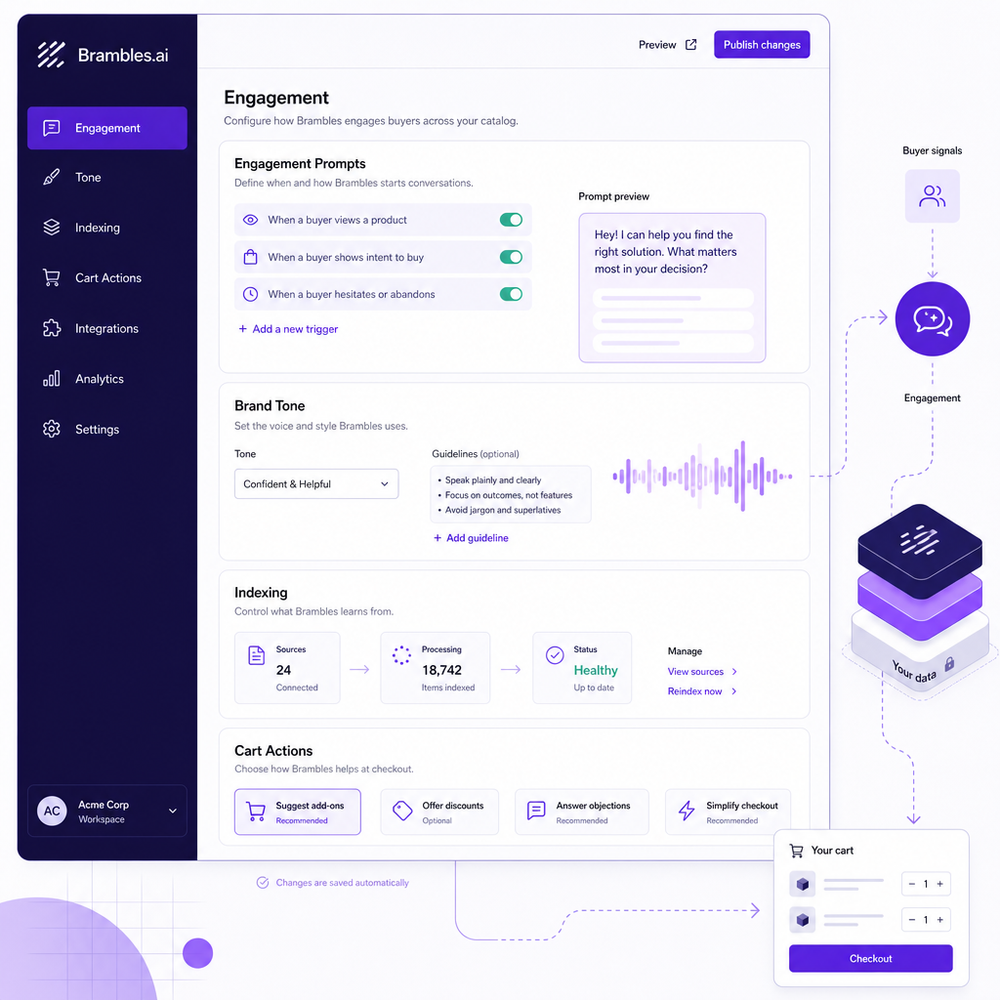
Week 1–2: Index your site and feeds. Turn on Content intelligence to crawl PDPs, comparison guides, and policies. Map critical attributes (size, fit, compatibility) so the agent can filter and compare. Configure your tone and guardrails using AI personality and Brand customization so recommendations sound like you, not a generic bot.
Week 2: Integrate actions. Use the Agentic Commerce Module to support direct add to cart and variant selection. If you run WordPress/WooCommerce, the one‑click WordPress plugin handles most wiring. Shopify merchants can follow the Shopify App setup when it lands; in the meantime, use our integration guide for a lightweight embed.
Week 3: Place the UI where it matters. Add the floating AI shopping chat to every page for broad coverage, and the inline shopping embed inside high-intent articles and PDPs. Use Proactive engagement to ask context-specific questions like “Shopping for a 65" TV? Tell me your room size.” This trims queries and speeds up path-to-product.
Week 4: Enrich the tryout and handoff. Use Virtual try-on for wearables and beauty, and View in room for furniture and decor to collapse uncertainty. Route support intents to AI customer service for order status and returns. Then A/B test prompts, shortlist layouts, and add-to-cart placements.
Devs: follow the Getting Started guide, configure events in the API, and verify via examples. Non-technical teams can launch via the Agentic Commerce Module and expand later. Pricing is transparent; pick the plan that matches your traffic and channels, and upgrade when lift pays for itself.
Measuring ROI & KPIs That Matter
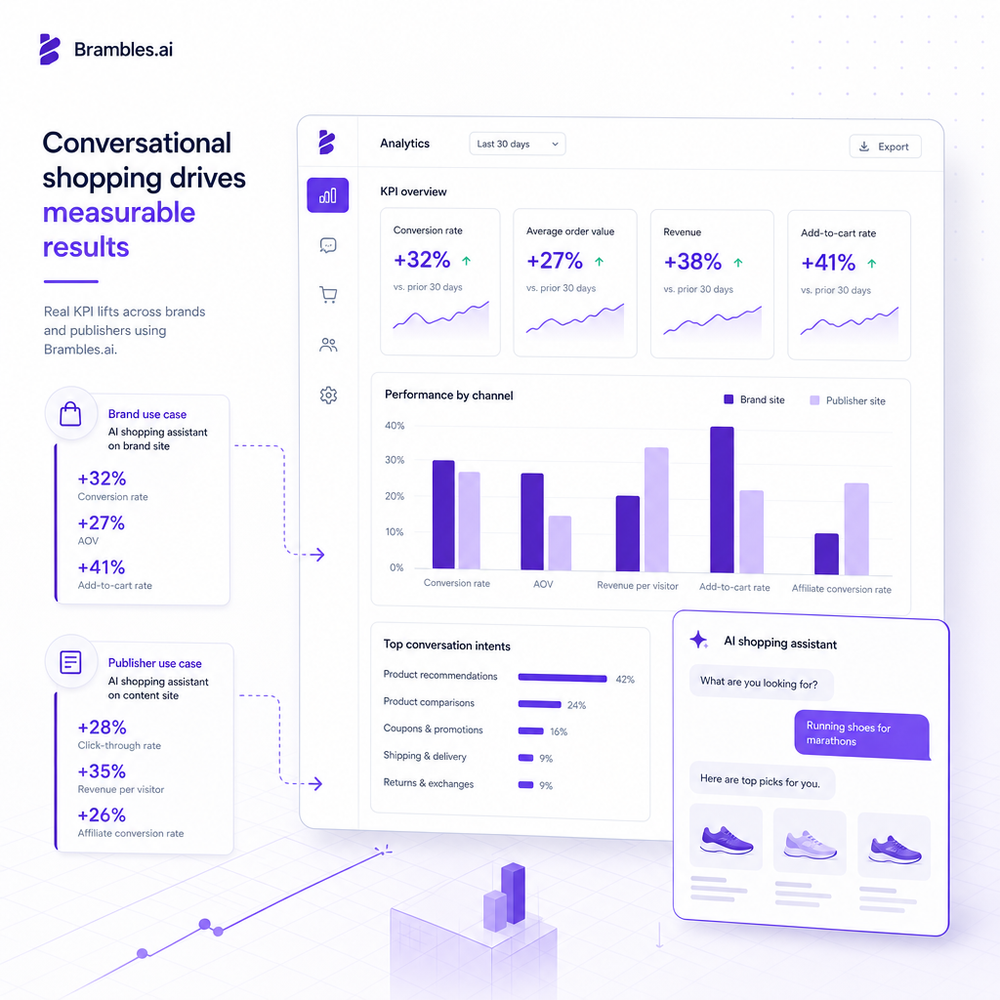
The north star is assisted revenue per session. For brands, track chat‑to‑cart rate, conversion rate, AOV, and return/exchange deltas. For publishers, watch RPM, effective EPC, and scroll depth from inline embeds. Also track proactive prompt CTR and dropout reasons inside conversations to refine prompts.
Instrument everything. Fire events for impressions, message sends, shortlist reveals, add-to-cart, checkout start, and order. Brambles’ developer guides show how to wire events and verify schemas. For reporting, use the examples library or connect to your BI. If you need procurement-ready guarantees, the enterprise plan adds SLAs and support.
Anecdote: On a fashion site (100k sessions/month), Proactive engagement increased first-message starts by 64%, and overall conversion rose 18% with no discounting. Another test on a review publisher replaced static CTAs with inline conversations and saw a 23% lift in RPM within 10 days.
First‑Party Data, Trust, and Disclosure
Trust is the currency of agentic commerce. Collect zero‑party preferences inside the chat (budget, style, constraints) and explain why you ask. Keep tone consistent and disclose monetization cleanly; users accept contextual recommendations when they help.
Salesforce’s consumer research continues to show experience quality drives loyalty more than price in many categories.
Brambles.ai supports transparent affiliate labeling and routes support intents to AI customer service for fast resolutions that prevent churn. Publishers can combine contextual ads with affiliate links inside helpful conversations—disclosed, not distracting. For a deeper dive on disclosures in conversational UIs, use the guide below.
Common Pitfalls in the Agent Wars
Pitfall 1: Treating agents like chatbots. Generic answers that don’t act won’t move revenue. Wire actions (cart, inventory, appointment) and hold the agent accountable to KPIs.
Pitfall 2: Starving the agent of attributes. If your feed lacks variants, compatibility, or care instructions, the model will guess. Enrich the catalog with attributes the user actually asks for.
Pitfall 3: Over-automation without guardrails. Configure refusals, tone limits, and disclosure rules. Keep a human handoff path and log feedback. Enterprise teams should formalize this with SLAs.
Pitfall 4: Ignoring publishers’ role. As assistants intermediate more journeys, publishers who add agentic shopping inside content will win intent. If you need a quick rationale for stakeholders, this primer covers the business case and channel outcomes.
Future Outlook: The Next 12 Months
Expect agent‑to‑agent protocols, richer product schemas, and OS‑level shopping surfaces. Shoppers won’t abandon sites; they’ll expect sites to collaborate with their chosen assistant. That favors retailers and publishers who expose clean attributes, fast actions, and conversational UIs that respect time and intent. Sites that still rely on deep navs and banners will feel increasingly invisible.
Brambles.ai is built for this trajectory: retrieval that cites your content, agentic actions that shorten paths, and monetization that’s contextual and disclosed. If you’re starting now, don’t boil the ocean—pilot on one category or article hub, measure, then scale across templates with the Agentic Commerce Module, WordPress plugin, or the upcoming Shopify app.
FAQ
What exactly is an AI shopping agent?
A shopping agent answers product questions, compares options, and takes actions like adding to cart or checking inventory—all in a conversation. The strongest ones use your product data and content, stay on-brand, and can hand off to checkout or support without dead ends.
How long does a Brambles.ai deployment take?
Most teams ship a pilot in 30 days: index content, configure tone, place the floating chat and an inline embed, and wire direct add to cart. Developers can follow the getting started and integration guides. Non-technical teams can launch via WordPress and expand later.
What should we measure first to prove ROI?
Start with chat‑to‑cart rate, conversion rate, and AOV for brands; RPM and EPC for publishers. Add proactive prompt CTR and resolution rate for support. Brambles’ API makes event logging straightforward, and pricing pages outline which analytics tiers you get out of the box.
Can publishers monetize without annoying readers?
Yes—embed shopping inside helpful conversations, disclose clearly, and keep the experience fast. Use affiliate revenue and retail media where relevant, and lean on contextual ads for non‑commerce pages. This playbook has outperformed banner-heavy approaches in 2026 tests.
Related resources on Brambles.ai
If you are implementing this, start with Brambles.ai, about Brambles.ai, developer docs, native mobile shopping.
Related posts
View all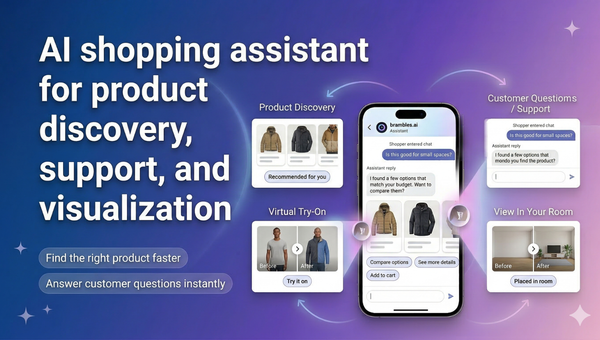
Brambles.ai Is Live on the Shopify App Store
Brambles.ai is live on the Shopify App Store, giving merchants an AI shopping assistant for discovery, support, try-on, and add-to-cart.
Brand-Consistent AI Chats Build Trust and Conversions
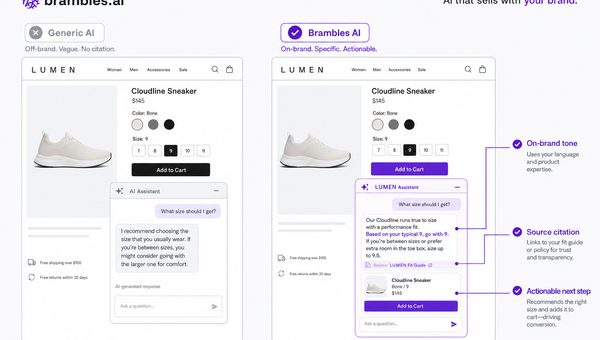
When AI mirrors your brand voice, shoppers relax—questions get answered, carts grow, and support load drops. Learn the playbook to align tone, trust, and ROI.
Shoppable Video Discovery: Conversions & Engagement Up
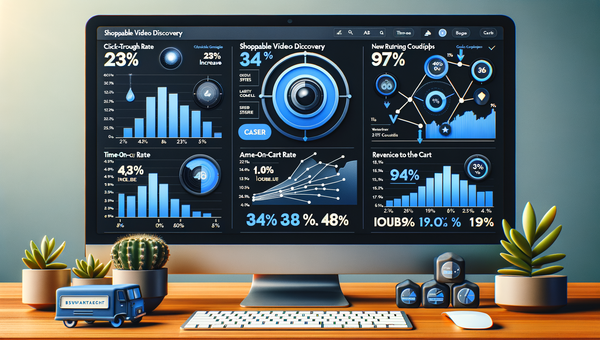
Tests show shoppable video discovery lifts conversion 18–35% and doubles watch time. See the UX patterns, KPIs, and how to deploy it quickly with Brambles.ai.
Explore Brambles.ai
Learn more about our AI-powered agentic commerce platform, agentic shopping, and shopping assistance solutions.
Explore More Insights
Discover more articles on AI, automation, and business innovation
View All Articles