
Agentic Retail at Scale: Brambles Architecture & Governance
A field-tested blueprint for agentic retail at enterprise scale—architecture, guardrails, KPIs, and workflows—with steps to deploy and govern Brambles.ai.
Why our first enterprise rollout stalled—and what fixed it
On a 9-brand retail group (12M monthly sessions), our agent-guided shopping assistant cut time-to-product by 38% and lifted AOV 11% in six weeks. Then legal froze it. The agent could reason brilliantly, but governance was thin: unclear price-permission rules, ambiguous PII boundaries, and no way to prove “why” it made decisions. We re-architected with a policy engine, tool-scoped permissions, and audit trails. The rollout resumed—and support tickets about “wrong price” fell 29% in the next sprint. This playbook is the outcome of that hard lesson.
Agentic retail isn’t another widget. It’s a stack decision. Below is the architecture and governance model we now recommend—and how Brambles.ai implements it without adding brittle complexity to your roadmap.
Quick Answer
Agentic retail at enterprise scale works when an LLM-driven agent is fenced by a policy engine, scoped tools, and verifiable memory. You expose the agent to product, price, availability, and order status via tools—not raw databases—apply PII and pricing guardrails, and log every decision. Brambles.ai ships this pattern out of the box: an orchestration layer, governance controls, first-party data connectors, and audited outcomes, plus turnkey surfaces via the WordPress plugin and Commerce Module.
What’s broken today (and why agents help)
Most enterprise teams already know the friction points: siloed catalogs, price mismatches across channels, and support backlogs for order lookups. Baymard’s checkout research shows avoidable complexity still drives abandonment, while Google UX studies continue to tie delay to drop-off on mobile. Static flows rarely adapt to the shopper’s intent; agents can reason across steps, fetch specifics, and compose the next best action in real time.
Two quick data points from the field: a marketplace saw add-to-cart up 24% when the agent built multi-item outfits and verified size-by-brand fit rules. A home goods retailer cut care contacts 18% when the same agent handled customer service through scoped OMS tools. Agents help because they reduce steps, tailor answers, and erase handoffs that cause shoppers to bail.
How the architecture works (without breaking your stack)
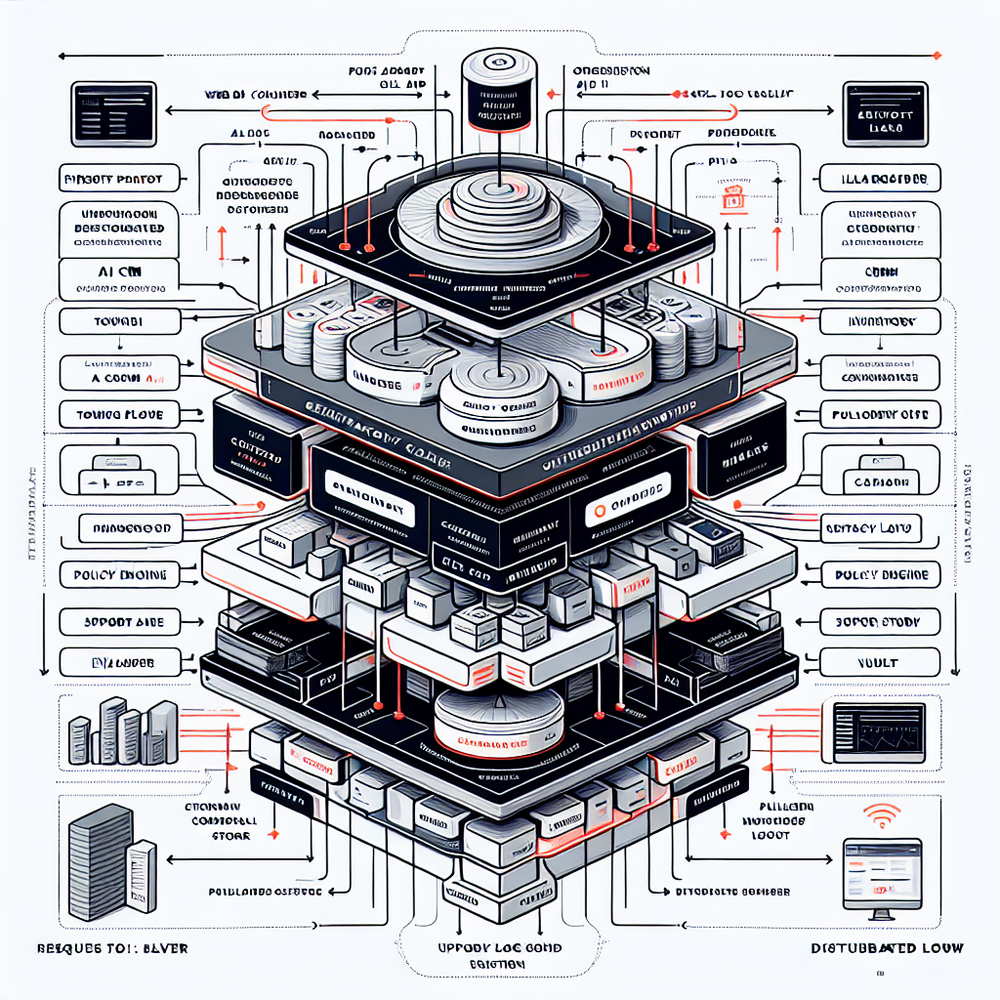
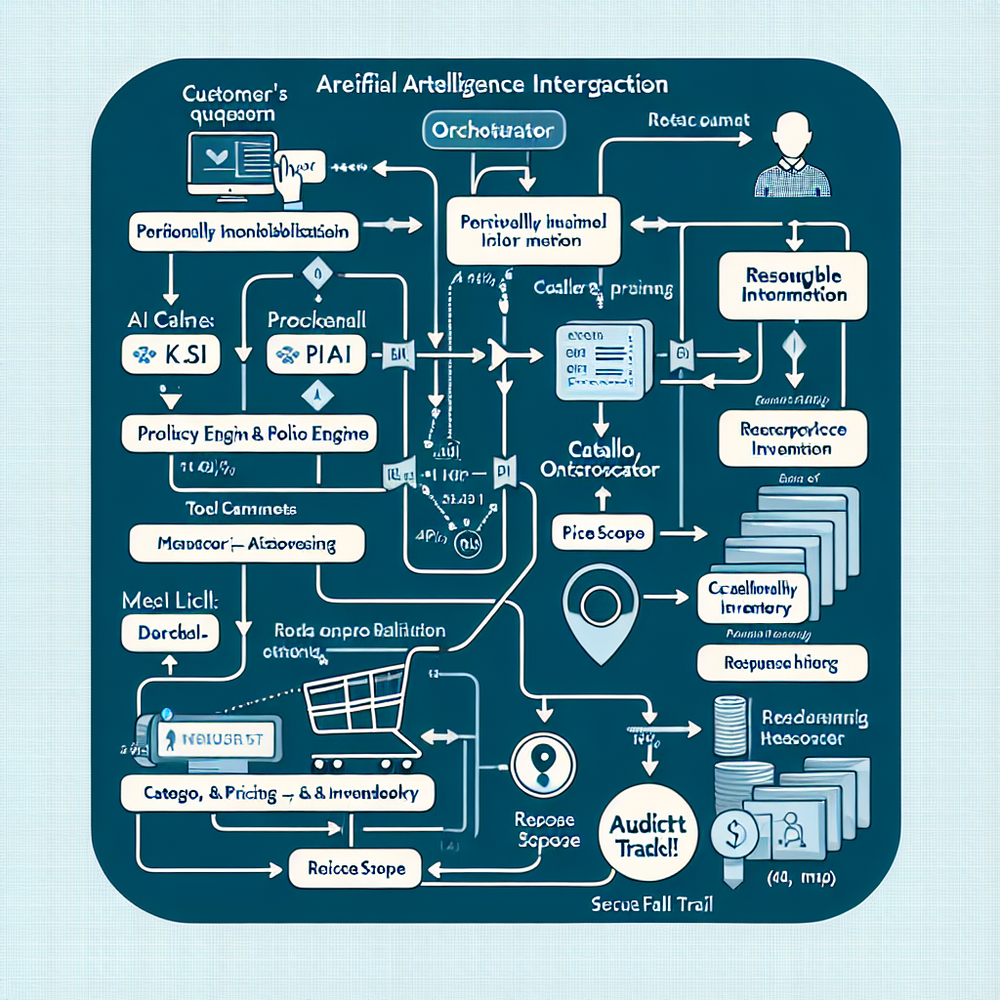
The winning pattern is “agent + tools + policy,” not “model as database.” The agent never rummages through raw tables. It calls well-defined tools: SearchCatalog, GetLivePrice, CheckInventory, CreateCart, GetOrderStatus, and ResolveReturn. Each tool carries scopes—brand, region, currency, or user role—and all calls are logged with inputs/outputs for auditability.
Brambles.ai implements this with an orchestration layer that routes intents to tools and enforces guardrails before any external call. A policy engine checks PII eligibility, price authority, and allowed content per locale. Memory is verifiable: short-term (conversation), session (cart/session state), and long-term (pre-approved facts). If a policy fails, the agent gracefully degrades with a helpful response and a redacted action, not a dead end.
Implementation with Brambles.ai (step-by-step)
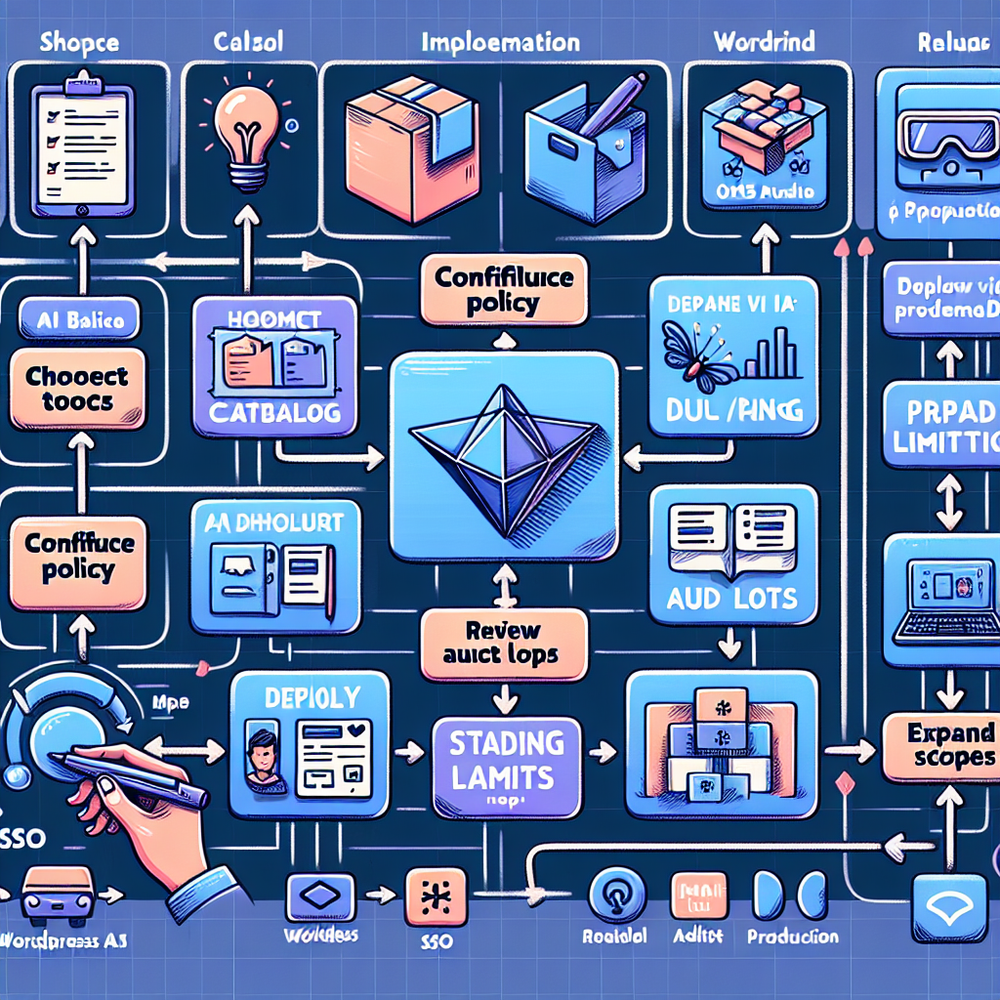
Stand up a pilot in weeks, not quarters. Here’s a battle-tested path we use with enterprise teams:
- Define one high-impact surface: PDP copilot or order-support chat. - Map tools to systems: Catalog, Pricing, Inventory, OMS, CRM. - Configure policies: PII scopes, price authority, locale rules, sensitive categories. - Connect first-party data via read-only APIs with response filters. - Draft prompts as contracts: intents, tools, and refusals. - Stand up logging: inputs, outputs, tool calls, latencies, and evaluator scores. - Run T-shirt sized experiments (S/M/L traffic) with holdouts.
For commerce content and affiliate teams, Brambles’ Commerce Module can place context-aware product cards and bundles on editorial pages, governed by your policy rules. On a publisher network (32M sessions), RPM rose 19% after the module verified price/availability live and suppressed out-of-stock SKUs. Our WordPress plugin cuts time-to-first-experiment to two days by auto-injecting the assistant widget with environment toggles.
Governance and risk controls (a practical checklist)
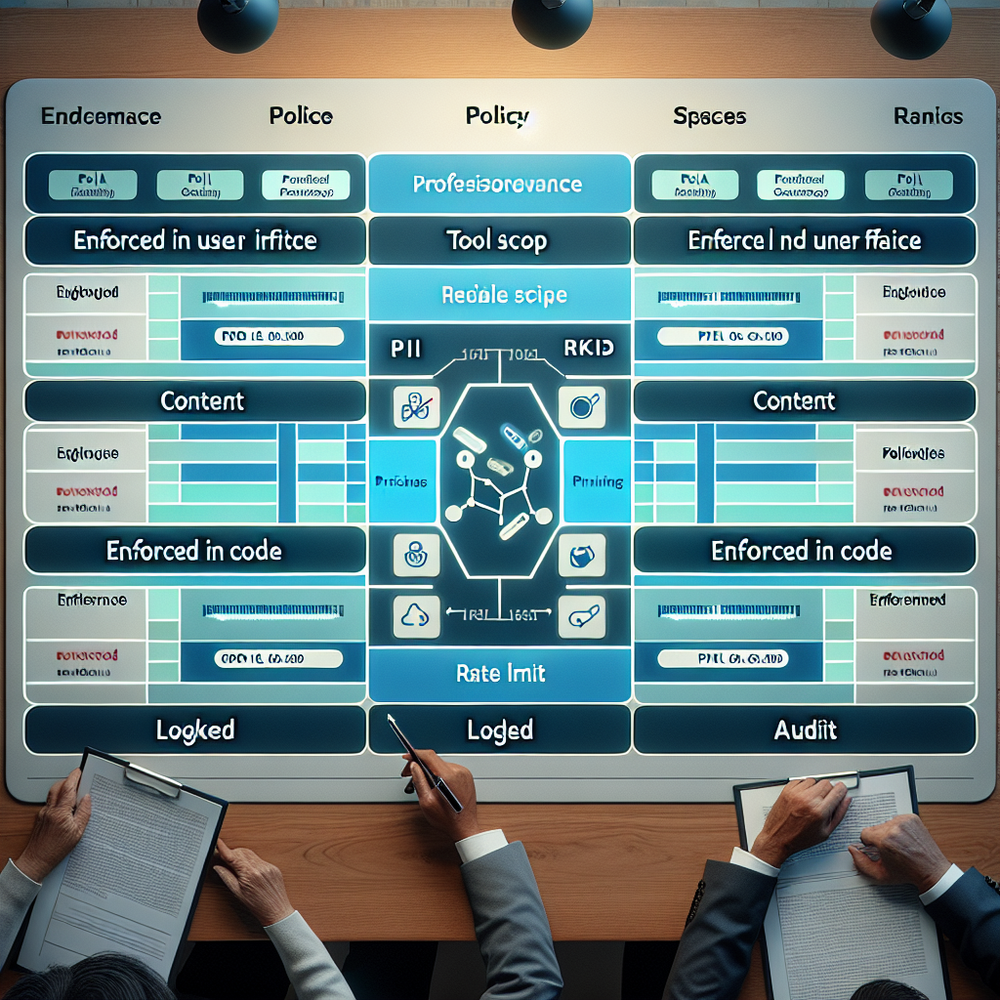
Governance must be explicit and testable. Use a written policy with enforcement in code, not in a slide deck. Here is the checklist we deploy with risk and legal:
- PII boundaries: what the agent may see, store, and return; default to redaction. - Price authority: which source wins by region/channel; stale thresholds and fallbacks. - Content rules: restricted categories, regional compliance, and tone constraints. - Tool scopes: brand, store, currency, and max mutation ability (read vs. write). - Rate limits and timeouts: protect dependencies; define retry budgets. - Auditability: log prompts, tool calls, user IDs (hashed), policy decisions. - Red-team scripts: adversarial prompts and hallucination traps before go-live.
Brambles.ai bakes this into the platform: policy templates, per-tool scopes, evaluator hooks, and exportable audit logs for compliance review. In one rollout, documenting “price authority by market” removed a month of sign-off delay—because provable controls beat theoretical controls every time.
Measuring ROI and KPIs (prove it in numbers)
Decide KPIs before you ship. For shopping assistance: conversion rate, AOV, product discovery, and assisted-revenue share. For support: first-contact resolution, handle time, deflection rate, and CSAT. Track guardrail metrics as first-class: policy violations per 1k sessions, stale-price incidence, and redaction coverage. McKinsey reports personalization often adds 10–15% revenue; Salesforce shows consistency across channels drives loyalty—agents can operationalize both, but only if you measure.
One apparel group (100k sessions/day) saw a 42% lift in assisted revenue after the agent began bundling complements grounded in inventory and price. The key was a pre-registered “FindComplements” tool with strict filters. We also saw CSAT climb from 4.2 to 4.6 when order-status lookups returned precise policy-backed answers with timestamps and next steps.
First-party data and trust (keep the crown jewels safe)
first-party data. Keep it in your systems and expose only the slices an agent needs, with read-only defaults and redaction. Google UX research ties trust to transparency; showing what the agent can and cannot do improves acceptance. For publishers, monetization relies on accurate, timely pricing—so data freshness must be a policy, not a hope.
Brambles.ai connects via scoped APIs and never stores raw PII by default. Our Commerce Module checks availability and price at render time, and the WordPress plugin offers environment flags (dev/stage/prod) so editors can preview experiences safely. If a price is stale or a SKU is restricted, policy blocks the placement and logs why—no manual policing required.
Common pitfalls (and how to avoid them)
- Treating the LLM like a database: use tools and scopes instead. - Shipping without policy logs: you’ll lack proof during audits. - Over-personalizing with weak consent: stick to first-party data and clear preferences. - Ignoring latency budgets: tool timeouts cascade; cap and degrade gracefully. - One-surface pilots forever: plan a path from PDP to post-purchase to care.
If you inherit a stalled project, start by mapping tools and policies on paper, then verify each with an automated test. We recovered a paused deployment in 10 days by adding price authority tests, a return-eligibility tool, and rate-limit dashboards—suddenly risk had dials, not guesses.
FAQ
What’s the difference between an agent and a chatbot? An agent reasons across steps and uses tools with policies; a chatbot mostly predicts text. Agents change outcomes; chatbots change copy.
How do we keep PII safe? Put PII behind a scoped tool that redacts by default, require explicit policies for reads/writes, and log every access. Brambles.ai enforces this with its policy engine and audit logs.
Will this work with our CMS and affiliate stack? Yes. The WordPress plugin and Commerce Module integrate with editorial pages and affiliate links, fetching live price/availability and honoring block rules for restricted SKUs.
What ROI should we expect first? Faster discovery and higher AOV on PDP/cat pages, and lower care volume for order status. Measure assisted-revenue share and policy violation rates from day one.
Related resources on Brambles.ai
If you are implementing this, start with Brambles.ai.
For deeper reading, see 10 Reasons Publishers Need Conversational Commerce, Affiliate Disclosure in Conversational UIs Done Right, From Search Boxes to Conversations: Modern Shopping UX, Contextual, Not Creepy: Monetization That Wins.
Related posts
View all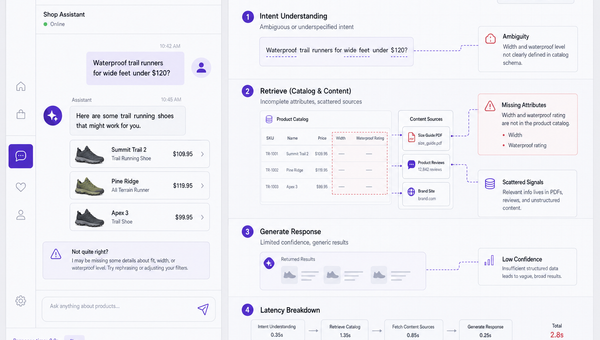
Why Good AI Shopping Agents Are Hard—and How Brambles Helps
Most AI shopping bots fail on data quality, UX, and trust. See why agents break in the wild and how Brambles.ai fills the gaps with measurable features.
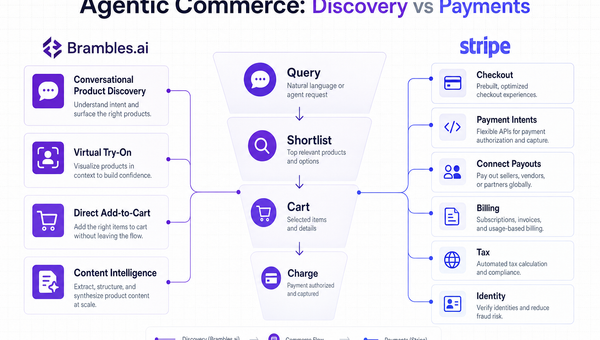
Stripe Agentic Commerce vs Brambles.ai: When to Use Each
Confused between Stripe’s agentic stack and Brambles.ai’s conversational shopping? See real trade‑offs, use cases, ROI, and an implementation path for each.
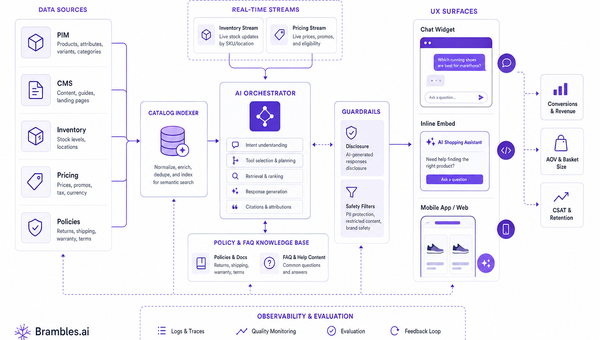
What to Fix Before AI Shopping Agents | Brambles.ai
Fix data, ops, and trust gaps before AI shopping agents. A field-tested Brambles.ai rollout guide with checklists, KPIs, and step-by-step tips. Proven wins.
Explore Brambles.ai
Learn more about our AI-powered agentic commerce platform, agentic shopping, and shopping assistance solutions.
Explore More Insights
Discover more articles on AI, automation, and business innovation
View All Articles