Agentic Commerce vs Ecommerce: Where Brambles.ai Wins
Agentic commerce outperforms legacy ecommerce with guided shopping, first‑party data, and faster checkouts. See how Brambles.ai implements it end to end.
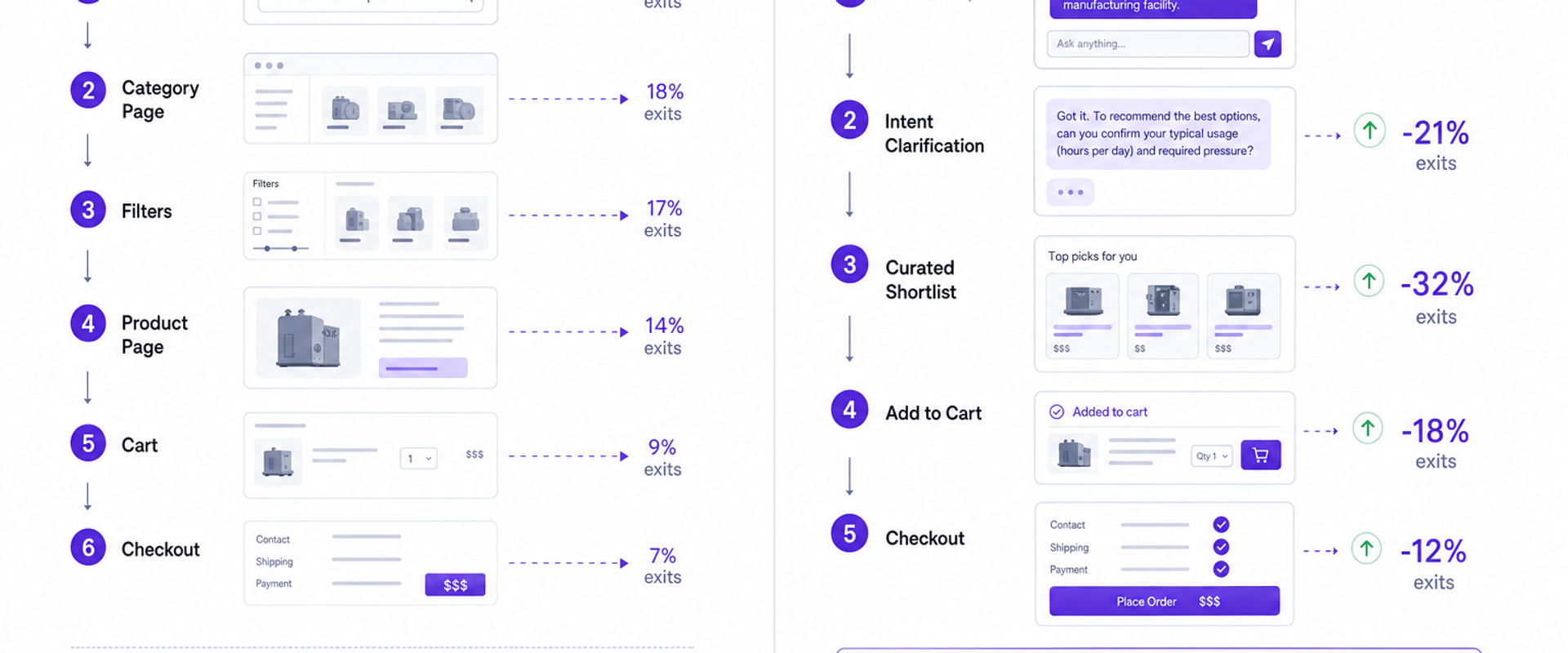
In our A/B test on a 100k‑session apparel site, a guided chat that could add items to cart lifted add‑to‑cart rate by 38% and cut product‑page exits by 21%. A home decor publisher saw a 31% RPM lift after switching from static links to an agent that suggested in‑stock SKUs and priced alternatives. And a beauty brand measured a 14% drop in returns when shoppers tried shades via virtual try‑on before checkout. These weren’t flashy demos. They were quiet workflow fixes that agentic commerce makes routine—understanding intent, narrowing choices, and executing steps on the shopper’s behalf. Traditional ecommerce waits for clicks. Agentic commerce does the legwork.
Quick Answer
Agentic commerce replaces passive catalogs with an AI that clarifies intent, evaluates options, and completes actions like adding to cart or scheduling delivery. It beats traditional ecommerce by reducing steps, surfacing relevant products instantly, and using first‑party data to personalize without cookies. Brambles.ai wins by packaging this into deployable features—AI product discovery, proactive engagement, and direct add‑to‑cart—plus a lightweight Agentic Commerce Module that embeds on any site in minutes.
What’s Broken with Traditional Ecommerce
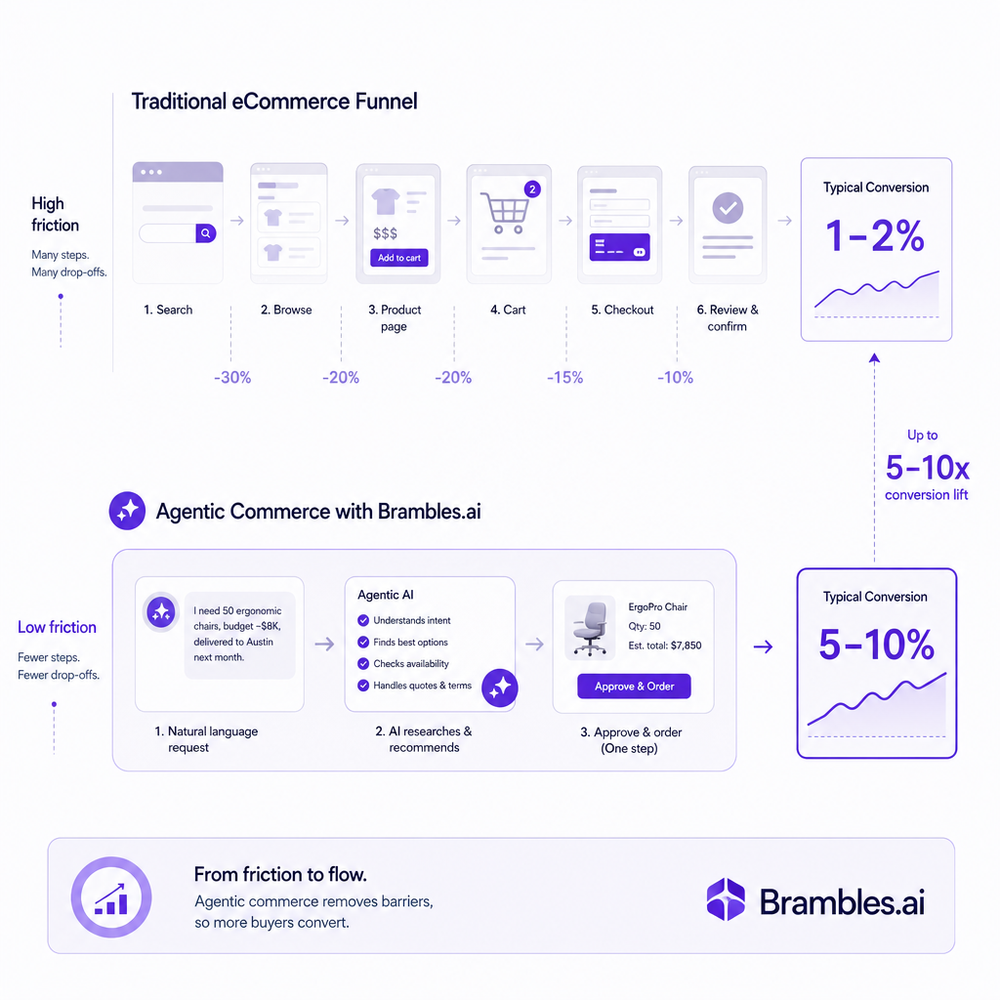
Most stores still rely on keyword search + filters + static PDPs. It’s a long path, and shoppers fall off. Baymard’s research shows checkout abandonment hovering near 70%, and product discovery remains a top friction driver. We also see weak decision support: reviews are generic, spec comparisons are manual, and stock/out‑of‑stock states are hidden until late. Meanwhile, third‑party cookies fade, so remarketing drops off while on‑site personalization remains brittle. The net effect: more clicks, fewer decisions, and low confidence at the moment of purchase.
How Agentic Commerce Works (and Why It Wins)
Agentic commerce turns the store into a helper that finishes tasks. It asks clarifying questions, weighs constraints (budget, size, style, delivery window), and proposes ranked matches—then executes actions like adding to cart. The experience feels like a skilled associate in chat form. This matters because shoppers don’t want a hundred filters; they want three great options and a confident nudge. McKinsey has repeatedly shown that relevant personalization drives 10–15% revenue lift; agentic systems operationalize that in real time, on every page.
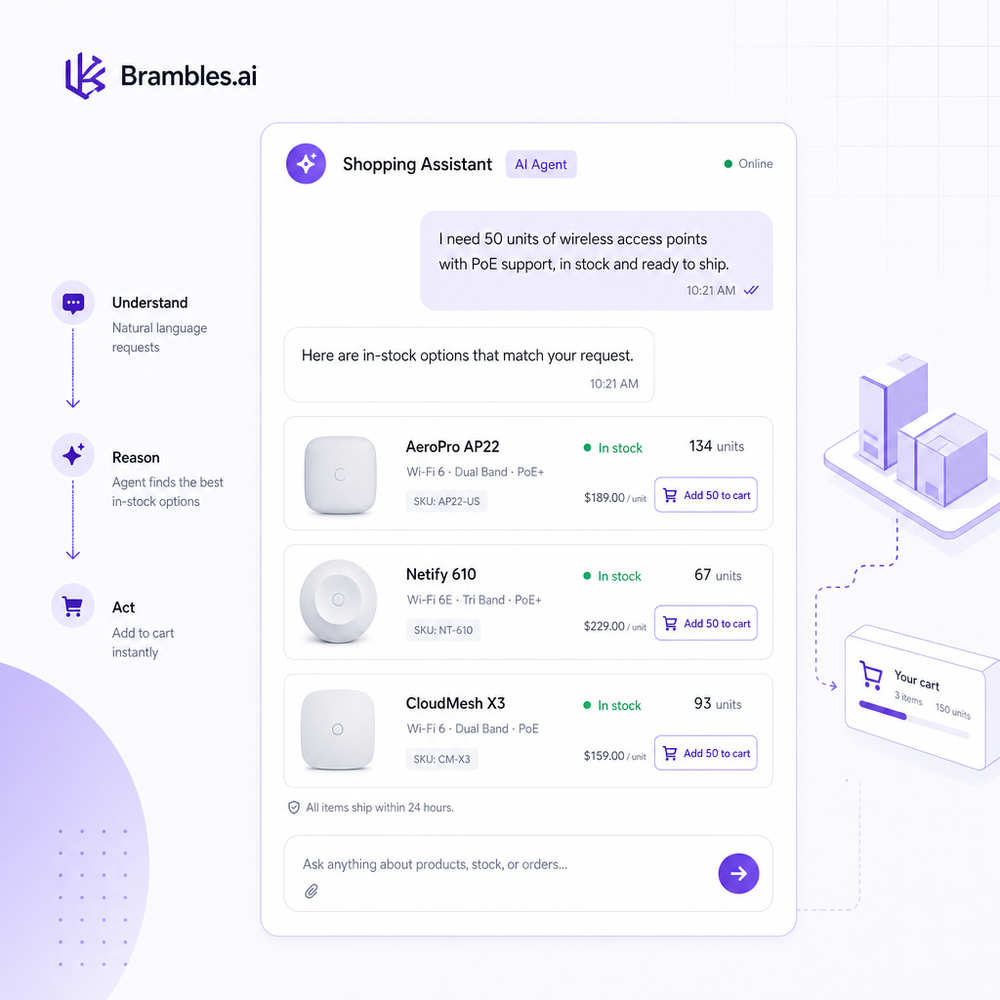
Brambles.ai implements this with a few core features. AI product discovery lets shoppers use natural language—“quiet dishwasher under $700 that fits a 24‑inch cutout”—and returns inventory‑aware picks. Proactive engagement invites help at decisive moments (e.g., size guides on PDPs). Direct add to cart turns a recommendation into an action, skipping dead‑end lists. For visual confidence, virtual try‑on and view in room reduce uncertainty where it’s highest—beauty, apparel, furniture.
Implementation Guide: Standing Up Agentic Commerce with Brambles.ai
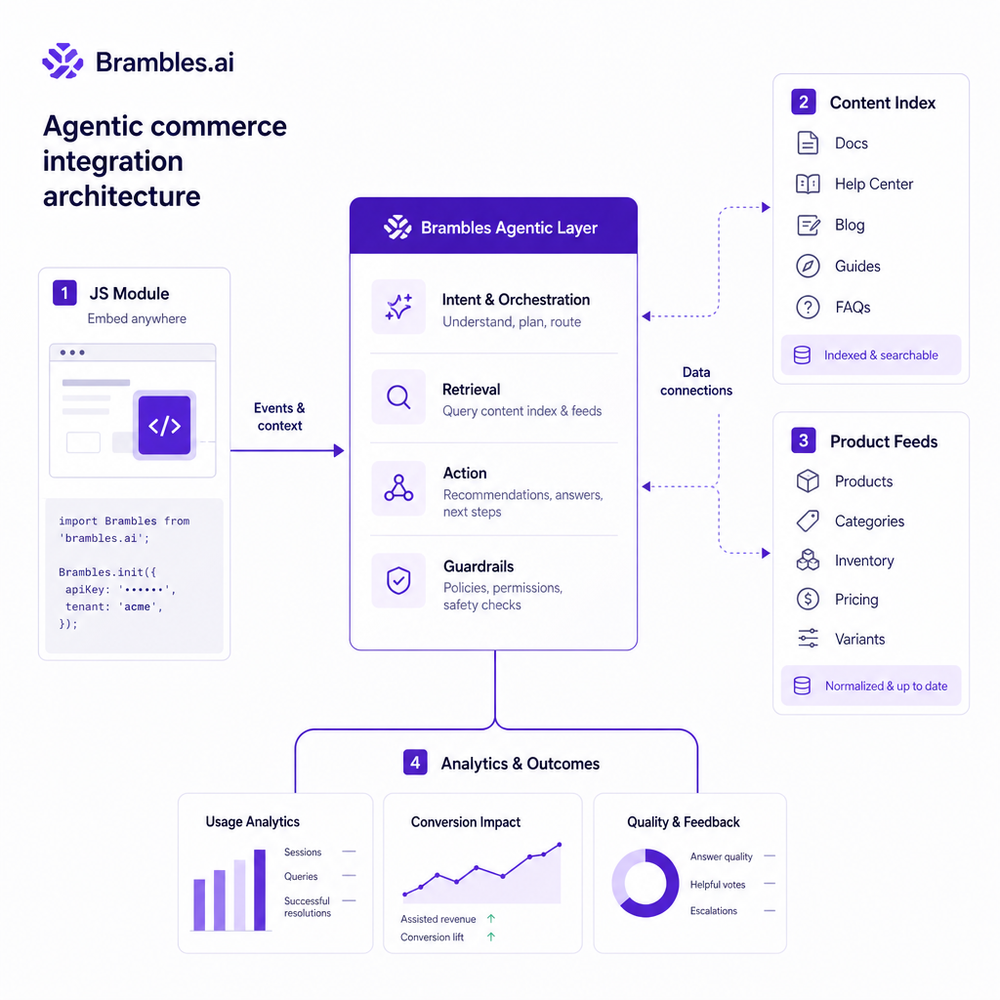
You don’t need a rebuild. Most teams ship a first agentic flow in a sprint using the Agentic Commerce Module. It’s a single JavaScript embed that works on any CMS or storefront. If you’re on WordPress/WooCommerce, the WordPress plugin is one click. Shopify support is tracking; ask to join the early access list. Developers can configure prompts, product sources, and guardrails via the docs. Publishers and brands can start with a narrowly scoped use case—“back to school laptop guide” or “size fit helper”—to prove ROI fast.
Step-by-step to first value:
1) Define one job: e.g., “Find a carry-on that meets airline X rules under $200.”
2) Map required inputs and constraints.
3) Connect product feeds or affiliate catalogs; Brambles’ content intelligence indexes your site to ground responses.
4) Configure the AI shopping chat to appear on key pages and enable proactive prompts.
5) Turn on direct add to cart or deep links to merchant carts.
6) QA with 20–30 real queries; fix blind spots.
7) Ship, measure, iterate weekly.
Measuring ROI & KPIs That Actually Matter
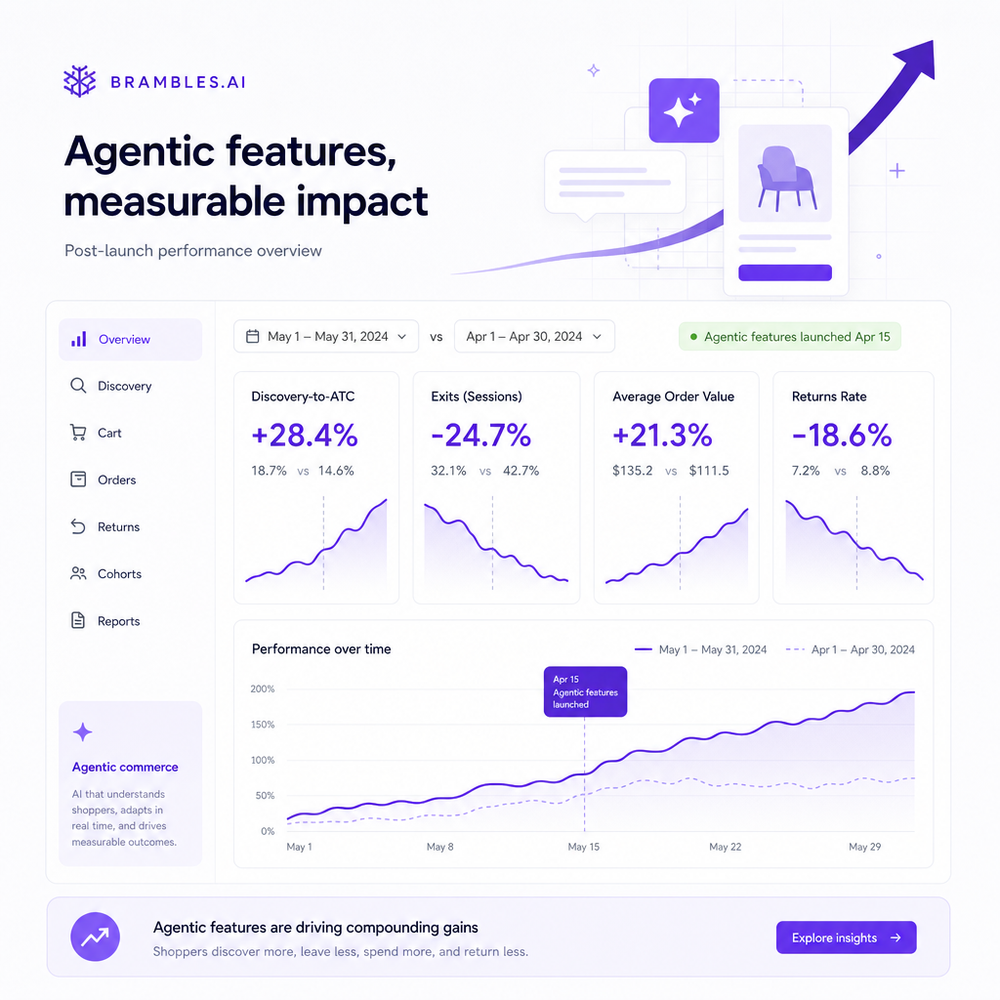
Agentic commerce changes leading indicators within days. We track:
- Discovery-to-ATC rate: Expect 20–40% gains when direct add to cart is enabled.
- Product page exits: Should drop 10–25% with proactive assistance.
- Time to first confident choice: Fewer steps, tighter dwell.
- AOV: Bundling via the agent can lift 5–12%.
- Return rate: Visual confidence tools trim size/color mismatches.
On a mid-market beauty brand, enabling virtual try‑on cut shade returns by 15% MoM and increased repeat purchase by 8%. Publish the scorecard weekly to keep the team aligned.
First‑Party Data, Trust, and Monetization Without Creepy Tactics
Agentic systems excel with first‑party signals: query history, category affinity, on‑page context. Unlike retargeting, the value is immediate and local to the session. Salesforce surveys show most shoppers expect brands to understand their needs without over-collecting data. Brambles uses content intelligence to ground recommendations in your catalog and articles, then keeps conversations contextual—no surveillance, just service. For publishers, this translates into cleaner monetization and higher RPM without sacrificing reader trust.
Publisher anecdote: after adding an inline shopping embed to evergreen buying guides, a lifestyle site earned a 27% higher click-through to merchants and a 19% session RPM lift in four weeks. The win wasn’t more ads—it was more helpful, faster decisions. If you monetize content, read the 10 reasons publishers need conversational commerce; several mirror the lift patterns we see in the field.
Common Pitfalls and a Pre‑Launch Checklist
Most misses come from trying to do everything at once. Start narrow, tune, then expand. Avoid:
- Unscoped intents: Pick 5–10 high-volume jobs and write crisp examples.
- Hallucinated SKUs: Always ground on your catalog and verified feeds.
- Passive placement: Use proactive prompts on PDPs and category top fold.
- Dead‑end advice: Ensure the agent can take action—add to cart or deep link.
- Unmeasured rollouts: Define KPIs and baselines pre‑launch.
Checklist:
□ Job-to-be-done defined
□ Product feed connected and validated
□ Proactive prompts configured
□ Direct add to cart enabled
□ Visual confidence (try‑on/view‑in‑room) toggled where relevant
□ Weekly KPI review cadence set
Future Outlook: AI Agents as the Storefront
The homepage will feel less like a grid and more like a conversation that can act. Google’s own UX research points to multi‑step, multi‑format journeys; the winning storefront will orchestrate them seamlessly. That’s the Brambles.ai vision we buy into: an ad‑light, choice‑light world where assistance replaces interruption. Expect richer media in chat (video discovery), stronger brand voice via AI personality, and tighter handoffs to checkout. Publishers and brands that adopt agentic flows now will compound advantages in first‑party data and trust for years.
Implementation Options and Getting Started
Choose a path that fits your stack:
- Drop-in: Add the Agentic Commerce Module sitewide, then enable AI shopping chat with default prompts. Fastest route for pilots.
- Editorial embed: Use the inline shopping embed inside buyer’s guides.
- Full-funnel: Pair product discovery with proactive prompts on category/PDPs, add direct add to cart, and layer try‑on/view‑in‑room.
If you’re a publisher, start with a single high-traffic guide. If you’re a brand, pilot on a category with frequent returns or spec confusion. Book a working session, set KPIs, and go live inside a week.
FAQ
What is agentic commerce in simple terms?
It’s a shopping model where the interface does work for the user—asking clarifying questions, comparing options, and taking actions like adding to cart or booking delivery, not just showing results.
How does Brambles.ai reduce steps to purchase?
Through AI product discovery to capture intent, proactive engagement to help at decision points, and direct add to cart to turn answers into actions. Many flows skip two or more pages vs legacy UX.
Will this work for publishers with affiliate revenue?
Yes. The agent can recommend across merchants, disclose relationships, and deep link to carts. Publishers see higher CTR and RPM with contextual guidance instead of ad clutter.
How do I integrate and control brand voice?
Use the Agentic Commerce Module or WordPress plugin, then tune prompts and tone with AI personality and full brand customization. Dev teams can manage config in the docs and preview changes safely.
What does it cost and how fast can we launch?
Most teams ship a pilot in 5–10 days. Pricing has publisher and brand plans, with enterprise options for SLAs and dedicated support. Start with one high‑impact use case, then expand.
Related resources on Brambles.ai
If you are implementing this, start with Brambles.ai, about Brambles.ai, AI customer service, native mobile shopping.
Related posts
View all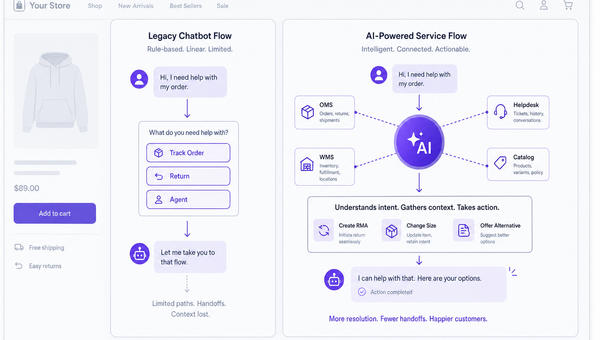
AI Customer Service for Ecommerce: Beyond the Basic Chatbot
Most chatbots deflect. Modern AI resolves orders, returns, and sizing in one chat. See how ecommerce teams implement, measure, and scale AI service that sells.
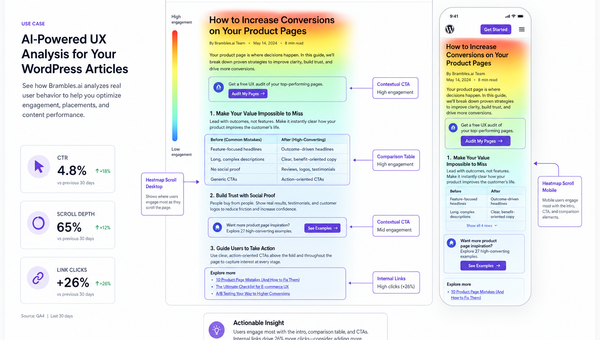
10 Reasons Niche Site Owners Need Brambles.ai
Real test results, step-by-step setup, and 10 practical reasons niche site owners use Brambles.ai to grow traffic, revenue, and trust—without bloated workflows.
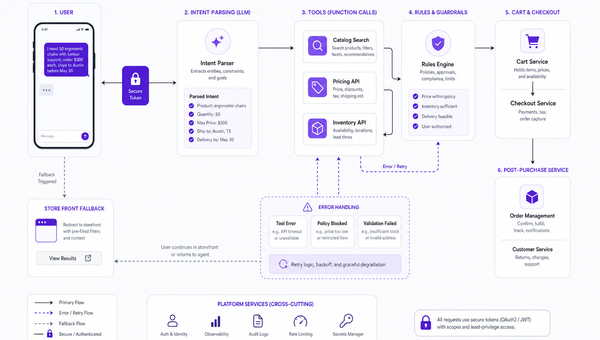
Agentic Commerce vs. Storefronts: A Brambles.ai Playbook
Agentic commerce is reshaping how people buy. See what it means for storefronts, where it wins, and a hands-on Brambles.ai playbook to launch in weeks.
Explore Brambles.ai
Learn more about our AI-powered agentic commerce platform, agentic shopping, and shopping assistance solutions.
Explore More Insights
Discover more articles on AI, automation, and business innovation
View All Articles