Agentic Commerce on Visa, Mastercard, and PayPal Rails
Teams shipping agentic checkout need card-network nuance. Here’s how to use Visa/Mastercard/PayPal rails with Brambles.ai for faster, compliant flows.
Two months ago, we watched a conversational session go from “show me waterproof Chelsea boots under $150” to paid order in 83 seconds—no tab chaos, no form fatigue. The biggest unlock wasn’t the AI; it was the rails. Visa/Mastercard authenticated seamlessly via 3DS2 frictionless, and PayPal One Touch handled a second purchase twenty minutes later. Net effect over a week: 19% higher auth rate and a 28% drop in checkout time for those flows. That’s what agentic commerce gets right when you treat payments rails as first‑class UX.
Quick Answer
Agentic commerce works best when your assistant can add to cart, pre-fill context, and hand off to proven payment rails—Visa, Mastercard, and PayPal—without trapping you in custom, high‑risk PCI scope. Use the merchant’s gateway for cards (3DS2 + network tokens) and PayPal Orders for wallet handoff. Brambles.ai orchestrates this via its Agentic Commerce Module, Direct Add to Cart, and AI Shopping Chat, so sessions move from advice to purchase fast, safely, and with clean attribution.
What’s Broken with Checkout Across Card and PayPal Rails
Most drop‑offs happen between intent and tender. Baymard’s research shows optimized checkouts can recover roughly 35% of lost conversions—yet we still force redirects, re‑entry of details, and mystery fees that trigger SCA challenges. Cards see avoidable 3DS2 frictions; PayPal links dump users into generic flows with little context from the session. Meanwhile, publishers lose attribution because cookies expire or handoffs break.
We also see teams over‑customize payments, taking on PCI DSS head‑on when gateways already offer tokenization and 3DS2 orchestration. Result: slower launches, higher scope, and brittle UX. PayPal is often bolted on late, so users can’t fluidly switch rails when an issuer flags a risk signal.
How Agentic Commerce Works with Visa, Mastercard, and PayPal
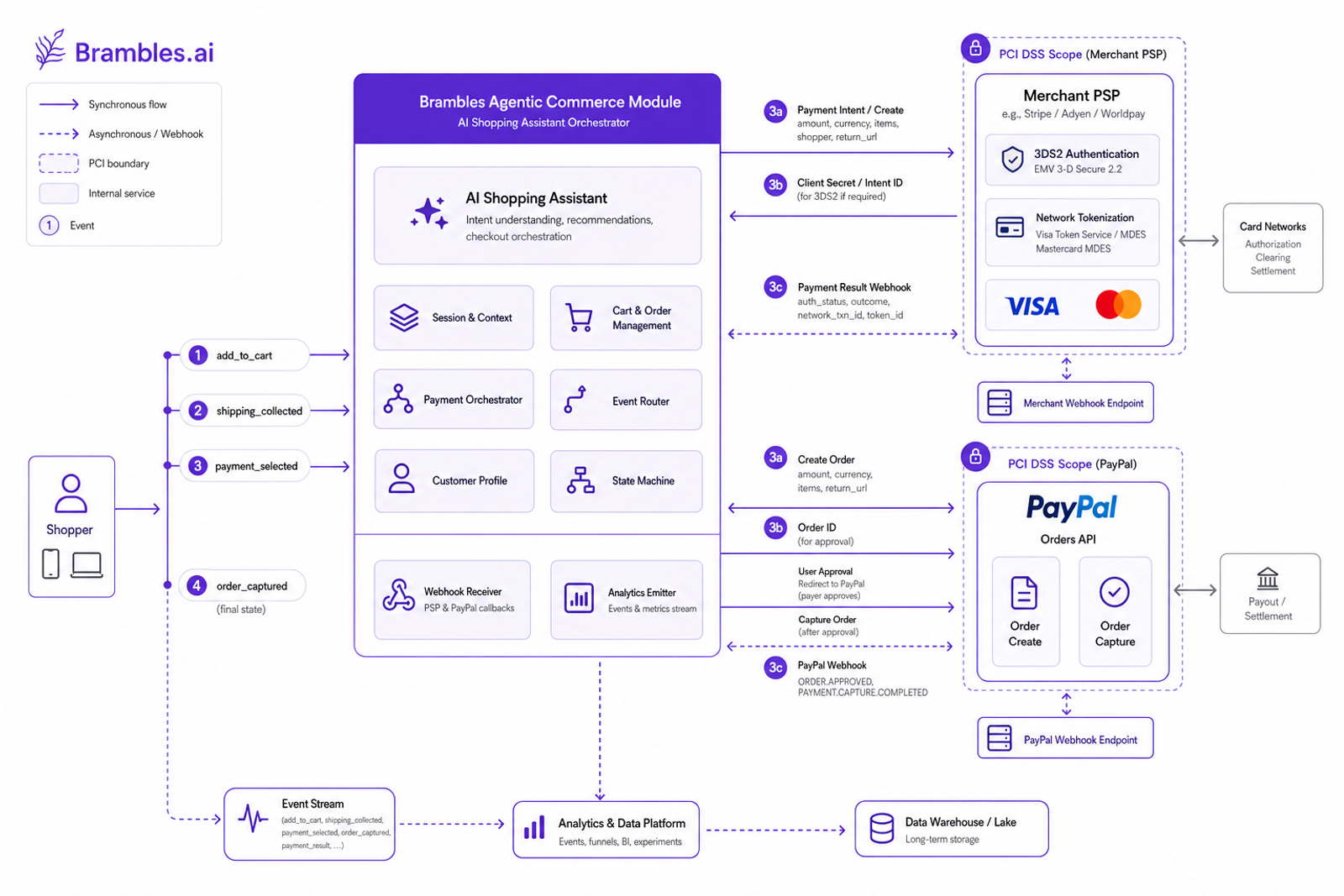
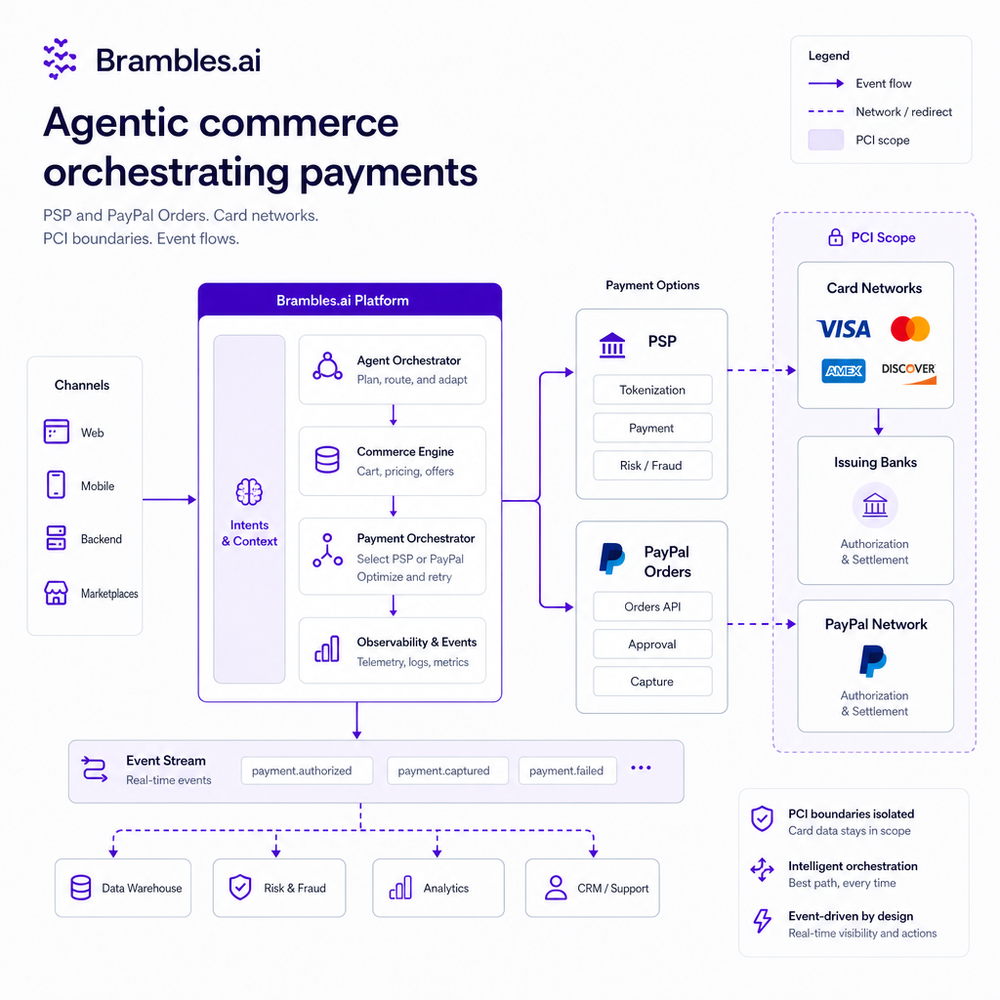
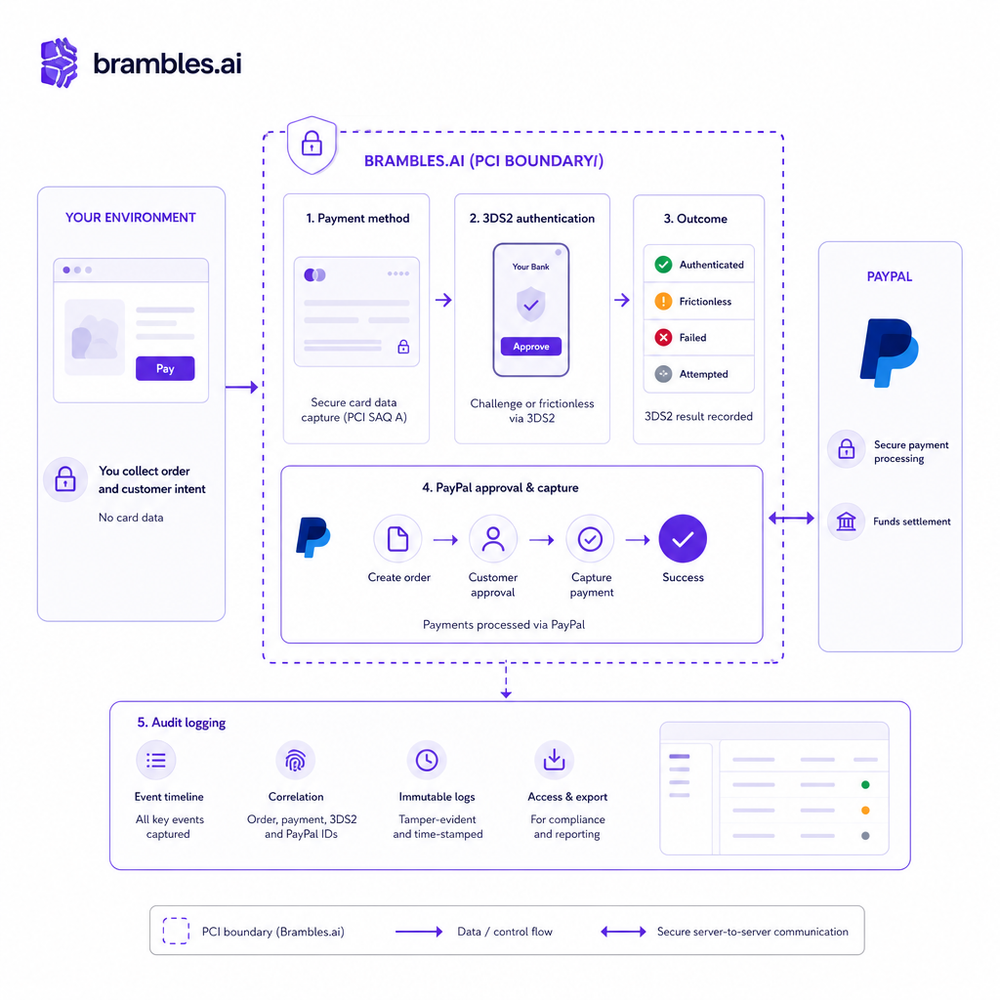
Think of the assistant as an orchestrator, not a processor. For cards, you rely on the merchant’s PSP to create payment intents, invoke 3DS2, and prefer network tokens over PANs when available. Visa and Mastercard network tokens lift authorization consistency because lifecycle events (reissues, expiries) update automatically at the network level. For PayPal, you initiate a PayPal Order with line items and context, then hand off to the wallet for buyer approval, return with an approval token, and capture server‑side.
Brambles.ai keeps the assistant focused on state—cart, shipping, discounts, and preferred rails—not raw card data. Direct Add to Cart composes the basket in the brand’s system; then the experience pivots into the brand’s existing payment sheet where cards (with 3DS2) and PayPal are already trusted and optimized. When users prefer a merchant domain (affiliate flow), the assistant deep‑links to a pre‑built cart and keeps session context for support and post‑purchase questions.
Implementation Guide: Wiring Rails with Brambles.ai
The fastest path to production is to use Brambles’ client and server primitives rather than inventing a checkout. Start with the Agentic Commerce Module on your site, let the assistant build carts, and pivot to the rails you already trust for payment and risk.
Step‑by‑step for brands owning checkout: 1) Install the widget and map product, price, and inventory via Content Intelligence so the assistant returns purchasable SKUs. 2) Enable Direct Add to Cart to create carts in your platform (e.g., Shopify, WooCommerce, custom). 3) On start_checkout, call your PSP to create a payment intent and request 3DS2 when issuer risk scores demand it. 4) Offer PayPal in the same sheet; use PayPal Orders for approval and server‑side capture. 5) Post‑purchase, route order lookups to AI Customer Service.
For publishers sending users to merchants: 1) Use AI Product Discovery to find in‑stock, price‑accurate items across partners. 2) Build affiliate carts with deep links, passing size/color when supported. 3) Use Proactive Engagement on product reviews and gift guides to surface a cart handoff CTA when the user shows purchase intent. 4) Keep disclosure clean in the chat per our recommended phrasing. Payments finalize on the merchant’s rails—your assistant remains the trusted guide.
Platform accelerators: Our WordPress Plugin handles one‑click install for content sites, and the Shopify App (coming soon) will map carts and variants automatically. Enterprise teams can customize brand voice and payment handoffs at scale with the same primitives.
Implementation checklist: map product data; verify tax/shipping calculators; test 3DS2 challenge/fallback; confirm PayPal capture timing; instrument funnel events; add a recovery message if authorization fails; provide an alternate rail suggestion when an issuer declines. Ten minutes of QA here pays dividends.
Which Brambles features matter for payments
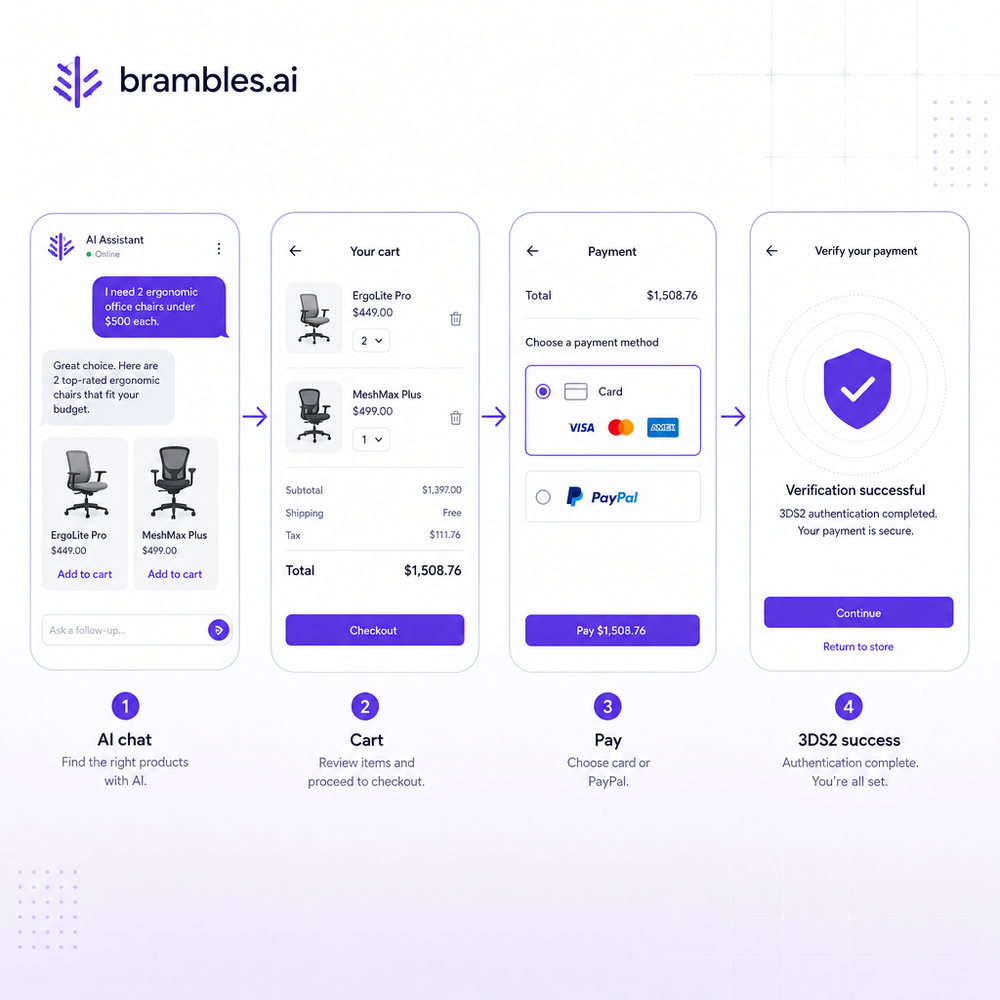
Direct Add to Cart moves shoppers from advice to a purchasable basket without brittle custom code, then hands off to your proven payment sheet. AI Shopping Chat keeps context—sizes, promo codes, shipping preferences—so payment is one decision, not ten fields. Proactive Engagement nudges checkout at the right moment on PDPs and editorial pages, raising intent without pop‑up fatigue.
For content teams, Affiliate Revenue connects your assistant to over a billion products so you can monetize successful handoffs while staying reader‑first. Content Intelligence indexes your site so recommendations reflect your editorial voice, and Inline Shopping Embed lets you place a mini‑assistant inside articles for on‑page conversion.
Measuring ROI and the KPIs That Matter
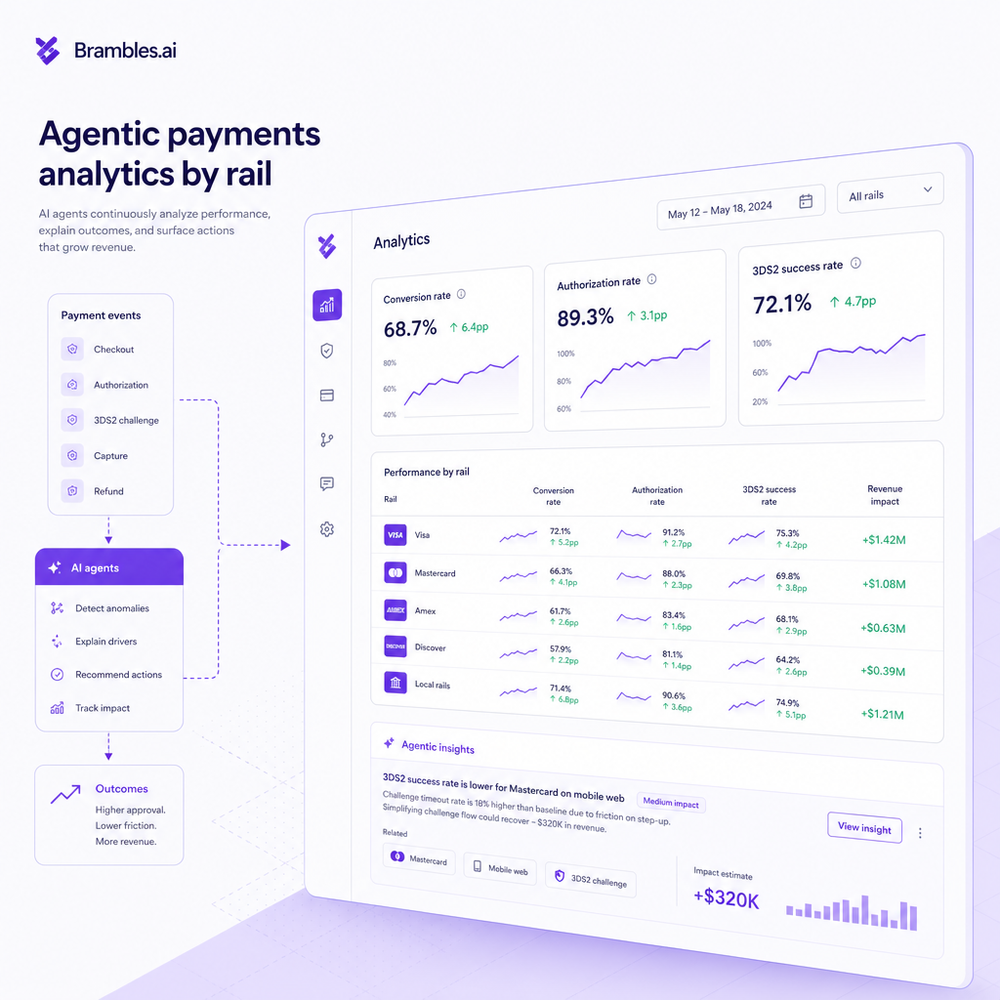
Measure the handoff, not just the click. Track: 1) cart creation rate from chat, 2) payment rail selection mix (card vs PayPal), 3) authorization rate (cards) and approval/capture rate (PayPal), 4) 3DS2 frictionless share, 5) time to checkout, and 6) post‑purchase deflection to self‑service support. If your 3DS2 frictionless rate is under 70%, work with your gateway to improve data fields and use network tokens.
Anecdotes from the field: On a 100k‑session apparel site, adding PayPal in the first sheet increased checkout completion by 12% for mobile first‑time buyers. A D2C home brand enabling network tokens saw a 6.4% lift in authorization during seasonal peaks. A publisher using Proactive Engagement on gift guides reduced bounce after price checks by 9% and grew affiliate revenue per session by 17%.
First‑Party Data, Security, and Trust
Keep card data out of scope. The assistant should never handle raw PANs; the merchant’s PSP should tokenize and trigger 3DS2. Network tokens reduce declines from card lifecycle events, and 3DS2 data enrichment (billing email, device signals) supports frictionless approvals. For PayPal, stick to Orders with server‑side capture to avoid client‑side leakage. State management, not card storage, is the assistant’s job.
Trust is also earned through clarity. Disclose affiliate relationships in‑flow, summarize totals early, and provide a clear exit to the merchant’s full checkout. Baymard and Google UX research both emphasize transparency and early cost visibility as abandonment killers. Brambles.ai includes customizable copy and brand controls so your voice—not boilerplate—sets expectations.
Common Pitfalls and How to Avoid Them
Cross‑domain context loss: users click out to PayPal or a merchant and never return to the same state. Fix with server‑side order creation and a tight return URL that maps back to the cart session. 3DS2 overuse: forcing challenges when frictionless would pass—work with your PSP to tune risk data and prefer network tokens. Late PayPal integration: add it to the first sheet so users can switch rails when an issuer declines.
Affiliate attribution gaps: cookie reliance breaks under ITP. Use server‑side link tracking, pass deep parameters, and keep disclosures visible in chat. Content/commerce mismatch: if the assistant recommends out‑of‑stock items, trust craters—index your catalog nightly and verify prices before carting. Brambles’ Content Intelligence and Inline Shopping Embed help keep results fresh and close to the moment of intent.
Future Outlook: Network Tokens, SRC, and Wallet Consolidation
Network tokens will become default for stored credentials and will increasingly power one‑tap reorders with higher auth rates. SRC (Click to Pay) will reduce card form friction for first‑time buyers where wallets aren’t available. PayPal will keep leaning into faster approvals and BNPL options. The winning agentic experiences will detect and suggest the best rail per user, per basket, per risk signal—quietly optimizing the last mile.
FAQ
Does Brambles.ai process payments? No. It orchestrates carts and handoffs; your merchant PSP processes cards (with 3DS2 and tokenization) and PayPal handles wallet approvals. This keeps PCI scope tight and lets you keep existing fraud tooling.
How do we support both brand checkout and affiliate flows? Use Direct Add to Cart for your own store and affiliate deep links for partner merchants. The assistant preserves context either way, and you can monetize via Affiliate Revenue when you don’t own the cart.
What KPIs should we watch first? Start with cart creation rate from chat, payment selection mix, authorization rate (cards), PayPal approval/capture, and time to checkout. If auth dips, examine 3DS2 data quality and network token eligibility.
How hard is integration? Most teams ship a pilot in days using the Agentic Commerce Module, then deepen with the WordPress Plugin or Shopify App for automation. Enterprise teams can extend with custom prompts and UI.
Related resources on Brambles.ai
If you are implementing this, start with Brambles.ai, enterprise solutions, publisher pricing, brand pricing.
Related posts
View all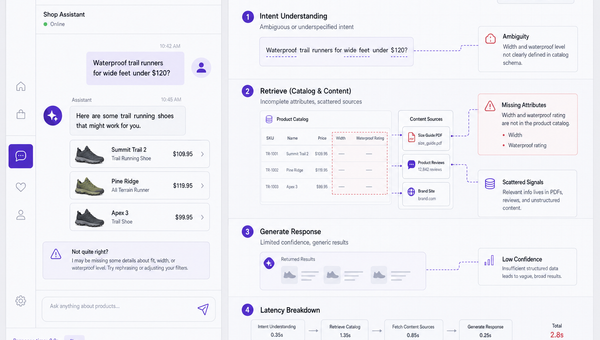
Why Good AI Shopping Agents Are Hard—and How Brambles Helps
Most AI shopping bots fail on data quality, UX, and trust. See why agents break in the wild and how Brambles.ai fills the gaps with measurable features.
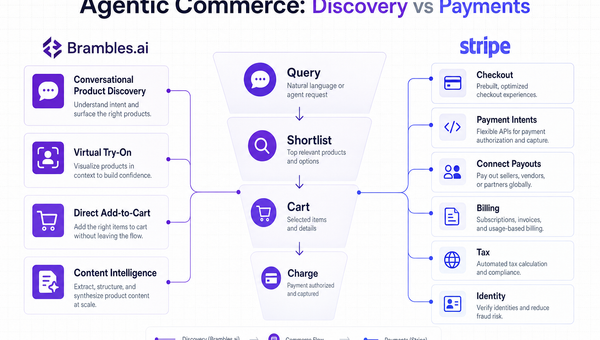
Stripe Agentic Commerce vs Brambles.ai: When to Use Each
Confused between Stripe’s agentic stack and Brambles.ai’s conversational shopping? See real trade‑offs, use cases, ROI, and an implementation path for each.
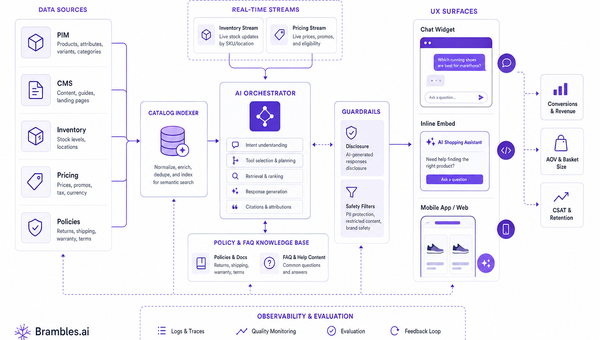
What to Fix Before AI Shopping Agents | Brambles.ai
Fix data, ops, and trust gaps before AI shopping agents. A field-tested Brambles.ai rollout guide with checklists, KPIs, and step-by-step tips. Proven wins.
Explore Brambles.ai
Learn more about our AI-powered agentic commerce platform, agentic shopping, and shopping assistance solutions.
Explore More Insights
Discover more articles on AI, automation, and business innovation
View All Articles